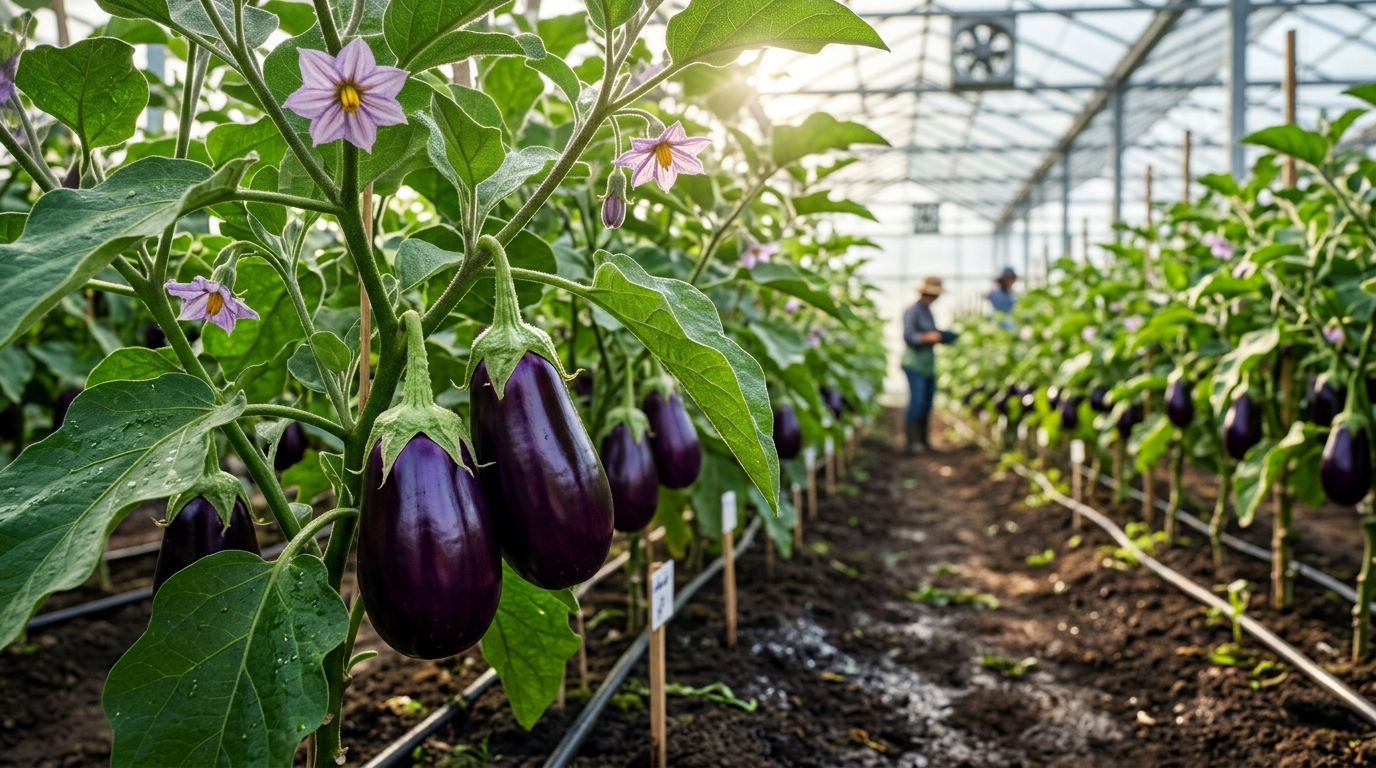
In the first comprehensive meta-QTL analysis conducted in eggplant (Solanum melongena L.), researchers have identified 97 stable genomic regions governing fruit characteristics, morphological development, anthocyanin regulation, prickles, and resistance to biotic stress. The study addresses a major bottleneck in eggplant breeding, where progress in improving architectural traits, stress resilience, and fruit quality has been constrained by the quantitative inheritance of these agronomic features.
To pinpoint stable genomic positions across diverse experimental backgrounds, the investigators compiled 620 initial quantitative trait loci identified in 23 independent studies. The team constructed a high-density consensus genetic framework and successfully projected 425 of those QTLs, representing 68.54 percent of the initial pool, onto the unified map.
The meta-analysis delineated 97 stable meta-QTLs distributed across linkage groups LG1 through LG12. Integrating these loci substantially improved genomic resolution, reducing the mean confidence interval from 10.29 centimorgans for the initial QTLs down to 3.42 centimorgans for the meta-QTLs. This represents a 66.8 percent narrowing in interval width, yielding an approximately threefold reduction in genomic target size.
Focusing on 40 prioritized meta-QTL intervals, the authors initially retrieved 1,440 gene models and refined them to 68 high-confidence candidate genes. This candidate selection was grounded in domain architecture, expression profiling, ortholog analysis, and synteny conservation with related Solanaceae species, including tomato and potato, alongside functional insights from Arabidopsis orthology.
The investigation uncovered key genomic hubs across multiple chromosomes, most prominently on Chromosome 6, which functions as a multi-trait super-region housing major loci for anthocyanin pigmentation (MQTL6.4_A), morphological traits (MQTL6.3_M), and prickle development (MQTL6.3_P). Other critical intervals identified include MQTL3.1_Bs on Chromosome 3 for biotic stress resistance, as well as MQTL1.1_F on Chromosome 1 and MQTL4.3_F on Chromosome 4 for fruit quality traits.
These genomic hotspots are enriched for coordinated, multi-layered regulatory networks and functional modules. Key functional elements include pattern-recognition receptors such as leucine-rich repeat receptor-like kinases, transcriptional regulators from the WRKY and MYB families, scaffolding proteins, and specialized metabolic and structural enzymes including GDSL esterases, laccases, F-box proteins, and SWEET transporters.
The researchers noted that strong synteny conservation with tomato and potato highlights the evolutionary stability and functional relevance of these co-adapted gene complexes across the Solanaceae family. By establishing a robust consensus framework with defined molecular markers and candidate genes, the findings provide genomic resources to accelerate marker-assisted selection and genomic breeding for climate-resilient, high-quality eggplant cultivars.
Subject of Research: Meta-QTL analysis and candidate gene identification in eggplant
Article Title: Comprehensive meta-QTL analysis uncovers stable loci for fruit traits, morphological development, anthocyanin regulation, and biotic stress resistance in eggplant
Article References: Hossain, M. Y., Ahmed, M., Islam, M. R., Rana, M. S., Ananty, N. T., Turzo, M. T. A., Hasan, J., Khan, I. M. M., Banu, M. S. A., Hossin, A. Y., Huda, K. M. K., Parveen, S., & Rashid, M. H.-U. (2026). Comprehensive meta-QTL analysis uncovers stable loci for fruit traits, morphological development, anthocyanin regulation, and biotic stress resistance in eggplant. Theoretical and Applied Genetics, 139(12), Article 327. https://doi.org/10.1007/s00122-026-05421-4
Image Credits: AI Generated
DOI: 10.1007/s00122-026-05421-4
Keywords: eggplant, Solanum melongena, meta-QTL analysis, quantitative trait loci, plant breeding, candidate genes, biotic stress resistance, anthocyanin regulation, Comprehensive, meta-QTL, analysis, uncovers
News Source: Drew Townsend. (November 6, 2026). Comprehensive Meta-QTL Analysis Identifies Stable Breeding Loci in Eggplant. Scienmag.