• HOME
  • NEWS
  • EXPLORE
    • CAREER
      • Companies
      • Jobs
    • EVENTS
    • iGEM
      • News
      • Team
    • PHOTOS
    • VIDEO
    • WIKI
  • BLOG
  • COMMUNITY
    • FACEBOOK
    • INSTAGRAM
    • TWITTER
Saturday, May 16, 2026
BIOENGINEER.ORG
No Result
View All Result
  • Login
  • HOME
  • NEWS
  • EXPLORE
    • CAREER
      • Companies
      • Jobs
        • Lecturer
        • PhD Studentship
        • Postdoc
        • Research Assistant
    • EVENTS
    • iGEM
      • News
      • Team
    • PHOTOS
    • VIDEO
    • WIKI
  • BLOG
  • COMMUNITY
    • FACEBOOK
    • INSTAGRAM
    • TWITTER
  • HOME
  • NEWS
  • EXPLORE
    • CAREER
      • Companies
      • Jobs
        • Lecturer
        • PhD Studentship
        • Postdoc
        • Research Assistant
    • EVENTS
    • iGEM
      • News
      • Team
    • PHOTOS
    • VIDEO
    • WIKI
  • BLOG
  • COMMUNITY
    • FACEBOOK
    • INSTAGRAM
    • TWITTER
No Result
View All Result
Bioengineer.org
No Result
View All Result
Home NEWS Science News Health

For migratory alewife, urbanization of coastal areas means smaller size, poorer health

Bioengineer by Bioengineer
March 16, 2020
in Health
Reading Time: 2 mins read
0
IMAGE
Share on FacebookShare on TwitterShare on LinkedinShare on RedditShare on Telegram

IMAGE

Credit: Rita Monteiro Pierce


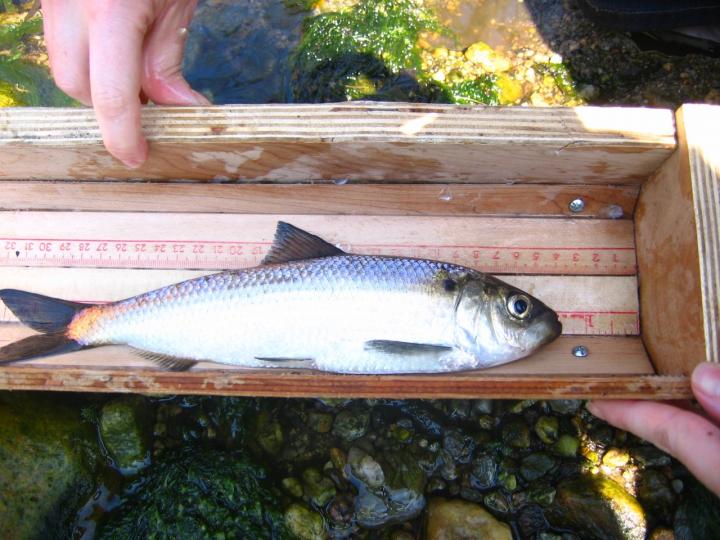
WOODS HOLE, Mass. — It’s not spring in New England until the herring are running. From late February to early April, two species of herring –alewife and blueback herring–return from the ocean and swarm the region’s ponds and streams, seeking the waters in which they were born.

“[Alewife] come back every year to find areas to reproduce, much like salmon [do] in freshwater ponds,” says Ivan Valiela, Distinguished Scientist at the Ecosystems Center at the Marine Biological Laboratory (MBL). The species are “canaries in the coal mines” indicating shifts in the health of the Northeastern coastal environment, he said.

Populations of coastal alewife have been in decline since the 1960s, with a sharp drop in the 2000s, according to a new research paper by Valiela and colleagues. Commercial landings of river herring in 2005 were only about 1 percent of 1958’s catch.

The study, led by Rita Monteiro Pierce, examined how urban development of New England coastal watersheds affects the size and health alewife stocks. They found that “the more developed the watershed, the less well off the alewives that were leaving them,” says Valiela. “Growth and the condition of the fish [were] impaired by increased urbanization.”

The researchers chose nine coastal ponds –six on Cape Cod, Mass., and three in Maine–and sampled alewife born in 2008 as they headed out to sea for the first time. The ponds, all known alewife breeding sites, were part of watersheds with a wide range of urbanization (from 3 to 60 percent urban land use cover).

Johns Pond in Sandwich, Mass., was the most-urbanized area studied. The young alewife sampled there were nearly half as long and up to 10 times lighter than alewife collected in streams coursing through the less urbanized areas.

Monteiro Pierce conducted research at the MBL Ecosystems Center for several years while a doctoral student at the State University of New York College of Environmental Science and Forestry in Syracuse, N.Y.

###

The Marine Biological Laboratory (MBL) is dedicated to scientific discovery – exploring fundamental biology, understanding marine biodiversity and the environment, and informing the human condition through research and education. Founded in Woods Hole, Massachusetts in 1888, the MBL is a private, nonprofit institution and an affiliate of the University of Chicago.

Media Contact
Emily Greenhalgh
[email protected]
508-289-7119

Original Source

https://www.mbl.edu/blog/for-migratory-alewife-urbanization-of-coastal-areas-means-smaller-size-poorer-health/

Related Journal Article

http://dx.doi.org/10.1139/cjfas-2018-0434

Tags: BiologyClimate ChangeDevelopmental/Reproductive BiologyEcology/EnvironmentMarine/Freshwater Biology
Share12Tweet8Share2ShareShareShare2

Related Posts

New Actinomycin Derivatives Target Malaria More Selectively

May 16, 2026

Mobile App Enhances Exercise for Older Adults’ Cognition

May 16, 2026

rAAV8 HMR-001 Boosts Liver Gene Therapy in Hemophilia

May 16, 2026

Pembrolizumab and Lenvatinib Trial for Mucosal Melanoma

May 16, 2026
Please login to join discussion

POPULAR NEWS

  • Research Indicates Potential Connection Between Prenatal Medication Exposure and Elevated Autism Risk

    843 shares
    Share 337 Tweet 211
  • New Study Reveals Plants Can Detect the Sound of Rain

    730 shares
    Share 291 Tweet 182
  • Salmonella Haem Blocks Macrophages, Boosts Infection

    62 shares
    Share 25 Tweet 16
  • Breastmilk Balances E. coli and Beneficial Bacteria in Infant Gut Microbiomes

    58 shares
    Share 23 Tweet 15

About

We bring you the latest biotechnology news from best research centers and universities around the world. Check our website.

Follow us

Recent News

New Actinomycin Derivatives Target Malaria More Selectively

Mobile App Enhances Exercise for Older Adults’ Cognition

Botulinum Toxin Reduces Urinary Retention Post-Hemorrhoidopexy

Subscribe to Blog via Email

Enter your email address to subscribe to this blog and receive notifications of new posts by email.

Join 82 other subscribers
  • Contact Us

Bioengineer.org © Copyright 2023 All Rights Reserved.

Welcome Back!

Login to your account below

Forgotten Password?

Retrieve your password

Please enter your username or email address to reset your password.

Log In
No Result
View All Result
  • Homepages
    • Home Page 1
    • Home Page 2
  • News
  • National
  • Business
  • Health
  • Lifestyle
  • Science

Bioengineer.org © Copyright 2023 All Rights Reserved.