

• HOME
  • NEWS
  • EXPLORE
    • CAREER
      • Companies
      • Jobs
    • EVENTS
    • iGEM
      • News
      • Team
    • PHOTOS
    • VIDEO
    • WIKI
  • BLOG
  • COMMUNITY
    • FACEBOOK
    • INSTAGRAM
    • TWITTER
Monday, May 11, 2026
BIOENGINEER.ORG
No Result
View All Result
  • Login
  • HOME
  • NEWS
  • EXPLORE
    • CAREER
      • Companies
      • Jobs
        • Lecturer
        • PhD Studentship
        • Postdoc
        • Research Assistant
    • EVENTS
    • iGEM
      • News
      • Team
    • PHOTOS
    • VIDEO
    • WIKI
  • BLOG
  • COMMUNITY
    • FACEBOOK
    • INSTAGRAM
    • TWITTER
  • HOME
  • NEWS
  • EXPLORE
    • CAREER
      • Companies
      • Jobs
        • Lecturer
        • PhD Studentship
        • Postdoc
        • Research Assistant
    • EVENTS
    • iGEM
      • News
      • Team
    • PHOTOS
    • VIDEO
    • WIKI
  • BLOG
  • COMMUNITY
    • FACEBOOK
    • INSTAGRAM
    • TWITTER
No Result
View All Result
Bioengineer.org
No Result
View All Result
Home NEWS Science News Health

First 3D-printed sensor-operated prosthetic arm for toddlers prototyped by UK engineers

Bioengineer by Bioengineer
January 13, 2020
in Health
Reading Time: 2 mins read
0
IMAGE
Share on FacebookShare on TwitterShare on LinkedinShare on RedditShare on Telegram

IMAGE

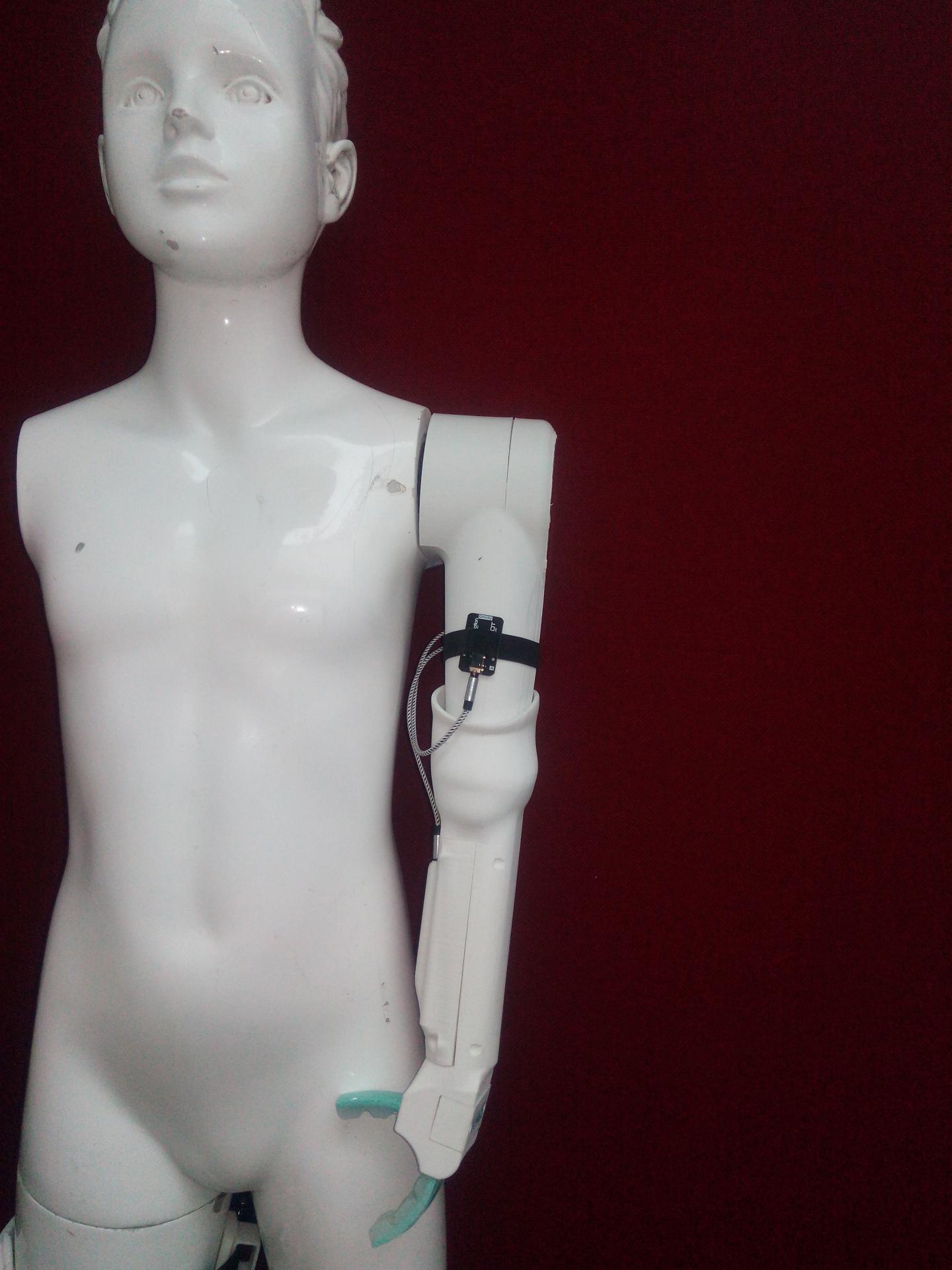
Credit: University of Lincoln


The lightweight device with soft grip fingers uses an armband fitted with sensors to detect electrical signals naturally conducted by muscles. This enables the toddler to grip and pick up objects in much the same way as they would with a natural arm.

While muscle-stimulated (or ‘myoelectric’) prostheses are routinely used by adults, this new smaller device, developed by a team at the University of Lincoln, UK, is the first of its kind to translate the same technology into dimensions suitable for a toddler.

Previously, as well as being expensive to build, producing prosthesis for children under two has been considered problematic as a child’s fast growth rates mean that devices would need to be frequently replaced. By using 3D printing, the SIMPA (Soft-Grasp Infant Myoelectric Prosthetic Arm) is cheaper to produce than conventional prosthesis and can be custom made to the individual child’s required size without the need for traditional plaster casting techniques.

Another issue with existing prosthetics for children is the high rejection rates. The early fitting of a functional myoelectric device has been shown to reduce this risk, which is something that would be made possible with the use of the new SIMPA device.

Dr Khaled Goher, Senior Lecturer in the School of Engineering at the University of Lincoln and the lead engineer on the project, said: “Many traditional active prosthetics are unsuitable for toddlers as they are very time consuming to construct and heavy. Our proposed system would utilise a seven-channel paediatric armband with motion sensors allowing infants to benefit from and become familiar with active prosthetics, with evidence showing that the earlier the exposure, the more likely for the prosthetics to be accepted and used throughout life.

“So far, the device has been tested for grasp force and effectiveness using a range of everyday objects including toys, bottles and building blocks but the next stage of the project is to test the prototype design on toddlers.”

Dr Goher added: “We are planning to use algorithm training which would utilise games to engage with the toddlers and attune the system to the ‘grab’ signals from the armband.”

###

Media Contact
Elizabeth Allen
[email protected]
01-522-886-196

Original Source

https://www.lincoln.ac.uk/news/latestnews/

Tags: BiologyBiotechnologyComputer ScienceDisabled PersonsElectrical Engineering/ElectronicsMedicine/HealthPediatricsRehabilitation/Prosthetics/Plastic SurgeryResearch/DevelopmentTechnology/Engineering/Computer Science
Share12Tweet8Share2ShareShareShare2

Related Posts

New Post-Hoc Analysis Explores Daily Oral Orforglipron Use in Adults Over 65 with Obesity, Regardless of Diabetes Status

May 11, 2026

Evaluating Digoxin Use in Patients with Symptomatic Rheumatic Heart Disease

May 10, 2026

Evaluating the Effectiveness and Safety of Digitalis Glycosides in Treating Heart Failure

May 10, 2026

Urdu Fall Risk Questionnaire Adapted for Elderly

May 10, 2026
Please login to join discussion

POPULAR NEWS

  • Research Indicates Potential Connection Between Prenatal Medication Exposure and Elevated Autism Risk

    840 shares
    Share 336 Tweet 210
  • New Study Reveals Plants Can Detect the Sound of Rain

    727 shares
    Share 290 Tweet 181
  • Salmonella Haem Blocks Macrophages, Boosts Infection

    61 shares
    Share 24 Tweet 15
  • Breastmilk Balances E. coli and Beneficial Bacteria in Infant Gut Microbiomes

    57 shares
    Share 23 Tweet 14

About

We bring you the latest biotechnology news from best research centers and universities around the world. Check our website.

Follow us

Recent News

New Post-Hoc Analysis Explores Daily Oral Orforglipron Use in Adults Over 65 with Obesity, Regardless of Diabetes Status

Evaluating Digoxin Use in Patients with Symptomatic Rheumatic Heart Disease

Evaluating the Effectiveness and Safety of Digitalis Glycosides in Treating Heart Failure

Subscribe to Blog via Email

Enter your email address to subscribe to this blog and receive notifications of new posts by email.

Join 82 other subscribers
  • Contact Us

Bioengineer.org © Copyright 2023 All Rights Reserved.

Welcome Back!

Login to your account below

Forgotten Password?

Retrieve your password

Please enter your username or email address to reset your password.

Log In
No Result
View All Result
  • Homepages
    • Home Page 1
    • Home Page 2
  • News
  • National
  • Business
  • Health
  • Lifestyle
  • Science

Bioengineer.org © Copyright 2023 All Rights Reserved.

