An international, expert-driven synthesis has identified 50 priority questions intended to advance grapevine microbiome research and its contribution to sustainable viticulture. The opinion paper, published in Plant and Soil, presents a research agenda rather than new experimental results. Its questions were generated through a standardized survey of 44 international experts and consolidated through structured review, covering major conceptual, methodological and translational challenges across the field.
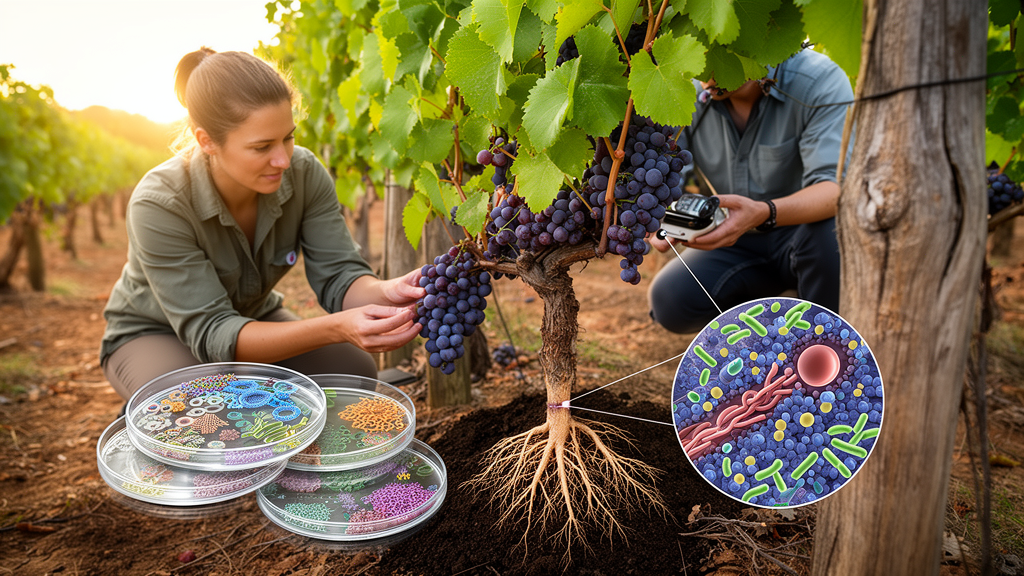
Current evidence links microbial biogeography with grape condition, fermentation communities and wine chemistry, but much of that evidence is observational and strongly confounded by geography, climate, cultivar and management. These factors complicate efforts to distinguish microbial contributions from correlations associated with environmental or agricultural differences. The 50 questions span nine thematic domains, including vineyard soil ecology, holobiont assembly, plant–pest–microbe interactions, microbial product viability, circular-economy strategies, climate resilience, digital technologies and socio-economic implementation.
Across these areas, the synthesis calls for investigation of multi-domain microbial mechanisms associated with nutrient cycling, disease suppression, stress resilience, grape yield and grape quality. It also prioritizes assessment of how management practices and global change affect microbiome stability. These are proposed areas for research, not findings that the opinion paper demonstrates through vineyard experiments, and the survey does not establish the effectiveness of a particular microbial intervention.
The agenda extends from basic biological questions to the practical and institutional steps needed to translate microbiome research into scalable solutions for vineyard regeneration and sustainable wine production. Proposed directions include determining the viability of microbial products, identifying circular-economy strategies, examining climate resilience, considering the role of digital technologies and assessing socio-economic implementation. The authors present these topics as interconnected parts of a coordinated framework, intended to support discovery and innovation while helping align research with wider soil-health and climate strategies.
Its principal contribution is thus a structured international roadmap: 50 questions that clarify what grapevine microbiome science must resolve before microbiome-based approaches can be integrated into sustainable viticulture.
Subject of Research: An expert research agenda for grapevine microbiome science and sustainable viticulture
Article Title: Fifty fundamental questions to unlock the grapevine microbiome for sustainable viticulture
Article References: Ochoa-Hueso, R., Liberal, I. M., Aguiar, J. F., Alfaro, F., Alguacil, M. D. M., Belda, I., Blanco-Pastor, J. L., Bonanomi, G., Campos, V. E., Cantos-Villar, E., Casimiro-Soriguer, R., Cruz, C., Delgado-Baquerizo, M., Díaz-Losada, E., Dittrich, F., Edwards, R., Fiera, C., Foschino, R., García-López, A. M., … Revillini, D. (2026). Fifty fundamental questions to unlock the grapevine microbiome for sustainable viticulture. Plant and Soil. https://doi.org/10.1007/s11104-026-09170-7
Image Credits: AI Generated
DOI: 10.1007/s11104-026-09170-7
Keywords: grapevine microbiome, sustainable viticulture, research priorities, vineyard soil ecology, holobiont assembly, microbial biogeography, nutrient cycling, disease suppression, climate resilience, microbial products, circular economy, expert survey
News Source: Morgan Morrow. (October 20, 2026). Fifty fundamental questions to unlock the grapevine microbiome for sustainable viticulture. Scienmag.