• HOME
  • NEWS
  • EXPLORE
    • CAREER
      • Companies
      • Jobs
    • EVENTS
    • iGEM
      • News
      • Team
    • PHOTOS
    • VIDEO
    • WIKI
  • BLOG
  • COMMUNITY
    • FACEBOOK
    • INSTAGRAM
    • TWITTER
Tuesday, October 20, 2026
BIOENGINEER.ORG
No Result
View All Result
  • Login
  • HOME
  • NEWS
  • EXPLORE
    • CAREER
      • Companies
      • Jobs
        • Lecturer
        • PhD Studentship
        • Postdoc
        • Research Assistant
    • EVENTS
    • iGEM
      • News
      • Team
    • PHOTOS
    • VIDEO
    • WIKI
  • BLOG
  • COMMUNITY
    • FACEBOOK
    • INSTAGRAM
    • TWITTER
No Result
View All Result
Bioengineer.org
No Result
View All Result
Home NEWS Science News Agriculture

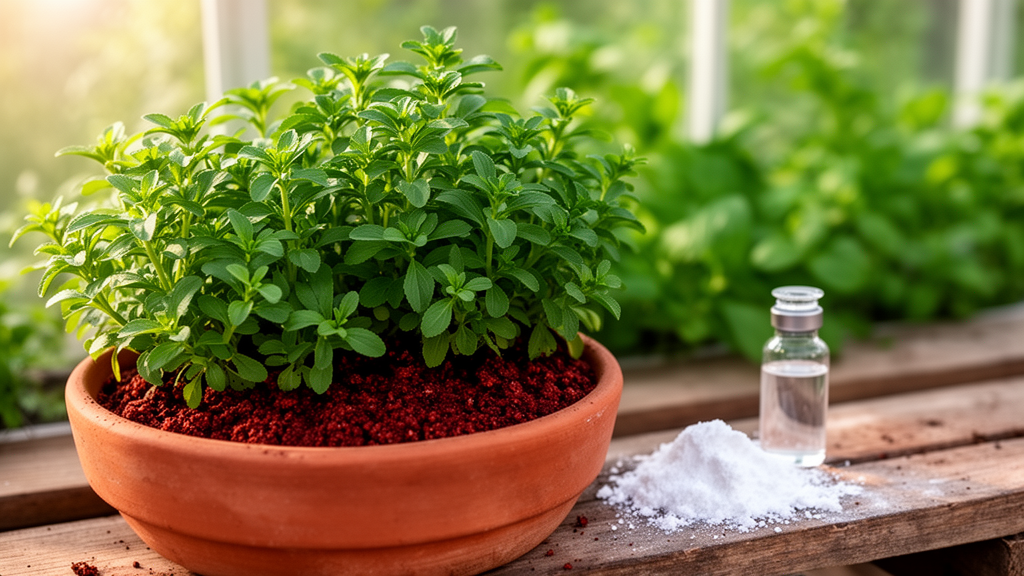
Field experiment links lime and GA3 applications with improved stevia growth in northern Bangladesh

by
October 20, 2026
in Agriculture
Reading Time: 2 mins read
0
Field experiment links lime and GA3 applications with improved stevia growth in northern Bangladesh

Lime and Gibberellic Acid Team Up to Boost Stevia Growth in Acidic Soils

Share on FacebookShare on TwitterShare on LinkedinShare on RedditShare on Telegram

A field experiment in northern Bangladesh found that combining lime with gibberellic acid (GA3) was associated with improved growth and leaf mineral composition in stevia (Stevia rebaudiana) cultivated in acidic soil. The randomized complete block design compared 12 treatments comprising four lime rates and three GA3 concentrations across 36 plots, with three replications. The study evaluated plant morphology, leaf concentrations of nitrogen, phosphorus, potassium, sulfur, calcium, magnesium and zinc, and nutrient availability in the soil after harvest.

According to the study abstract, plant height ranged from 90.62 cm in treatment T1 to 96.12 cm in T6, which received 0.5 t ha−1 of lime and 250 ppm GA3. Treatment T9, combining 1.0 t ha−1 of lime with 250 ppm GA3, produced the most primary branches, at 12.38, and the most secondary branches, at 34.84. It also had the highest measured leaf nitrogen concentration, 1.97%, and calcium concentration, 1.70%. These were treatment-specific observations rather than results demonstrating effects across other sites or soil conditions.

Factorial analysis of variance detected significant interactions between lime rate and GA3 concentration for plant height (p < 0.01), leaf number (p < 0.05), and leaf nutrient concentrations for nitrogen, calcium and magnesium (p < 0.05). Principal component analysis grouped the growth-promoted treatments T6 and T9 together, according to the abstract. After harvest, reported soil pH values ranged from 5.13 in T1 to 6.67 in T12, although the abstract states that further validation is required. The investigators characterized the combined treatment of 1.0 t ha−1 lime and 250 ppm GA3 as the most effective within the experiment for branching and nutrient accumulation.

The evidence comes from a single field experiment and its abstract; the supplied material does not provide a full assessment of the complete study. The authors also identify several limitations and unresolved questions. Steviol glycoside concentrations were not analyzed, so the experiment did not establish whether the treatments affected stevia’s sweet compounds. Multi-location trials are needed to test the reported responses beyond the experimental setting. The findings support further testing of lime and GA3 in acidic soils, but they do not by themselves establish commercial applicability or make a universal recommendation for stevia cultivation in northern Bangladesh.

Subject of Research: Effects of combined lime and GA3 applications on field-grown stevia growth, leaf minerals and post-harvest soil pH in northern Bangladesh

Article Title: Integration of lime and GA3 to enhance growth and leaf mineral composition of stevia (Stevia rebaudiana) in acidic soils of the northern region of Bangladesh

Article References: Amin, M., Islam, M. A., Akter, R., Mahabub, M. R., Chowdhury, M. T. I., Bhuiya, S. A., & Islam, S. (2026). Integration of lime and GA3 to enhance growth and leaf mineral composition of stevia (Stevia rebaudiana) in acidic soils of the northern region of Bangladesh. BMC Plant Biology. https://doi.org/10.1186/s12870-026-09844-5

Image Credits: AI Generated

DOI: 10.1186/s12870-026-09844-5

Keywords: stevia, acidic soils, lime, gibberellic acid, field experiment, Bangladesh, plant growth, leaf nutrients, soil pH, randomized block design, Integration, enhance

News Source: Alan Morgan. (October 20, 2026). Field experiment links lime and GA3 applications with improved stevia growth in northern Bangladesh. Scienmag.
Tags: acidic soilsBangladeshenhancefield experimentgibberellic acidintegrationleaf nutrientsLIMEPlant Growthrandomized block designsoil pHstevia
Share12Tweet7Share2ShareShareShare1

Related Posts

Fine mapping refines chromosome 3 QTL associated with heat tolerance in maize tassels

Fine mapping refines chromosome 3 QTL associated with heat tolerance in maize tassels

October 20, 2026
Tea OSCA gene family survey links CsOSCA1.1 to osmotic stress responses in Arabidopsis

Tea OSCA gene family survey links CsOSCA1.1 to osmotic stress responses in Arabidopsis

October 20, 2026

Study identifies seven Olour mango half-sib progenies with promising dwarfing traits

October 20, 2026

Six-month factorial trial links neem treatment and rack storage to better white yam quality

October 20, 2026

POPULAR NEWS

  • Research report: Knowledge and associated factors related to stoma care among surgical nurses in Sri Lanka

    Research report: Knowledge and associated factors related to stoma care among surgical nurses in Sri Lanka

    29 shares
    Share 12 Tweet 7
  • Cell assays and molecular modeling assess 1,2,3-thiadiazole derivatives against cancer cell lines

    29 shares
    Share 12 Tweet 7
  • NHANES analysis links lower socioeconomic status with higher self-reported arthritis prevalence

    29 shares
    Share 12 Tweet 7
  • Field experiment links lime and GA3 applications with improved stevia growth in northern Bangladesh

    29 shares
    Share 12 Tweet 7

About

We bring you the latest biotechnology news from best research centers and universities around the world. Check our website.

Follow us

Recent News

Research report: Knowledge and associated factors related to stoma care among surgical nurses in Sri Lanka

Cell assays and molecular modeling assess 1,2,3-thiadiazole derivatives against cancer cell lines

NHANES analysis links lower socioeconomic status with higher self-reported arthritis prevalence

Subscribe to Blog via Email

Enter your email address to subscribe to this blog and receive notifications of new posts by email.

Join 85 other subscribers
  • Contact Us

Bioengineer.org © Copyright 2023 All Rights Reserved.

Welcome Back!

Login to your account below

Forgotten Password?

Retrieve your password

Please enter your username or email address to reset your password.

Log In
No Result
View All Result
  • Homepages
    • Home Page 1
    • Home Page 2
  • News
  • National
  • Business
  • Health
  • Lifestyle
  • Science

Bioengineer.org © Copyright 2023 All Rights Reserved.