• HOME
  • NEWS
  • EXPLORE
    • CAREER
      • Companies
      • Jobs
    • EVENTS
    • iGEM
      • News
      • Team
    • PHOTOS
    • VIDEO
    • WIKI
  • BLOG
  • COMMUNITY
    • FACEBOOK
    • INSTAGRAM
    • TWITTER
Sunday, May 17, 2026
BIOENGINEER.ORG
No Result
View All Result
  • Login
  • HOME
  • NEWS
  • EXPLORE
    • CAREER
      • Companies
      • Jobs
        • Lecturer
        • PhD Studentship
        • Postdoc
        • Research Assistant
    • EVENTS
    • iGEM
      • News
      • Team
    • PHOTOS
    • VIDEO
    • WIKI
  • BLOG
  • COMMUNITY
    • FACEBOOK
    • INSTAGRAM
    • TWITTER
  • HOME
  • NEWS
  • EXPLORE
    • CAREER
      • Companies
      • Jobs
        • Lecturer
        • PhD Studentship
        • Postdoc
        • Research Assistant
    • EVENTS
    • iGEM
      • News
      • Team
    • PHOTOS
    • VIDEO
    • WIKI
  • BLOG
  • COMMUNITY
    • FACEBOOK
    • INSTAGRAM
    • TWITTER
No Result
View All Result
Bioengineer.org
No Result
View All Result
Home NEWS Science News Immunology

Fats fighting back against bacteria

Bioengineer by Bioengineer
October 16, 2020
in Immunology
Reading Time: 2 mins read
0
IMAGE
Share on FacebookShare on TwitterShare on LinkedinShare on RedditShare on Telegram

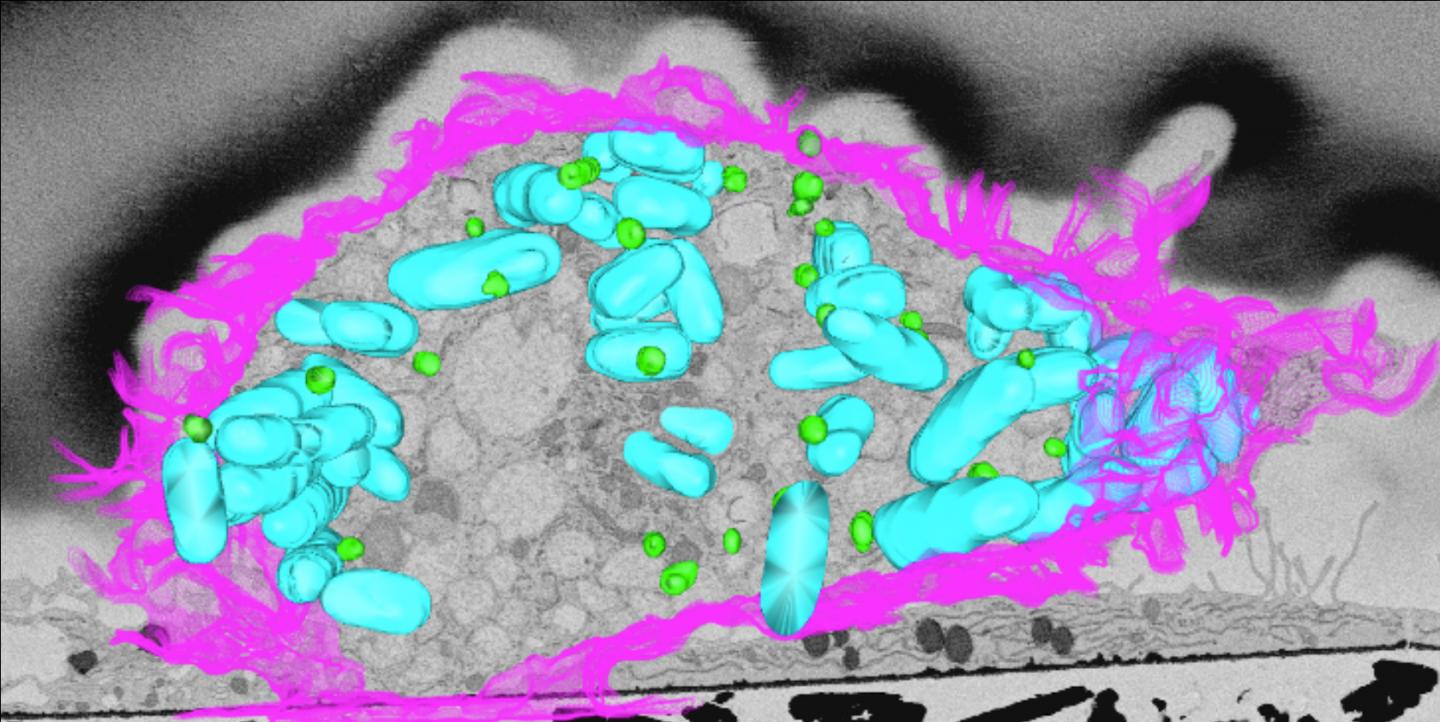
Droplets of fat inside our cells are helping the body’s own defence system fight back against infection, University of Queensland researchers have discovered.
IMAGE

Credit: Institute for Molecular Bioscience, University of Queensland

Droplets of fat inside our cells are helping the body’s own defence system fight back against infection, University of Queensland researchers have discovered.

The international collaboration between UQ Institute for Molecular Bioscience researchers Professor Robert Parton and Professor Matt Sweet, and the University of Barcelona’s Professor Albert Pol found that these fat droplets are both a food source and weapon against bacterial invaders.

“It was previously thought that bacteria were merely using the lipid droplets to feed on, but we have discovered these fatty droplets are involved in the battle between the pathogens and our cells,” Professor Parton said.

“Fat is part of the cell’s arsenal–cells manufacture toxic proteins, package them into the lipid droplets, then fire them at the intruders.

“This is a new way that cells are protecting themselves, using fats as a covert weapon, and giving us new insights into ways of fighting infection.”

With antibiotic-resistant superbugs on the rise, researchers are determined to find alternative ways to fight infection.

One possibility is ramping up the body’s natural defences.

“We showed that upon infection of white blood cells called macrophages, lipid droplets move to the part of the macrophage where the bacteria are present,” Professor Sweet said.

The bacterial infection also changed the way that white blood cells used energy.

“Lipid droplets can be used as a fuel source for mitochondria when there aren’t enough other nutrients,” Professor Sweet said.

“During an infection, lipid droplets move away from the mitochondria and attack the bacteria instead, altering metabolism of the cell.”

Cell biologist Professor Parton was inspired to continue this research after the phenomenon was seen in fruit flies.

“Most people thought the lipid droplets were ‘blobs of fat’, only useful for energy storage but now we are seeing that they act as metabolic switches in the cell, defend against infection and much more–there are now entire scientific conferences of researchers working on them,” he said.

“Our next step is to find out how the lipid droplets target the bacteria.

“By understanding the body’s natural defences, we can develop new therapies that don’t rely on antibiotics to fight drug-resistant infections.”

###

This research is published in Science (DOI – 10.1126/science.abe7891)

VIDEO – https://youtu.be/WTJc7oQFezU

Media Contact
Jane Ilsley
[email protected]

Related Journal Article

http://dx.doi.org/10.1126/science.abe7891

Tags: Cell BiologyInfectious/Emerging DiseasesMedicine/Health
Share13Tweet8Share2ShareShareShare2

Related Posts

IMAGE

UMass Amherst grad student awarded fellowship for food allergy research

July 23, 2021
IMAGE

Less-sensitive COVID-19 tests may still achieve optimal results if enough people tested

July 22, 2021

Public trust in CDC, FDA, and Fauci holds steady, survey shows

July 20, 2021

USC study shows male-female differences in immune cell function

July 19, 2021
Please login to join discussion

POPULAR NEWS

  • Research Indicates Potential Connection Between Prenatal Medication Exposure and Elevated Autism Risk

    844 shares
    Share 338 Tweet 211
  • New Study Reveals Plants Can Detect the Sound of Rain

    730 shares
    Share 291 Tweet 182
  • Salmonella Haem Blocks Macrophages, Boosts Infection

    62 shares
    Share 25 Tweet 16
  • Breastmilk Balances E. coli and Beneficial Bacteria in Infant Gut Microbiomes

    58 shares
    Share 23 Tweet 15

About

We bring you the latest biotechnology news from best research centers and universities around the world. Check our website.

Follow us

Recent News

Tau T205 Phosphorylation Controls Memory and Engrams

Phocaeicola dorei Eases Liver Fibrosis via Efferocytosis

Boosting Aging Positivity and Activity in Older Couples

Subscribe to Blog via Email

Enter your email address to subscribe to this blog and receive notifications of new posts by email.

Join 82 other subscribers
  • Contact Us

Bioengineer.org © Copyright 2023 All Rights Reserved.

Welcome Back!

Login to your account below

Forgotten Password?

Retrieve your password

Please enter your username or email address to reset your password.

Log In
No Result
View All Result
  • Homepages
    • Home Page 1
    • Home Page 2
  • News
  • National
  • Business
  • Health
  • Lifestyle
  • Science

Bioengineer.org © Copyright 2023 All Rights Reserved.