Oncologists in China experience moral distress not simply as private ethical conflict but as a problem woven into family expectations, hospital hierarchies and financial pressures, according to a qualitative study published in BMC Medical Ethics. Moral distress arises when healthcare professionals recognize the ethically appropriate action but are constrained from acting upon it, and it is associated with burnout and reduced quality of care. The researchers set out to explore how oncologists describe morally distressing situations in clinical practice and how those experiences are shaped by sociocultural and institutional contexts, an area they describe as having received limited research attention, particularly within oncology settings in China.
The study adopted a qualitative descriptive design. Sixteen oncologists were recruited through purposive and snowball sampling, and semi-structured interviews were conducted to explore their accounts of morally distressing and ethically challenging situations. The interview data were then analyzed using thematic analysis. Because the work is qualitative and based on a small purposive sample, the findings describe the experiences of these sixteen participants rather than measuring how common any given distressing situation is across the wider oncology workforce.
Four themes emerged from the analysis. The first was family-mediated ethical tensions, the second institutional and hierarchical constraints, the third the emotional consequences of moral distress, and the fourth strategies for managing moral distress. Together, the themes depict moral distress as arising when physicians perceived an ethically or professionally appropriate course of action but were constrained from acting accordingly by family expectations, hierarchical decision-making structures, financial barriers or other systemic pressures.
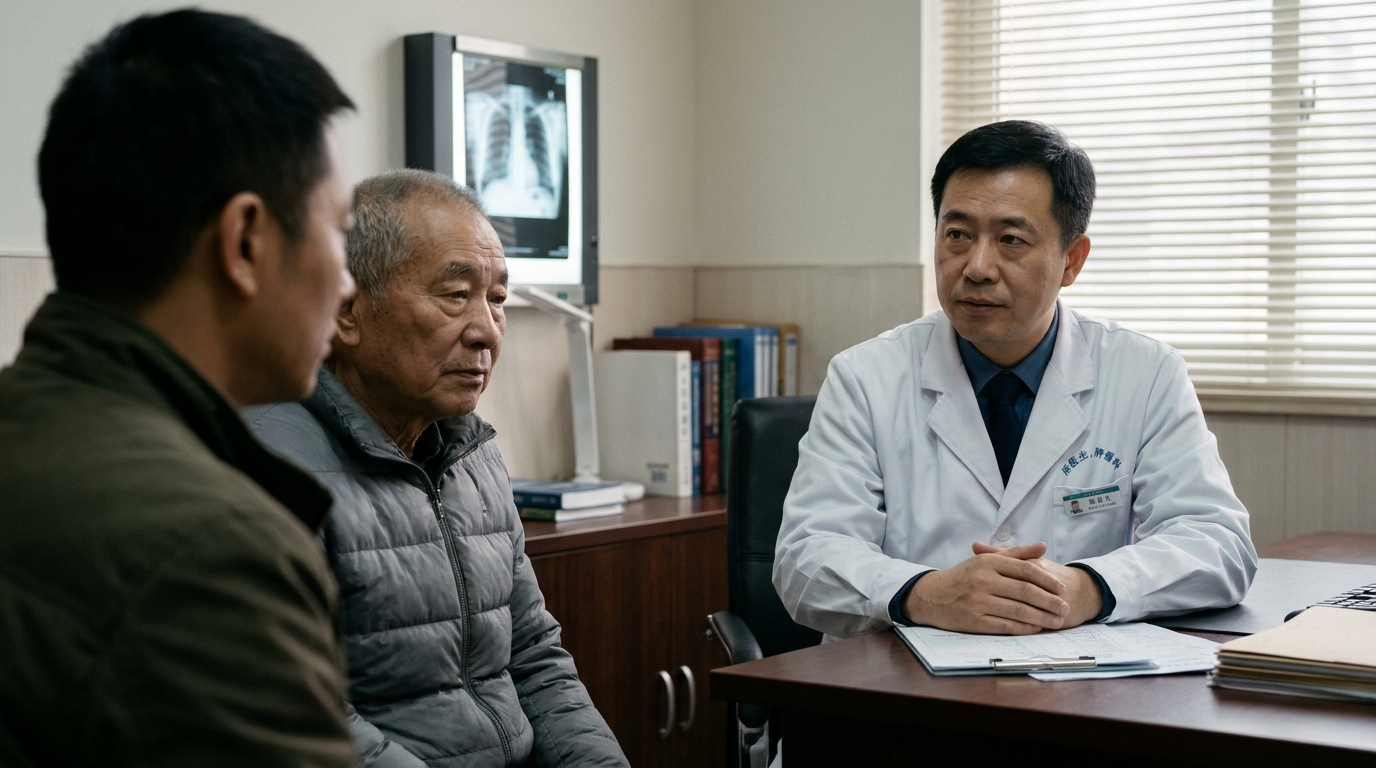
The family theme reflects a clinical environment in which relatives can play a prominent role in care decisions. The study reports that family expectations were among the forces that constrained physicians from acting on what they judged to be the right course. Where families mediate information or decisions, an oncologist who believes a particular action is ethically or professionally appropriate may be unable to pursue it, producing the gap between judgment and action that defines moral distress.
The second theme, institutional and hierarchical constraints, points to the structure of decision-making within hospitals. Hierarchical decision-making structures appeared in participants’ accounts as barriers that prevented them from acting on their ethical judgments. Financial barriers and other systemic pressures also featured in the accounts, indicating that the constraints participants described extended beyond interpersonal dynamics to include economic and organizational factors.
The third theme addresses what those constraints do to clinicians. The researchers identified the emotional consequences of moral distress as a distinct theme, and the study notes that the intersecting forces constraining physicians’ moral agency prompted adaptive responses. In other words, the distress was not only felt internally; it also shaped how oncologists behaved in and around the clinical encounter.
Those adaptive responses formed the fourth theme. Participants described strategies for managing moral distress that included strategic communication, professional self-protection, relational negotiation and personal emotional coping. These are responses developed at the level of the individual clinician navigating a difficult environment, and the study frames them as adaptations to the pressures described in the first two themes rather than as solutions to the underlying problem.
The authors conclude that moral distress among the participating oncologists was not solely an individual ethical conflict but was embedded within a broader moral environment shaped by relational expectations and structural power relations. On that view, the distress documented in the interviews cannot be fully understood, or addressed, by focusing only on the individual physician’s resilience or coping skills. The relational and structural context in which decisions are made is part of the phenomenon itself.
That conclusion carries a practical implication. The researchers argue that efforts to address moral distress should extend beyond individual coping strategies to include institutional and organizational reforms that strengthen the ethical climate, support moral agency and acknowledge contextually situated decision-making practices. In practical terms, they point toward changes at the level of the organization and institution rather than relying solely on training individual clinicians to tolerate or manage distressing situations.
The study’s scope should be kept in view when weighing these conclusions. It involved sixteen oncologists recruited through purposive and snowball sampling, interviewed with a semi-structured guide and analyzed thematically, so it illuminates how morally distressing situations are described and shaped by context among this group rather than estimating prevalence or testing an intervention. Even so, the work adds a documented account of how family ethics, hierarchical power and structural constraints intersect to constrain moral agency in oncology practice in China, and it positions institutional reform, alongside individual support, as part of the response to a problem already linked in the literature to burnout and reduced quality of care.
Subject of Research: Moral distress among oncologists in China and the family, hierarchical and structural factors that shape it
Article Title: Moral distress in the context of family ethics, hierarchical power, and structural constraints: a qualitative study of oncologists in China
Article References: Lyu, X.-C., Sun, X.-Y., Lee, L.-H., Akkadechanunt, T., Yang, C.-I., & Yuan, L.-P. (2026). Moral distress in the context of family ethics, hierarchical power, and structural constraints: a qualitative study of oncologists in China. BMC Medical Ethics. https://doi.org/10.1186/s12910-026-01652-8
Image Credits: AI Generated
DOI: 10.1186/s12910-026-01652-8
Keywords: moral distress, oncologists, China, medical ethics, qualitative study, family ethics, hierarchy, burnout, thematic analysis, semi-structured interviews, Moral, distress
News Source: Courtney Benton. (November 6, 2026). Family ethics and hierarchy shape moral distress among Chinese oncologists. Scienmag.