A new analysis of the FEARFALL randomized controlled trial indicates that a multi-component intervention did not provide additional long-term benefits over a sham control for reducing concerns about falling in older adults. Published in Aging Clinical and Experimental Research, the study examined the 8-month follow-up effects of a program combining exercise and cognitive-behavioral training. The research team found that both the intervention group and the control group experienced similar improvements in psychological and physiological markers, suggesting that the specific active components of the intervention were not solely responsible for the observed changes.
The study focused on community-dwelling adults aged 70 and older who reported moderate to high levels of fear of falling. These concerns are common in this demographic and are associated with reduced physical activity and poorer health outcomes. The FEARFALL trial was designed to investigate whether addressing these psychological concerns through a targeted intervention could lead to sustained improvements in functional health and stress-related biomarkers. The primary goal was to determine if the intervention could outperform a control condition that matched the session frequency and duration but lacked specific exercise or cognitive-behavioral elements.
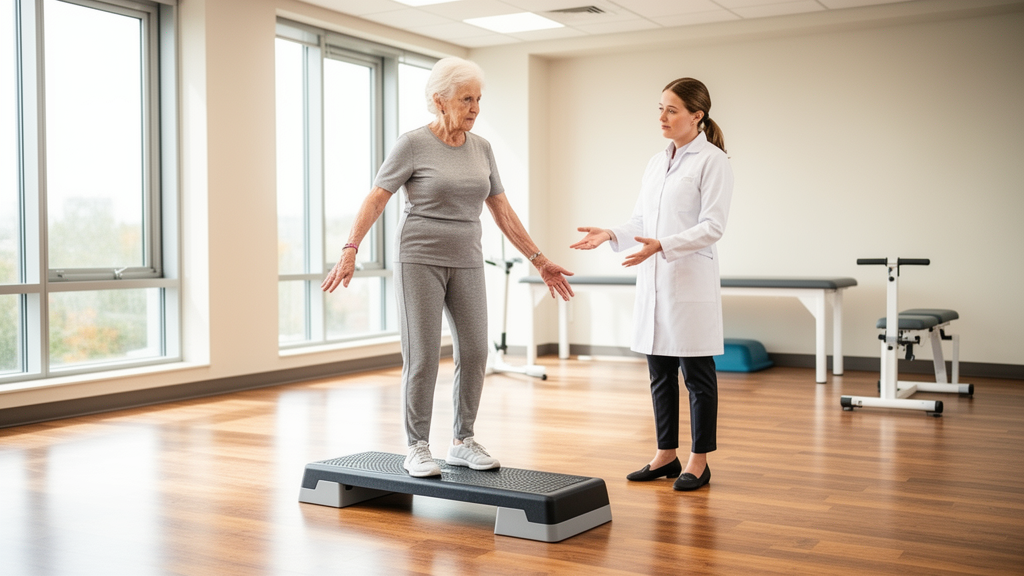
Researchers randomly assigned 160 participants to either the intervention group or the sham control group. The intervention group participated in a 16-week program that included progressive strength, balance, and gait training, along with cognitive-behavioral strategies adapted from the “A Matter of Balance” program. This approach aimed to reduce avoidance behaviors and enhance self-efficacy regarding fall risks. In contrast, the sham control group attended sessions of the same duration and frequency, which consisted of health-education lectures and light upper-body stretching. This design allowed the researchers to isolate the effects of the specific multi-component training from the general benefits of regular social contact and structured activity.
The study utilized a comprehensive set of measures to evaluate outcomes across psychological, functional, biophysiological, and anthropometric domains. Psychological assessments included the Falls Efficacy Scale-International (FES-I) to measure concerns about falling, the Geriatric Anxiety Scale (GAS) for anxiety, and the Perceived Stress Scale (PSS) for perceived stress. Functional outcomes were assessed using handgrip strength, the Short Physical Performance Battery (SPPB), and objective physical activity data recorded by the activPAL system. These tools provided a detailed picture of how participants’ physical capabilities and daily activity levels changed over the course of the study.
Biophysiological markers were also analyzed to understand the relationship between fall-related stress and physiological health. The team measured salivary cortisol and alpha-amylase to assess basal activity of the hypothalamic-pituitary-adrenal (HPA) axis and the sympathetic nervous system (SNS). Additionally, blood samples were collected to quantify inflammatory markers, including C-reactive protein (CRP), interleukin-6 (IL-6), interleukin-10 (IL-10), interleukin-1β (IL-1β), and tumor necrosis factor-alpha (TNF-α). These biomarkers were evaluated at baseline, immediately after the intervention, and at the 8-month follow-up to track long-term physiological changes.
The results showed that both groups experienced significant improvements in psychological outcomes over time. Concerns about falling, as measured by the FES-I, decreased significantly in both the intervention and control groups from baseline to the 8-month follow-up. Similarly, scores for anxiety and perceived stress declined, while perceived control over falling increased. The lack of significant differences between the groups suggests that the reduction in fall-related fear was not uniquely driven by the specific exercise and cognitive-behavioral components of the intervention. Instead, the improvements may have been influenced by the regular participation in structured sessions and the social engagement inherent in the study design.
Functional outcomes also changed over the study period, though the differences between groups were not significant. Gait speed, a component of the SPPB, improved immediately after the intervention but remained stable at the follow-up. However, objective step counts, which reflect daily physical activity, actually decreased over the entire study period in both groups. This decline in daily activity contrasts with the improvements in specific performance tests, highlighting the complexity of translating functional gains into everyday behavior.
Physiological biomarkers revealed a complex pattern of changes that were largely comparable between the two groups. Total diurnal cortisol output decreased over time, while total diurnal alpha-amylase output increased. These shifts suggest changes in basal stress system activity, potentially indicating an adaptation or normalization of the HPA axis and SNS. Inflammatory markers showed inconsistent trends; for instance, IL-6 and IL-1β levels increased, while TNF-α levels decreased. The researchers noted that these cytokine profiles are influenced by multiple factors, making it difficult to attribute these changes solely to the intervention or the reduction in fall-related fear.
Anthropometric variables, including body mass index and skeletal muscle mass, did not show significant changes over time in either group. This stability suggests that the intervention maintained the participants’ anthropometric status but did not lead to substantial gains in muscle mass or changes in body composition. The researchers emphasized that while handgrip strength improved, this did not necessarily translate to an increase in muscle mass, a common finding in studies of older adults.
The study has several limitations that must be considered when interpreting the results. The participants were selected based on having moderate to high concerns about falling, which limits the generalizability of the findings to older adults without such concerns. Additionally, the study did not reach its planned sample size, which may have reduced the statistical power to detect small differences between the groups. The sham control group, while designed to match the intervention in frequency and duration, included health-education lectures that could have provided some benefit, making it an active rather than inactive control. This design choice may have contributed to the null between-group findings.
The researchers concluded that the multi-component intervention was feasible and safe for vulnerable older adults but did not confer additional benefits over the sham control in reducing concerns about falling. Both groups showed similar time-related improvements in psychological and physiological markers, indicating that the specific components of the intervention were not uniquely effective in this context. The findings suggest that future studies should consider more tailored interventions or different control groups to better understand the long-term sustainability of fall-fear reduction strategies.
This trial contributes to the growing body of evidence on the management of fall-related concerns in older adults. By demonstrating that both active and sham interventions lead to similar improvements, the study highlights the importance of social engagement and structured activity in maintaining functional health. The detailed analysis of stress and inflammation markers provides valuable insights into the physiological correlates of psychological well-being in this population. As the global population ages, understanding the most effective ways to support healthy aging and independence remains a critical public health priority.
To put the investigation into perspective, public health data cited by the authors indicate that falls affect roughly 26.5 percent of older adults globally, while concerns about falling reach nearly 50 percent. Such concerns frequently accelerate a cycle of reduced physical activity, muscle deterioration, and social isolation. To evaluate these dynamics rigorously, the FEARFALL protocol recruited community-dwelling seniors with baseline Falls Efficacy Scale-International scores of at least 20, while excluding individuals with cognitive impairment below 24 points on the Mini-Mental State Examination or those taking anti-inflammatory medications such as glucocorticoids or nonsteroidal anti-inflammatory drugs. Participants in both arms demonstrated high compliance, with over 77 percent attending scheduled sessions, and outcome evaluators remained blinded through the separation of intervention delivery and testing teams.
The statistical framework evaluated 31 separate outcomes using linear mixed-effects models adjusted for age and sex, with false discovery rate corrections applied across psychological, functional, biomarker, and anthropometric domains. Although participants demonstrated statistically significant improvements in physical performance, the researchers highlighted important caveats regarding clinical relevance. For instance, the overall gain of 0.41 points on the Short Physical Performance Battery mirrored findings from similar trials like the SPRINTT study but fell short of the established threshold of more than one full point considered clinically meaningful. Likewise, the immediate post-intervention improvement in gait speed of 0.05 meters per second approached but did not achieve the 0.1 meter per second standard for clinical significance, and the modest increase in handgrip strength remained well below the benchmark of 5.0 to 6.5 kilograms, leaving open the possibility of a measurement habituation effect.
The biological sampling protocol also incorporated strict quality controls, collecting saliva across two consecutive days at waking, thirty minutes post-waking, and bedtime to reliably capture diurnal slopes and total hormonal output. Blood analyses employed high-sensitivity assays to track inflammatory markers such as interleukin-10 and C-reactive protein alongside proinflammatory cytokines. In interpreting the lack of significant group-by-time interactions, the authors observed that the trial enrolled 160 participants rather than the planned target of 200, which may have limited the statistical power needed to detect subtle differences between the active exercise group and the structured sham control during the extended follow-up window. Future investigations may need to explore more intensive or individualized physical regimens to determine whether targeted training can achieve superior long-term physiological and functional outcomes beyond the benefits provided by active socialization.
Subject of Research: Long-term effects of a multi-component intervention on fall-related concerns, stress, and inflammation in older adults
Article Title: Reducing concerns about falling in older adults: evaluation of a multi-component intervention and the role of stress and inflammation markers – long-term effects of the FEARFALL randomized controlled trial
Article References: Britting, S., Müller, A., Kob, R., Freiberger, E., & Rohleder, N. (2026). Reducing concerns about falling in older adults: evaluation of a multi-component intervention and the role of stress and inflammation markers – long-term effects of the FEARFALL randomized controlled trial. Aging Clinical and Experimental Research, 38(1), Article 195. https://doi.org/10.1007/s40520-026-03515-z
Image Credits: AI Generated
DOI: 10.1007/s40520-026-03515-z
Keywords: fall prevention, older adults, randomized controlled trial, stress biomarkers, inflammation, cognitive-behavioral therapy, functional health, FEARFALL study, Reducing, concerns, falling, older
News Source: Ophelia Keating. (November 10, 2026). Fall Fear Improves in Both Groups in FEARFALL Trial. Scienmag.