• HOME
  • NEWS
  • EXPLORE
    • CAREER
      • Companies
      • Jobs
    • EVENTS
    • iGEM
      • News
      • Team
    • PHOTOS
    • VIDEO
    • WIKI
  • BLOG
  • COMMUNITY
    • FACEBOOK
    • INSTAGRAM
    • TWITTER
Saturday, September 26, 2026
BIOENGINEER.ORG
No Result
View All Result
  • Login
  • HOME
  • NEWS
  • EXPLORE
    • CAREER
      • Companies
      • Jobs
        • Lecturer
        • PhD Studentship
        • Postdoc
        • Research Assistant
    • EVENTS
    • iGEM
      • News
      • Team
    • PHOTOS
    • VIDEO
    • WIKI
  • BLOG
  • COMMUNITY
    • FACEBOOK
    • INSTAGRAM
    • TWITTER
  • HOME
  • NEWS
  • EXPLORE
    • CAREER
      • Companies
      • Jobs
        • Lecturer
        • PhD Studentship
        • Postdoc
        • Research Assistant
    • EVENTS
    • iGEM
      • News
      • Team
    • PHOTOS
    • VIDEO
    • WIKI
  • BLOG
  • COMMUNITY
    • FACEBOOK
    • INSTAGRAM
    • TWITTER
No Result
View All Result
Bioengineer.org
No Result
View All Result
Home NEWS Science News Biology

Extreme rainfall events cause top-heavy aquatic food webs

Bioengineer by Bioengineer
July 9, 2020
in Biology
Reading Time: 3 mins read
0
IMAGE
Share on FacebookShare on TwitterShare on LinkedinShare on RedditShare on Telegram

IMAGE

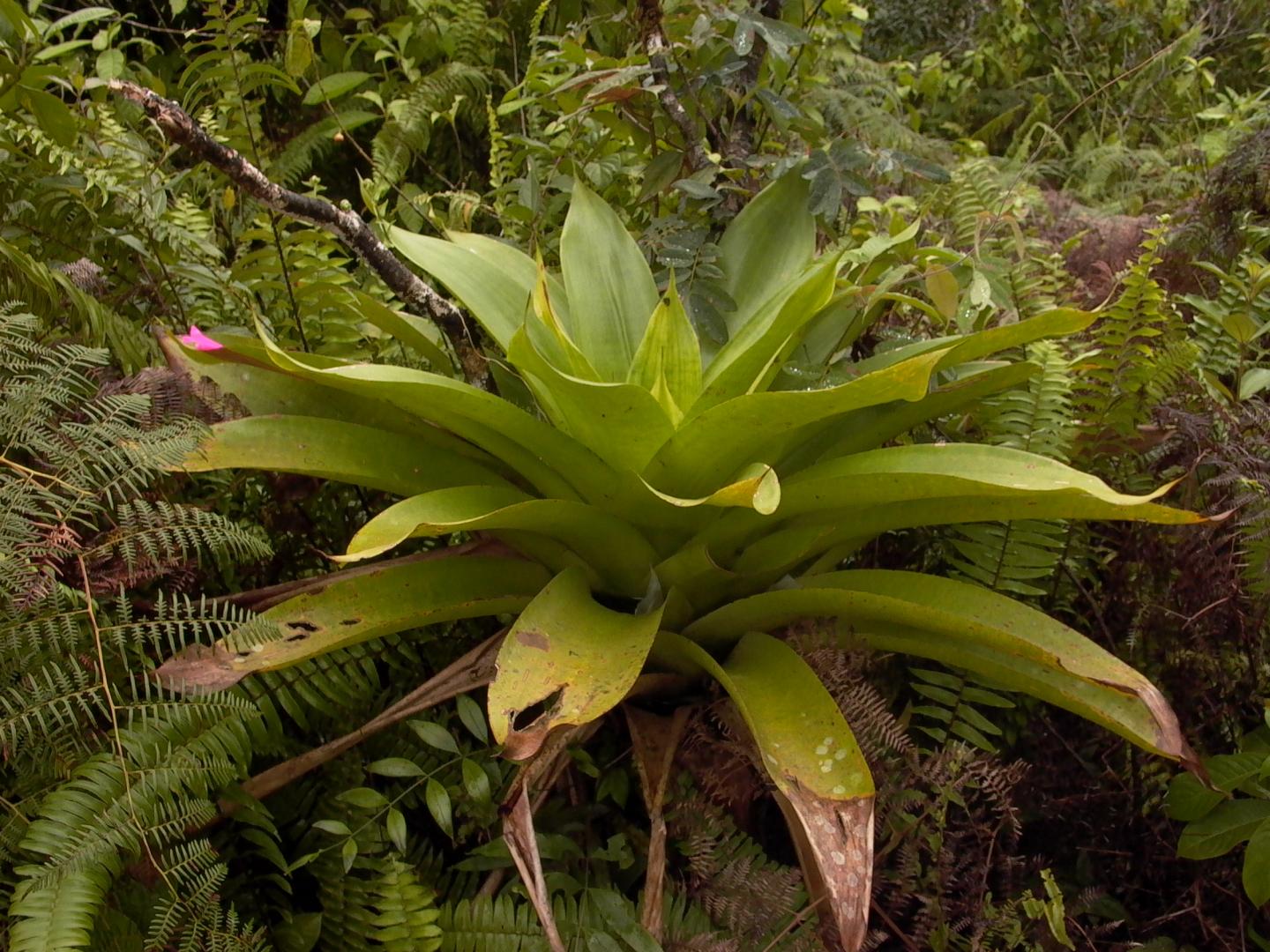
Credit: The Bromeliad Working Group/UBC.

An expansive, multi-site ecology study led by UBC has uncovered new insights into the effects of climate change on the delicate food webs of the neotropics.

In research recently outlined in Nature, scientists across seven different sites throughout Central and South America replicated the extreme rainfall events predicted by climate change science. Using the insect larvae that live in the water trapped by bromeliad plants as a model ecosystem, they found that food webs became top-heavy with predators when there were large day-to-day variations in rainfall.

“This has knock-on effects for all parts of the rainforest system, because the larval insects in the bromeliads are destined to become winged adults that then are part of the forest ecosystem around them,” said co-author Diane Srivastava, professor of zoology in UBC’s faculty of science, who established the Bromeliad Working Group, an international consortium of researchers who conducted the research.

To attain their results, scientists in sites spread across Argentina, Brazil, Columbia, Costa Rica, French Guiana and Puerto Rico performed identical experiments on bromeliads–large flowering tropical plants that trap water and provide a habitat for many aquatic insects and larvae. The bromeliads were covered with rain shelters, and researchers watered them on strict schedules to replicate 30 different rainfall patterns in each site.

“This is the first study, to my knowledge, where we have a replicated study of how precipitation patterns affect an entire food web in multiple sites,” said Srivastava. “Every day we’d run around with a watering can with a list of how much water each bromeliad should get on each day. We had a customized rainfall schedule for each bromeliad in every field site.”

While the researchers found that extreme rainfall patterns resulted in top-heavy food webs, the opposite was true when rainfall was delivered on an even schedule, with similar amounts of water delivered to the plants every day. Under those conditions, there were fewer predators and more prey among the larval insects.

“We were actually expecting to see the opposite pattern,” said Srivastava. “We often think of predators being the most sensitive to environmental change, but we got the opposite result. One reason may be that, when the water level in the bromeliad went down during drier days, there was less aquatic habitat, so the prey was condensed into a small amount of water together with their predators. This can really benefit predators and disadvantage prey.”

These findings can be extrapolated to other rainfall-dependent aquatic ecosystems, said Srivastava. “In any small pond or lake which is primarily determined by rainfall, we can expect to see a similar effect. We should be concerned about these findings, because we’ve shown that these extreme perturbations in rainfall really do affect the flow of energy through the food web.”

###

“Extreme rainfall events alter the trophic structure in bromeliad tanks across the Neotropics” was published June 25 in Nature Communications.

Media Contact
Silvia Moreno
[email protected]

Original Source

https://science.ubc.ca/news/extreme-rainfall-events-cause-top-heavy-aquatic-food-webs

Related Journal Article

http://dx.doi.org/10.1038/s41467-020-17036-4

Tags: BiodiversityBiologyClimate ChangeEcology/EnvironmentZoology/Veterinary Science
Share12Tweet8Share2ShareShareShare2

Related Posts

Overlapping Genes Evolve by Different Rules in Bacteria and Complex Life

Overlapping Genes Evolve by Different Rules in Bacteria and Complex Life

September 26, 2026
Male Dogs and the Very Young and Old Face Higher Risk of Severe Bites, Colorado Study Finds

Male Dogs and the Very Young and Old Face Higher Risk of Severe Bites, Colorado Study Finds

September 26, 2026

Plant-Powered Nanoparticles Strip MRSA of Its Adhesive Weapons

September 26, 2026

Salt Marsh Microbes Hold Steady Through Day-Night Swings, Venice Lagoon Study Finds

September 26, 2026
Please login to join discussion

POPULAR NEWS

  • High-Pressure Ventilation Linked to Atypical Skull Suture Fusion in Preterm Infants

    29 shares
    Share 12 Tweet 7
  • Overlapping Genes Evolve by Different Rules in Bacteria and Complex Life

    29 shares
    Share 12 Tweet 7
  • Laser-Dissected Proteomics Reveals Where Immunity Really Lives in Triple-Negative Breast Tumors

    29 shares
    Share 12 Tweet 7
  • Three-Year Campus Study Reveals How Bangkok’s Haze Season Seeps Into University Buildings

    29 shares
    Share 12 Tweet 7

About

We bring you the latest biotechnology news from best research centers and universities around the world. Check our website.

Follow us

Recent News

High-Pressure Ventilation Linked to Atypical Skull Suture Fusion in Preterm Infants

Overlapping Genes Evolve by Different Rules in Bacteria and Complex Life

Laser-Dissected Proteomics Reveals Where Immunity Really Lives in Triple-Negative Breast Tumors

Subscribe to Blog via Email

Enter your email address to subscribe to this blog and receive notifications of new posts by email.

Join 85 other subscribers
  • Contact Us

Bioengineer.org © Copyright 2023 All Rights Reserved.

Welcome Back!

Login to your account below

Forgotten Password?

Retrieve your password

Please enter your username or email address to reset your password.

Log In
No Result
View All Result
  • Homepages
    • Home Page 1
    • Home Page 2
  • News
  • National
  • Business
  • Health
  • Lifestyle
  • Science

Bioengineer.org © Copyright 2023 All Rights Reserved.