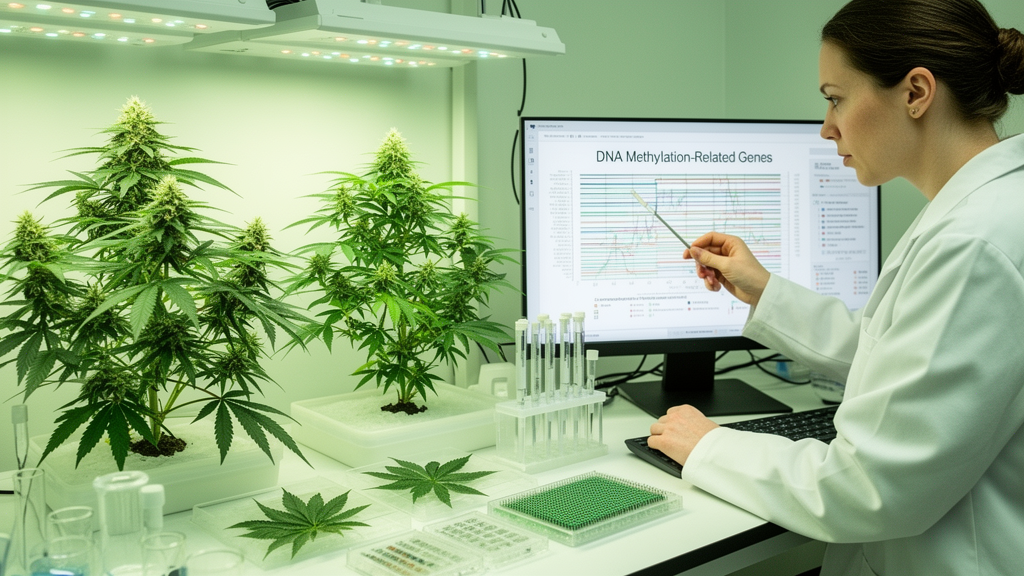
A genome-wide analysis of Cannabis sativa identified dynamic changes in the expression of DNA methylation-related genes during ethephon-induced feminization. Researchers found six cytosine-5 DNA methyltransferase genes and four DNA demethylase genes, then used quantitative expression profiling to compare male and female flowers and examine selected genes during treatment-induced sex conversion. Changes in the methylation machinery occurred alongside altered expression of flowering- and sex-associated genes, identifying candidates for future investigation into DNA methylation-associated regulation of floral development and sex plasticity.
The study, published in BMC Plant Biology, combined computational genome analysis with expression measurements. Phylogenetic analysis, comparisons of gene structure, conserved-domain searches and motif analysis were used to characterize the two gene families. These analyses indicated that the Cannabis sativa DNA methyltransferases and demethylases are highly conserved and share structural features with homologues from other plant species. This portion of the work was an in-silico survey of the genome rather than a direct test of methylation activity.
Promoter analysis revealed numerous cis-regulatory elements associated with light, phytohormone and stress responses, including ethylene-responsive motifs. The researchers also reported distinct transcriptional patterns between male and female flowers. Several methyltransferase and demethylase genes changed dynamically during ethephon-induced feminization, showing that their expression was associated with the developmental response rather than remaining constant across sexes and floral stages.
The expression profiles also detected changes in genes connected with flowering and floral sex. These included AGL11, SOC1, SQUAMOSA1, LFY, AP3, Men8, SHT and bhlH91, whose expression varied throughout floral development. The accompanying changes in DNA methylation-related genes support a possible role for methylation-associated regulation in the response, but the study did not directly manipulate DNA methylation or demonstrate that altered methylation caused the developmental effects. The evidence therefore establishes a relationship between gene-expression patterns rather than a confirmed causal pathway.
The authors described the work as the first comprehensive characterization of DNA methyltransferase and DNA demethylase gene families in C. sativa. Its results provide a genome-wide map of the relevant genes and reveal transcriptional changes associated with ethephon-induced feminization. The central limitation is that computational promoter analysis and quantitative expression profiling do not by themselves resolve how methylation changes regulate the flowering and sex-associated genes. Functional experiments focused on the nominated candidates will be required to test whether they contribute to floral development and sex plasticity in cannabis.
Subject of Research: DNA methylation-related gene expression during ethephon-induced sex conversion in Cannabis sativa
Article Title: Expression dynamics of DNA methylation machinery during ethephon-induced sex-conversion in Cannabis sativa: an in silico genome-wide analysis
Article References: Chanda, S., Pandey, Y., Kushwaha, A., Gupta, A. K., & Tiwari, G. (2026). Expression dynamics of DNA methylation machinery during ethephon-induced sex-conversion in Cannabis sativa: an in silico genome-wide analysis. BMC Plant Biology. https://doi.org/10.1186/s12870-026-09793-z
Image Credits: AI Generated
DOI: 10.1186/s12870-026-09793-z
Keywords: Cannabis sativa, ethephon, feminization, DNA methylation, methyltransferases, demethylases, gene expression, floral development, sex plasticity, epigenetics, Expression, dynamics
News Source: Juliet Wilcox. (October 26, 2026). Expression profiling links DNA methylation genes to cannabis feminization. Scienmag.