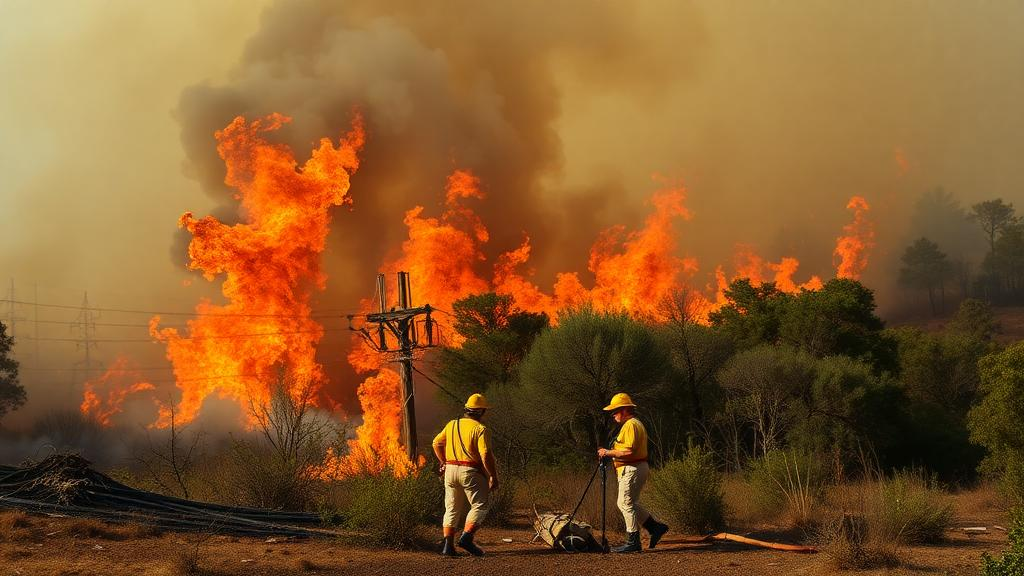
A trio of long-standing wildfire social scientists is calling on their own field to pause and take stock, warning that the rapid growth of research on the human dimensions of wildfire is outpacing agreement about what counts as rigorous work. In a perspective article published in the journal Fire Ecology, Travis Paveglio, Christine Eriksen, and Catrin Edgeley argue that more wildfire social science is not automatically better wildfire social science, and that without renewed attention to methodological quality, the field risks fragmenting just as its insights are most needed.
The article is deliberately reflective rather than empirical. The authors describe it as a set of longitudinal observations drawn from their own research experiences since the early 2000s and from their work handling wildfire social science submissions to scientific journals, including the Social Science Section of Fire Ecology. They explicitly avoid the structured processes of systematic or scoping reviews, arguing that those approaches can obscure the nuanced epistemological trends and scientific practices that occur outside the tidy boundaries of final publications. The intent, they write, is to provoke constructive dialogue among researchers, policy-makers, managers, and practitioners.
Their first observation concerns quality. The authors welcome the surge of interest in social science approaches to wildfire, but they report seeing a corresponding lack of agreement about methodological standards, conceptual grounding, and topical understanding across an ever-growing body of researchers. In their experience as editors and reviewers, newer submissions increasingly devote less time and space to contextualizing study design, research questions, or hypotheses. Methodological sections describing sampling, data analysis, and representativeness are becoming less descriptive and more general, and some submissions arrive without citations substantiating the methods used. Meanwhile, the number of completed interviews, survey responses, or focus groups claiming to represent populations continues to decrease across papers, even as the regions, communities, and professions those studies attempt to generalize across keep growing.
The authors are careful to note that the point is not to criticize researchers entering the field. They acknowledge structural constraints, including a historical lack of funding compared with biophysical research and simulation modeling, limited social science representation in leadership roles on interdisciplinary teams, and the political sensitivity of studying human actors. But they argue that researchers, especially those whose primary grounding is in engineering, ecology, or computer science, should remember that the social sciences carry their own standards, conventions, and philosophical foundations reflecting a long history of practice. Conducting an in-depth interview, they stress, is not the same as simply having a conversation; it involves skillful probing, narrative structuring, attention to emotional and political tension, verification of statements, and hearing what goes unsaid.
There are also practical stakes. The authors warn that producing a greater volume of less rigorous research is unlikely to increase funding and time for the field, particularly because wildfire research involving human populations is becoming increasingly crowded. Potential interview participants can only be engaged so many times, by so many teams, with so many different methods, before they become overwhelmed by survey fatigue or sour on the utility of the lessons drawn from them. The authors suggest a concerted effort among experienced social scientists to standardize or normalize the skills needed to conduct and teach wildfire social science, which could produce best-practice guidance and help funders and end-users, many of whom are not social scientists, select quality proposals. They also note that, unlike certified foresters, fire ecologists, or emergency managers, there are no consistent standards or qualifications for social scientists working on wildfire issues, and that formal academic training in study design, data collection, and analysis has been declining.
Their second observation addresses theory. The proliferation of wildfire social science across a broadening set of journals and ideological camps has, in the authors’ view, produced a growing disconnect between scholars who use different theoretical terms for the same concepts, disagree about definitions of key ideas such as risk and responsibility, or continue debating behavioral influences without operationalizing conclusions for tailored action. They report seeing authors claim to coin or empirically measure novel concepts that are actually rebrandings of topics already substantiated in the literature, or describe their approach as unique without comparing it to existing frameworks. Such absolute statements, they argue, are likely inaccurate given the depth and diffuse nature of a field that has been expanding for nearly 50 years. The authors also point to a plateau effect, citing the continued production of studies using the Theory of Planned Behavior to reify the role of self-efficacy in mitigation behavior, work that rarely advances understanding of how self-efficacy is built or how it interacts with other variables.
Against this backdrop, the authors call for researchers to contextualize new frameworks within existing knowledge and to look for commonalities and differences between theories operating at different scales, from individual-level behavioral theories to collective action theories and policy development. They argue that overarching, one-size-fits-all social theories are not possible across the variety of regions and communities grappling with wildfire in the twenty-first century, and that scholars in countries where wildfire social science is nascent should derive lessons from international scholarship while carefully adapting it to unique local and regional conditions. Good theory development, they write, requires a balance between testing existing conceptualizations and advancing new understandings through empirically derived insights, and it takes time, dedication, and continued effort.
The third observation turns to fieldwork. The authors identify the most enduring finding across wildfire social science as the recognition that human action, understanding, and response to wildfire are inherently contextual and often place-based, producing what they describe as a patchwork of local cultures with diverse approaches to wildfire adaptation. Classic social science perspectives on the researcher as instrument stress that field-based skills, mixed methods, participant observation, and communication abilities are lifelong practices that deepen with experience. Yet the authors observe that the balance of quality field-based research seems to be declining relative to big data, indicator approaches, and desk-based methods. An increasing number of place-based submissions describe virtual or phone interviews and online focus groups rather than in-person visits to study sites. They also flag the deployment of students to conduct workshops and interviews without direct supervision by experienced social scientists, and large interdisciplinary groups that obtain funding only to pay third-party companies to administer surveys, even as survey response rates and representative coverage decline.
The authors do not dismiss big data outright, acknowledging that a very important set of skills is needed to produce discrete outputs such as indices, mapping efforts, and AI-driven document analyses. But they argue that such outputs should be described as high-level inputs that do not diminish the need for dialogue, facilitation, and negotiation of shared priorities, especially when indicator approaches or predictive models assume that all people will act or respond in the same way, assumptions that lack ground-truthing via field data. They encourage authors to be explicit about their methodological choices, including whether they went into the field and why, and to be reasonable about the scope and generalizability of their work. Replicability across many independent efforts, they argue, is better science than all-encompassing studies that cannot be replicated or generalized.
The final observation concerns technology. The authors criticize a tendency for non-social scientists to narrow social science into the extension wing of new technological, ecological, or managerial approaches, tasking social scientists with advancing adoption of solutions derived by experts. Evidence from the social sciences, they write, is a consistent reminder that experts cannot simply engineer their way out of the gradually worsening challenges of fire management. They single out the rapid increase in simulation modeling and mapping efforts, noting that index scores designed to simplify prioritization can be useful if qualified as simplified outputs containing assumptions, incomplete data, and poor coverage at small scales, but that labeling many modeling efforts as social science is problematic because such work often treats people as static landscape features rather than agentic beings capable of thought, reflection, and learning. The authors call for empirical, third-party evaluation of whether modeling outputs are actually used, for cost-benefit analyses of precision and time devoted to modeling versus place-based expertise, and for best practices in an increasingly saturated market of modeling products. They also raise concerns about the growing wildfire management economy, in which non-profit and for-profit companies conduct their own social science, raising issues of social desirability, data confidentiality, and impacts on working relationships. The article closes with suggestions for researchers: enable and support apprenticeship, promote quality over quantity, embrace methodological rigor, immerse yourself in the discipline, hone your skills in the field, and honor what you do, treating in-depth social science as a privilege rather than an opportunity for profit.
Subject of Research: Best practices and methodological rigor in wildfire social science research
Article Title: Wildfire social science: rigor, traditions, and best practices for an evolving field
Article References: Paveglio, T. B., Eriksen, C., & Edgeley, C. M. (2026). Wildfire social science: rigor, traditions, and best practices for an evolving field. Fire Ecology, 22(1), Article 158. https://doi.org/10.1186/s42408-026-00592-3
Image Credits: AI Generated
DOI: 10.1186/s42408-026-00592-3
Keywords: wildfire social science, research methods, methodological rigor, fieldwork, human dimensions of wildfire, survey fatigue, Theory of Planned Behavior, simulation modeling, fire management, interdisciplinary research, Fire Ecology journal, researcher training
News Source: Courtney Benton. (October 28, 2026). Experts Call for a Rigor Reset in Wildfire Social Science. Scienmag.