University of Missouri scientists receive $4 million grant from the National Institutes of Health to examine clues about the rate of infection in communities and virus variants
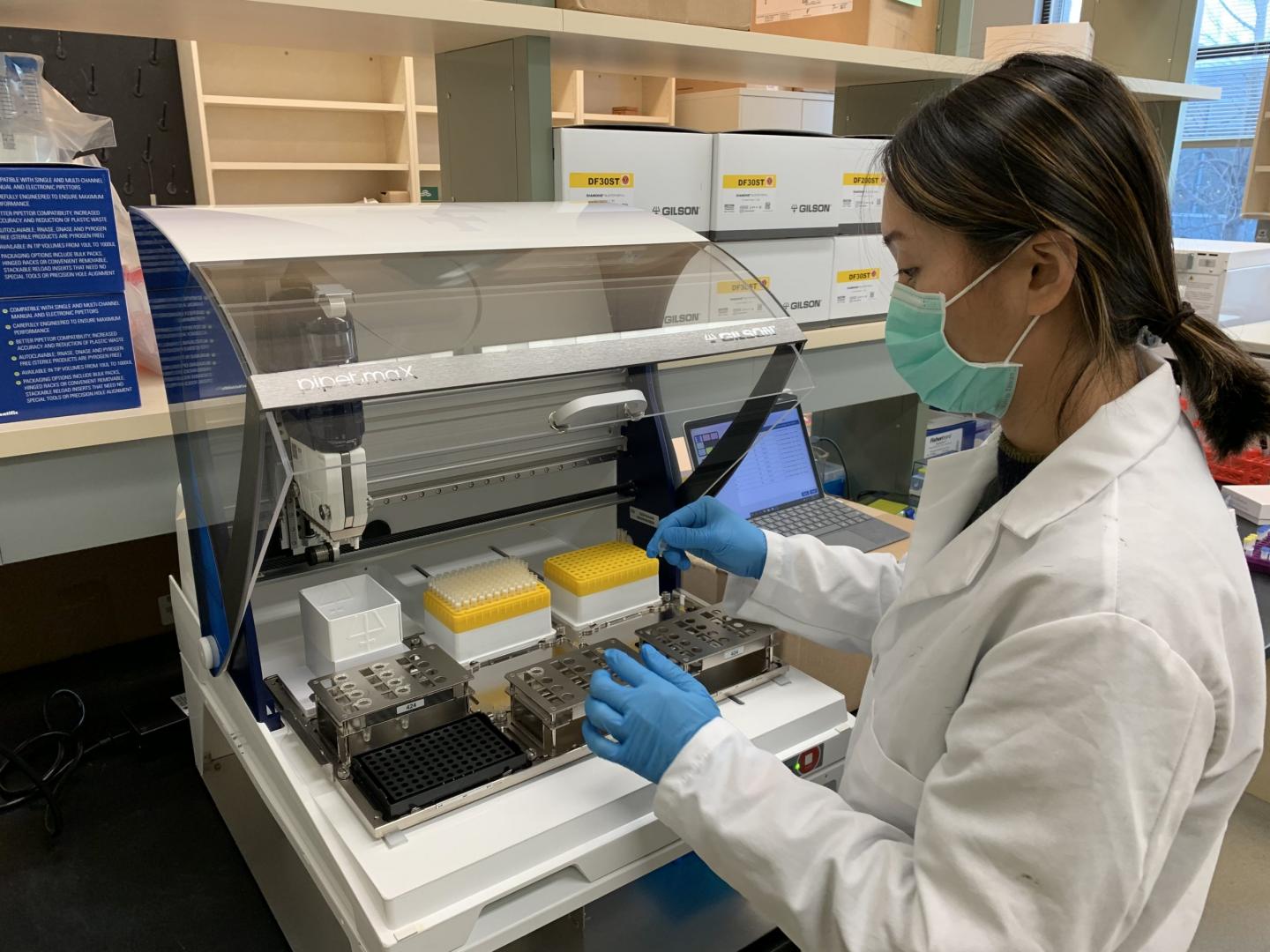
Credit: University of Missouri
Everyone poops, and now scientists are using this bodily function to develop a detailed analysis of the virus that causes COVID-19, known as SARS-CoV-2.
After cases of COVID-19 began to appear, scientists started exploring whether SARS-CoV-2 could be detected in wastewater by measuring for the level of genetic material, or RNA, present from the virus. Since then, scientists have proven this method can be a reliable population-level predictor of the trends of COVID-19 cases in a community, since virus particles can show up in wastewater days before symptoms appear in people.
Now, using a 2-year, $4 million grant from the National Institutes of Health, scientists at the University of Missouri are collaborating with the Missouri Department of Health and Senior Services, or DHSS, to figure out how differing levels of SARS-CoV-2 can appear in a community’s wastewater. Marc Johnson, a professor in the Department of Molecular Microbiology and Immunology and an investigator in the Christopher S. Bond Life Sciences Center, said the research will focus on two main areas:
- Determining a range of the amount of RNA from SARS-CoV-2 that an individual person can contribute to the level found in a community’s wastewater.
- What types of environmental factors contribute to the detection of SARS-CoV-2 in wastewater, such as situations where little or no genetic material is present despite known clinical outbreaks.
“In addition to measuring for the presence of the virus, we will now be able to start making sense of the numbers and expand the types of questions we can ask about the results,” Johnson said. “I really think this type of testing will continue long after the pandemic, and I believe studies like this will be able to ‘flush’ out how the virus works by figuring out what we can do with it and identify our limitations.”
With the recent rise of COVID-19 variants across the globe, or mutations of the original virus, Johnson said this analysis will also be able to help determine the presence of any COVID-19 variants.
“Once we convert the RNA to DNA, and then amplify the sequence to see where all of the major mutations are, we perform what we call ‘deep sequencing’ to figure out everything that is in there,” Johnson said. “We know the virus can evolve around our immune response, so I’m sure we are going to see more variants appear than what is currently out there now.”
The total amount of the grant award is being shared with DHSS. The grant is a part of the National Institutes of Health’s RADx Radical program, developed to combat the current COVID-19 pandemic and address future outbreaks by supporting 49 research projects and grant supplements at 43 institutions across the U.S., including this project with DHSS and the University of Missouri.
In 2020, MU scientists Johnson and Chung-Ho Lin, a research associate professor and lead scientist in the bioremediation program at the MU Center for Agroforestry in the College of Agriculture, Food and Natural Resources, began working with DHSS and the Missouri Department of Natural Resources to provide wastewater testing and analysis from more than 50 sites across Missouri as part of the Sewershed Surveillance Project.
“Wastewater detection of COVID-19” is funded by the National Institutes of Health (1U01DA053893-01).
###
Media Contact
Eric Stann
[email protected]
Original Source
https:/