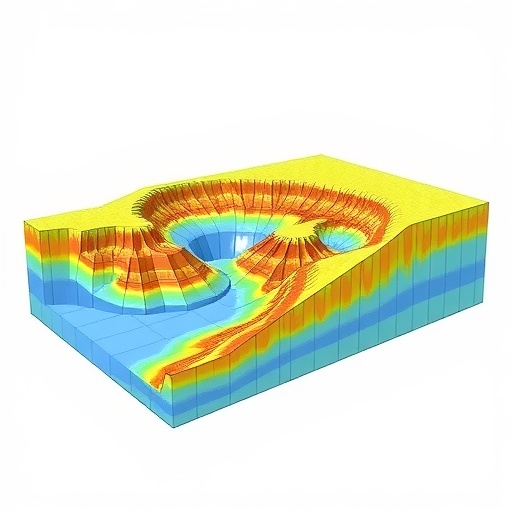
In the pursuit of enhancing hydrocarbon reservoir characterization, an innovative study has emerged focusing on the precise estimation of water saturation within the Mishrif formation—an essential factor in optimizing hydrocarbon recovery. This groundbreaking research delves into a comparative analysis of multiple water saturation models, benchmarked rigorously against Dean–Stark data, a classical laboratory technique for quantifying fluid saturations in core samples. The study’s comprehensive approach not only evaluates model accuracies but also explores the underlying complexities affecting water saturation prediction in carbonate reservoirs, yielding transformative insights for the oil and gas industry.
Water saturation—the measure of the volume fraction of water present in the pore spaces of reservoir rock—is critical in estimating producible hydrocarbons. In carbonate formations like the Mishrif, which are known for their heterogeneous pore structures and varying wettability, accurately determining water saturation remains an enduring challenge. Traditional models often rely on assumptions that inadequately address these complexities, leading to discrepancies in saturation estimates, ultimately impacting reservoir management decisions. The necessity for precise water saturation models is accentuated by the economic stakes involved in reservoir development and production strategies.
The Mishrif formation, a prolific carbonatic reservoir in the Middle East, serves as an ideal case study for evaluating the robustness of water saturation models. Comprising diverse lithofacies ranging from grainstones to packstones, the formation exhibits significant petrophysical variability. This heterogeneity, coupled with complex pore systems, influences fluid distribution patterns and complicates saturation determination. Researchers have leveraged core-based laboratory measurements, specifically Dean–Stark extraction, which provides a direct assessment of fluid saturations, offering an invaluable benchmark for validating predictive models.
Dean–Stark analysis stands out due to its reliability in measuring water volumes extracted from core plugs by solvent extraction methods, facilitating an empirical baseline against which theoretical saturation models can be tested. Despite its invasive nature and limited applicability in field scenarios, Dean–Stark data remains the gold standard within controlled laboratory environments. This study employs a carefully curated dataset obtained through this technique to scrutinize the precision and limitations of established water saturation models.
Among the evaluated models are Archie’s equation, the Indonesian model, and the Waxman-Smits approach, each incorporating distinct assumptions about rock electrical properties, clay content, and fluid interactions. Archie’s model, a foundational petrophysical equation, traditionally assumes clean, water-wet formations devoid of clay minerals. The Indonesian model introduces clay correction parameters to accommodate shaly sands, while the Waxman-Smits approach addresses surface conductivity effects arising from clay-bound water. By juxtaposing model predictions with empirical Dean–Stark measurements, discrepancies attributable to geological complexities are critically examined.
Results illuminate that no single model uniformly excels across the diverse lithologies in the Mishrif formation. Archie’s equation tends to underestimate water saturation in clay-rich zones due to its idealized assumptions, whereas the Indonesian and Waxman-Smits models demonstrate improved accuracy by accounting for clay effects and surface conductivity, respectively. Nonetheless, deviations persist, underscoring the inherent challenges in modeling heterogeneous carbonate systems where pore connectivity and wettability variations dominate fluid distribution.
Crucially, the study emphasizes the imperative of integrating petrophysical data with core sample analyses to refine model parameters. This hybrid approach facilitates adjustments tailored to specific reservoir characteristics, transcending generic model applications. Sensitivity analyses reveal that incorporating pore size distribution and wettability metrics can significantly enhance saturation predictions, advocating for the adoption of more sophisticated petrophysical frameworks that transcend conventional empirical models.
The implications of these findings extend beyond academic inquiry, directly influencing field-scale reservoir development plans. Accurate water saturation profiles inform reserve estimations, water injection strategies, and enhanced oil recovery (EOR) methods. Misestimations can lead to suboptimal drilling targets, inefficient fluid allocation, and ultimately diminished recovery factors. Therefore, this research provides both a cautionary tale and a pathway forward for reservoir engineers seeking to harness precision petrophysics for economic gain.
Furthermore, the introduction of machine learning techniques integrated with petrophysical modeling is highlighted as a promising frontier. By calibrating models with a combination of empirical lab data and well log measurements, machine learning algorithms can adaptively predict saturation values across heterogeneous formations. This multidisciplinary fusion holds the potential to overcome the limitations of classical models, providing dynamic, real-time saturation estimations during reservoir appraisal and production phases.
The study also discusses the inherent limitations posed by scale effects. While core-based Dean–Stark measurements offer high-resolution saturation data, translating these findings to the field scale entails uncertainties due to spatial heterogeneity and geophysical sampling constraints. Addressing these scale disparities requires sophisticated upscaling methodologies and robust statistical treatments to reliably infer reservoir-wide saturation distributions.
In its comprehensive scope, the research articulates the critical need for continuous refinement and validation of water saturation models, especially for carbonate reservoirs characterized by complex diagenetic histories and variable pore geometries. The Mishrif formation serves as a compelling example of the intricate interplay between geology, petrophysics, and fluid dynamics that challenges traditional modeling paradigms, thereby spurring innovation in reservoir characterization techniques.
Beyond reservoir evaluation, the insights gained from this benchmarking study contribute to the broader understanding of fluid-rock interactions in porous media, with potential applications in groundwater hydrology, carbon sequestration projects, and enhanced geothermal systems. Accurately characterizing water saturation is foundational across these disciplines, reinforcing the wider scientific and engineering relevance of the research.
Ultimately, this investigation underscores the synergy between experimental rigor and model development, advocating for an iterative feedback loop wherein laboratory data continuously inform and improve predictive tools. The deployment of such integrative methodologies advances the frontiers of subsurface characterization, empowering more reliable and efficient resource extraction in increasingly complex geological settings.
The profound impact of this research resonates across academia and industry alike, illustrating how meticulous benchmarking exercises can drive methodological evolution and technological innovation. As energy demands intensify and reservoirs become more challenging to exploit, studies like this equip geoscientists and engineers with the nuanced understanding necessary to navigate the complexities of subsurface fluid distributions.
Looking ahead, the continued integration of empirical data, advanced modeling techniques, and computational intelligence heralds a transformative era in petrophysical analysis. The tailored calibration of water saturation models will enable more accurate predictions, inform better reservoir management decisions, and ultimately contribute to sustainable and responsible exploitation of vital hydrocarbon resources globally.
This seminal work heightens awareness of the multifaceted challenges inherent in water saturation estimation and paves the way for next-generation tools that marry empirical evidence with sophisticated theoretical frameworks. It reinforces the indispensable role of meticulous experimental data, such as Dean–Stark measurements, in anchoring model accuracy amidst geological complexity.
In sum, the benchmark analysis of water saturation models against Dean–Stark data within the Mishrif formation emerges as a landmark contribution, spotlighting both the achievements and ongoing challenges in petrophysical modeling. Its detailed findings, rich methodological approach, and forward-looking perspectives chart a promising course for the continued evolution of reservoir characterization science.
Subject of Research: Water saturation modeling and validation in carbonate reservoirs, specifically the Mishrif formation, using empirical Dean–Stark data.
Article Title: Benchmarking water saturation models for the Mishrif formation using Dean–Stark data.
Article References:
Alzamili, R.K., Mahdavi Basir, H., Kadkhodaie, A. et al. Benchmarking water saturation models for the Mishrif formation using Dean–Stark data. Sci Rep (2026). https://doi.org/10.1038/s41598-026-55096-6
Image Credits: AI Generated
Tags: carbonate reservoir characterization challengescarbonate reservoir water saturation modelscomparative analysis of saturation modelsDean–Stark water saturation measurementfluid saturation quantification techniquesheterogeneous pore structure effectshydrocarbon recovery optimizationMiddle East carbonate reservoirsMishrif formation water saturationreservoir management and water saturationwater saturation prediction accuracywettability impact on saturation