Honeybees do more than make honey. As pollinators, they underpin agricultural and natural ecosystems, and their products carry nutritional, functional and economic weight across Europe. Yet the colonies and the sector that depends on them face a tangle of interconnected pressures, from environmental contamination and agricultural intensification to pests, diseases, climate-related stress, honey adulteration, market instability and uneven regulatory implementation across countries.
A European research network has been built specifically to confront that tangle. The COST Action CA22105, known as BeSafeBeeHoney — short for BEekeeping products valorization and biomonitoring for the SAFEty of BEEs and HONEY — was established to strengthen interdisciplinary and international cooperation in response to these challenges. The Action runs from September 2023 to September 2027 and connects researchers with beekeepers, veterinarians, food-sector professionals, policymakers, industry representatives and other stakeholders.
Its activities are organized across six complementary areas. These cover the nutritional and medicinal properties, quality and authenticity of honey and other bee products; environmental biomonitoring of abiotic and anthropogenic stressors; diseases and biotic threats affecting honeybee colonies; interactions between pollination, agriculture and colony losses; European policies, safety practices and honey-market analysis; and communication, dissemination and stakeholder engagement.
Within that framework, the 3rd International BeSafeBeeHoney Conference, themed Building a Safe European Value Chain for Beekeeping Products, was held from 6 to 8 May 2026 at the Agricultural University of Tirana in Albania. The hybrid event gathered more than 69 participants in person, with substantial online audiences joining remotely.
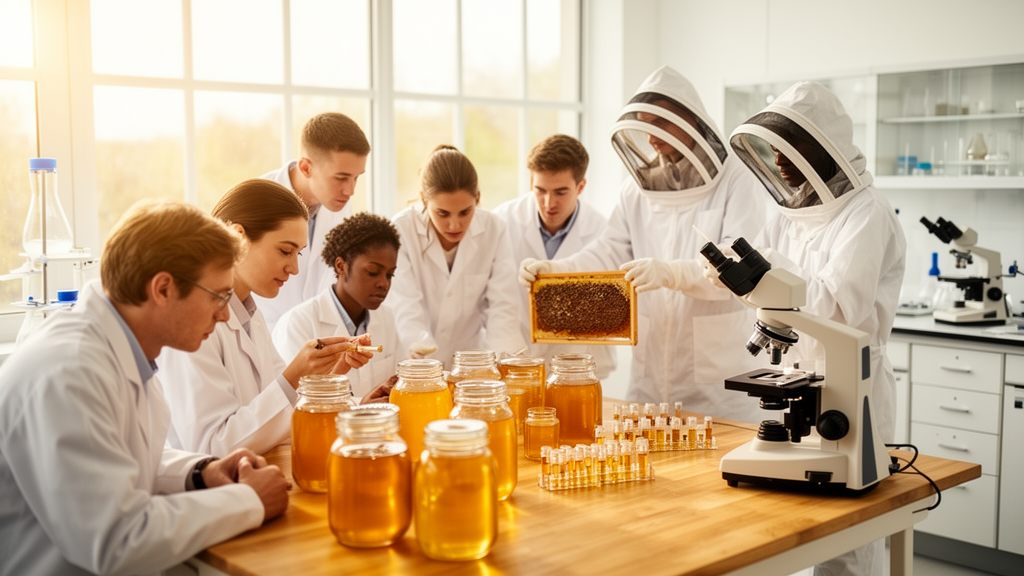
The programme was designed to bridge laboratory science and field practice. Scientific sessions ran alongside keynote lectures, poster presentations, a multi-actor round table, Working Group meetings and an apiary visit. According to the conference organizers, the event linked scientific evidence with professional practice and policy dialogue, demonstrating the role of COST networks in overcoming disciplinary and geographical fragmentation, building research capacity, supporting young researchers and widening countries, and translating knowledge into safer, more transparent and sustainable beekeeping value chains.
The abstracts from the meeting have now been published in BMC Proceedings, documenting the breadth of work presented under the BeSafeBeeHoney umbrella. The published collection reflects contributions from institutions across Europe, including the National Institute for Agrarian and Veterinary Research in Portugal, the Croatian Veterinary Institute, the University of Coimbra, the Institute of Meat Hygiene and Technology in Serbia, the University of Santiago de Compostela in Spain, the Institute of Food Safety, Animal Health and Environment BIOR in Latvia, the University of Zagreb, the Technical University of Munich and the Agricultural University of Tirana.
The breadth of the author list itself illustrates the network’s premise: honey safety cannot be assessed by any single discipline. Chemical analysts who screen hive products for contaminants, veterinarians who manage colony disease, food-safety inspectors who police authenticity, and beekeepers who face market pressures all occupy positions along the same value chain, and the conference format deliberately placed them in the same rooms, both physical and virtual.
The BeSafeBeeHoney Action remains scheduled to run until September 2027, with the Tirana meeting marking its third international conference. The organizers frame the continuing work as an effort to move from fragmented national efforts toward a coordinated European approach to beekeeping products, in which monitoring data, safety practices and market analysis feed jointly into policy.
For readers following pollinator and food-authenticity research, the published abstracts offer a snapshot of where European beekeeping science currently stands — and of the range of stressors, from contaminants to adulteration, that the sector is attempting to manage through cross-border cooperation.
Subject of Research: A European COST Action network on bee health, honey safety and beekeeping product value chains held its third international conference in Albania.
Article Title: Abstracts from the 3rd International BeSafeBeeHoney Conference – BeeForward: building a safe European value chain in beekeeping products
Article References: Abstracts from the 3rd International BeSafeBeeHoney Conference – BeeForward: building a safe European value chain in beekeeping products. (2026). BMC Proceedings, 20(39), 41. https://doi.org/10.1186/s12919-026-00404-1 (Author names are not included in the publisher’s citation export.)
Image Credits: AI Generated
DOI: 10.1186/s12919-026-00404-1
Keywords: honeybees, BeSafeBeeHoney, COST Action, beekeeping, honey authenticity, pollinators, food safety, environmental biomonitoring, colony health, BMC Proceedings, conference abstracts, European value chain
News Source: Drew Townsend. (October 28, 2026). European Beekeeping Network Gathers Researchers to Tackle Honey Safety and Bee Health. Scienmag.