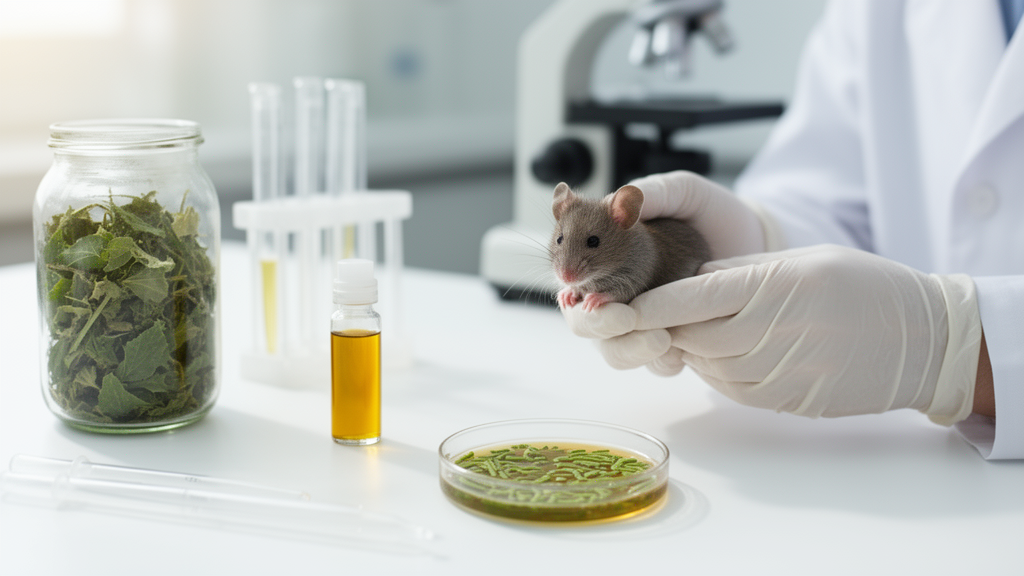
A flavonoid-rich extract of Eucommia ulmoides Oliv. leaves, a plant long used in Chinese medicine, protected mice from acetaminophen-induced acute liver injury by reshaping the gut microbiota and correcting microbe-driven bile acid metabolism, according to a study published in the journal Chinese Medicine.
Acetaminophen, known as paracetamol outside North America, is one of the most widely used antipyretic and analgesic drugs. At therapeutic doses of 1 to 4 grams per day it is cleared mainly by sulfation and glucuronidation, but in overdose the cytochrome P450 enzymes of the liver convert it into N-acetyl-p-benzoquinone imine, or NAPQI, a reactive metabolite that depletes hepatic glutathione, drives oxidative stress, spurs production of pro-inflammatory cytokines such as TNF-α, IL-6 and IL-1β, and ultimately kills hepatocytes. The authors note that acetaminophen-induced liver injury accounts for 46 percent of acute liver failure patients in the United States, more than four times the incidence attributed to other specific drugs, making new protective strategies a pressing clinical need.
The experimental design was straightforward but layered. Male C57BL/6J mice, six to eight weeks old, received oral doses of the leaf extract at 25, 50 or 100 milligrams per kilogram per day for 14 days, alongside control groups given distilled water and a positive-control group given N-acetylcysteine, the standard clinical antidote. On day 15, after a 12-hour fast, the animals received an intraperitoneal injection of 400 milligrams per kilogram acetaminophen and were euthanized 12 hours later. Serum, liver, ileal tissue and cecal contents were collected for biochemical assays, histopathology, immunostaining, sequencing and metabolomics. Most detailed analyses used the high dose of 100 milligrams per kilogram.
The protective signal was robust. Compared with injured mice given only acetaminophen, extract-treated animals showed dose-dependent reductions in liver index and in the activities of the transaminases ALT and AST, the classic biochemical markers of hepatocyte damage. Histology confirmed the biochemical picture: the acetaminophen group displayed severe hepatic architecture damage, hepatocyte necrosis and irregular cell arrangement, along with elevated 3-nitrotyrosine immunoreactivity, a marker of nitrosative stress, whereas extract pretreatment visibly improved these changes. The extract also appeared to counteract the loss of F4/80-positive Kupffer cells in the liver, although that effect reached only borderline statistical significance.
Oxidative and inflammatory measures moved in parallel. Acetaminophen sharply raised hepatic malondialdehyde, a lipid peroxidation product, and depressed the antioxidant enzyme glutathione peroxidase; the extract reversed both changes significantly. It also lowered serum TNF-α, IL-1β and IL-6 and hepatic TNF-α and IL-6, along with hepatic CCL4 and CCL2, although several chemokine readouts, including serum CXCL10, CCL4 and CCL2, showed only non-significant downward trends. In the ileum, immunohistochemistry revealed that acetaminophen reduced the tight junction proteins claudin-1, occludin and ZO-1, and the extract significantly restored ZO-1 and occludin, with a non-significant trend for claudin-1, suggesting partial repair of the intestinal barrier.
The microbiota data formed the study’s core. Sequencing of the V3-V4 region of the bacterial 16S rRNA gene from cecal contents showed that acetaminophen shifted the community composition, raising Bacteroidetes and lowering Firmicutes, Cyanobacteria and the Firmicutes-to-Bacteroidetes ratio. Extract treatment reversed these shifts, increasing Firmicutes and the F/B ratio while reducing Verrucomicrobia and enriching Actinobacteria. At the genus level, the extract boosted Oscillibacter, Ruminiclostridium, Lachnospiraceae_UCG-006, Lachnoclostridium, Bacteroides, Parabacteroides, Lactobacillus, Desulfovibrio and the Eubacterium xylanophilum group, six of which had been suppressed by acetaminophen and were restored by the extract, with receiver operating characteristic areas under the curve above 0.75.
Bile acid profiling tied these microbial changes to metabolism. Sixteen bile acids were quantified in cecal contents, and multivariate discrimination placed the extract-treated animals closer to healthy controls than to injured mice. Acetaminophen raised total and unconjugated bile acids and lowered the proportion of secondary bile acids, the microbial products of primary bile acid conversion. The extract restored the secondary-to-primary ratio, increasing deoxycholic acid, nordeoxycholic acid and 7-ketolithocholic acid, and markedly elevated chenodeoxycholic acid, a natural agonist of the farnesoid X receptor. Spearman correlations linked the enriched Firmicutes genera to favorable biochemical indicators, with positive associations to chenodeoxycholic acid, deoxycholic acid and glutathione peroxidase and negative associations to transaminases, malondialdehyde, liver index and inflammatory cytokines.
Two interventional experiments tested causality. When an antibiotic cocktail of metronidazole, vancomycin, neomycin and ampicillin depleted the intestinal flora, the extract’s protective effect largely collapsed: liver index, serum ALT and most cytokine and oxidative markers no longer differed significantly between antibiotic-treated injured mice with and without the extract, and the extract’s regulation of bile acid concentrations was likewise blocked. Conversely, fecal microbiome transplantation from extract-treated donor mice into injured recipients transferred measurable benefit, reducing liver index, serum ALT, IL-1β and CCL2, hepatic malondialdehyde and several chemokines, while preserving the Firmicutes advantage and the bile acid pattern, including higher deoxycholic acid and lower nordeoxycholic acid and taurocholic acid. Antibiotics similarly abolished the benefit of the transplanted microbiota.
Downstream signaling completed the proposed pathway. In the ileum, the extract upregulated FXR protein and FGF15 immunostaining, and ELISA showed elevated FGF15 in serum and liver. In hepatocytes, the FGF15 receptor FGFR4 rose while the bile acid synthesis gene CYP7A1 fell, and the bile salt export pump Bsep increased, consistent with reduced hepatic bile acid production and enhanced efflux. Ileal expression of OST-α/β and the ileal bile acid binding protein also rose, supporting enterohepatic circulation and epithelial defense. These changes were attenuated by antibiotics and reproduced, at least partially, by fecal transplantation, reinforcing the microbiota-dependent interpretation.
The authors are candid about the study’s limits. Bile acid analysis was confined to colonic contents and does not capture systemic bile acid homeostasis governed by hepatic synthesis, biliary secretion and reabsorption; intestinal barrier integrity was assessed indirectly by histology and immunohistochemistry rather than by permeability testing or serum LPS measurement; pathway targets were not fully validated in the transplant recipients; and only selected facets of a multifactorial injury process were examined. They also note that a 14-day pretreatment regimen may be difficult to translate clinically, since drug-induced liver injury is often unpredictable in humans. Even so, the convergence of sequencing, metabolomics, depletion and transplantation data makes a coherent case that this traditional leaf extract acts, at least in mice, by cultivating a gut microbial community that keeps bile acid metabolism, and the FXR-FGF15 signal it feeds, in working order.
Subject of Research: How a Eucommia ulmoides leaf flavonoid extract alleviates acetaminophen-induced acute liver injury in mice through gut microbiota and bile acid metabolism
Article Title: Extract from Eucommia ulmoides Oliv. Leaves alleviates APAP-induced acute liver injury via reshaping gut microbiota and attenuating microbial bile acids metabolism disorder
Article References: He, D., Zhang, H.-C., Shen, B.-B., Zhao, D., Tang, X.-Y., Xie, J., Zhou, R.-R., Zeng, H.-L., & Zhang, S.-H. (2026). Extract from Eucommia ulmoides Oliv. Leaves alleviates APAP-induced acute liver injury via reshaping gut microbiota and attenuating microbial bile acids metabolism disorder. Chinese Medicine, 21(1), Article 228. https://doi.org/10.1186/s13020-026-01496-9
Image Credits: AI Generated
DOI: 10.1186/s13020-026-01496-9
Keywords: Eucommia ulmoides, acetaminophen, acute liver injury, gut microbiota, bile acids, FXR-FGF15 signaling, fecal microbiome transplantation, 16S rRNA sequencing, oxidative stress, intestinal barrier, gut-liver axis, mouse study
News Source: Morgan Morrow. (October 28, 2026). Eucommia Leaf Flavonoids Ease Acetaminophen Liver Injury in Mice via Gut Microbiota. Scienmag.