• HOME
  • NEWS
  • EXPLORE
    • CAREER
      • Companies
      • Jobs
    • EVENTS
    • iGEM
      • News
      • Team
    • PHOTOS
    • VIDEO
    • WIKI
  • BLOG
  • COMMUNITY
    • FACEBOOK
    • INSTAGRAM
    • TWITTER
Monday, June 29, 2026
BIOENGINEER.ORG
No Result
View All Result
  • Login
  • HOME
  • NEWS
  • EXPLORE
    • CAREER
      • Companies
      • Jobs
        • Lecturer
        • PhD Studentship
        • Postdoc
        • Research Assistant
    • EVENTS
    • iGEM
      • News
      • Team
    • PHOTOS
    • VIDEO
    • WIKI
  • BLOG
  • COMMUNITY
    • FACEBOOK
    • INSTAGRAM
    • TWITTER
  • HOME
  • NEWS
  • EXPLORE
    • CAREER
      • Companies
      • Jobs
        • Lecturer
        • PhD Studentship
        • Postdoc
        • Research Assistant
    • EVENTS
    • iGEM
      • News
      • Team
    • PHOTOS
    • VIDEO
    • WIKI
  • BLOG
  • COMMUNITY
    • FACEBOOK
    • INSTAGRAM
    • TWITTER
No Result
View All Result
Bioengineer.org
No Result
View All Result
Home NEWS Science News Biology

EPFL researchers make a key discovery on how alpine streams work

Bioengineer by Bioengineer
March 18, 2019
in Biology
Reading Time: 3 mins read
0
IMAGE
Share on FacebookShare on TwitterShare on LinkedinShare on RedditShare on Telegram

IMAGE

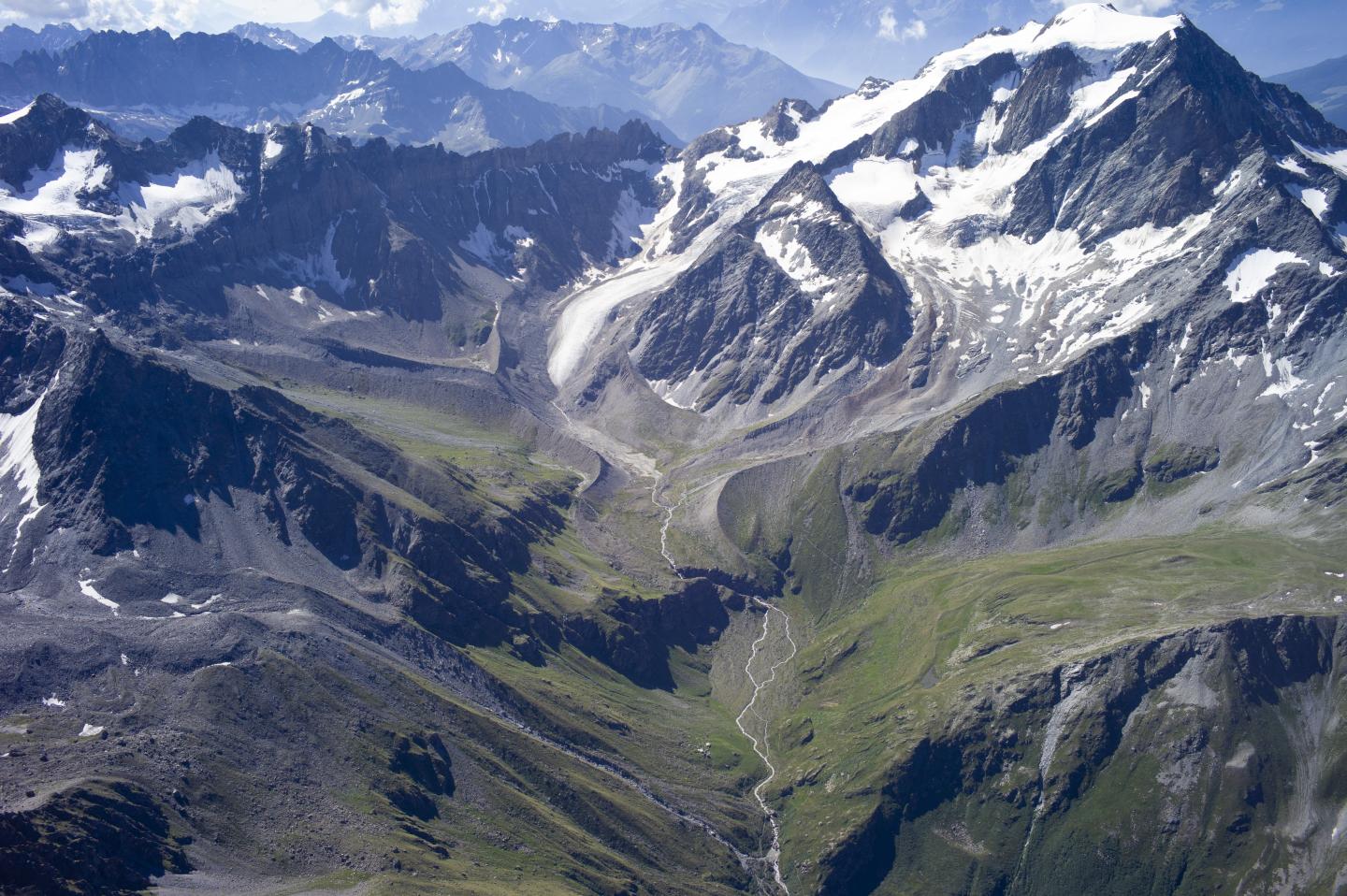
Credit: © SBER / EPFL

An EPFL study has prompted scientists to rethink a standard approach used to calculate the velocity of gas exchange between mountain streams and the atmosphere. Research conducted in streams in Vaud and Valais indicate that equations used to predict gas exchange based on data from lowland streams undershoots the actual gas exchange velocity in mountain streams on average by a factor of 100.

This discovery – appearing in Nature Geoscience – will enable scientists to develop more accurate models of the role that mountain streams play in global biogeochemical fluxes. Considering that more than 30% of the Earth’s surface is covered by mountains, the ramifications of this discovery are considerable.

The study was conducted at EPFL’s Stream Biofilm and Ecosystem Research Laboratory (SBER), within the School of Architecture, Civil and Environmental Engineering (ENAC).

More turbulence

In aquatic ecosystems, such as the world’s oceans, streams and lakes, numerous aquatic organisms, ranging from bacteria to fish, respire oxygen and exhale CO2. These gases must therefore be continually “exchanged” from the atmosphere to the water and vice-versa. Because mountain streams often flow over steep drops and rugged terrain, this creates a lot of turbulence and causes air bubbles to be trapped in the water, appearing white (aka ‘white water’).

These bubbles accelerate the gas exchange. Strikingly, the same mechanism is at work when white-capped waves appear on the surface of rough seas. Until now, scientists have ignored the contribution from air bubbles and have used the same approach to calculate gas exchange velocities in mountain streams than in calm lowland streams.

More precise calculations

It is intuitive that the rugged terrain would influence gas exchange in mountain streams, but no evidence had been collected to test this hypothesis until 2016. That’s when EPFL researchers installed more than 130 environmental sensors in mountain streams in Vaud and Valais to study this physical phenomena and related biogeochemical fluxes. To measure gas exchange velocity as accurately as possible, one of the SBER scientists and first author of the study – Amber Ulseth – along with others, added small amounts of argon as a tracer gas to the streams. Argon is a naturally occurring gas that is harmless to aquatic ecosystems.

Using cutting-edge analytical methods in the laboratory, Amber Ulseth and colleagues were able to quantify loss of argon from the streamwater. Next, they modeled the gas exchange velocity from the downstream loss of the tracer gas in the streamwater. Their results reveal that the gas exchange velocity in mountain streams is on average 100 times higher than predicted from equations developed from similar tracer gas experiments in low-land streams.

Major implications

“Our findings have major implications. They suggest that we have been underestimating the effects of all the small but abundant mountain streams in our biogeochemical models. This opens up a new research avenue,” says Tom Battin, Director of SBER and coauthor of the study. His lab is already looking into extensions of this research, such as developing a new model to predict CO2 emissions from mountain streams worldwide.

###

Media Contact
Mediacom EPFL
[email protected]

Original Source

https://actu.epfl.ch/news/epfl-researchers-make-a-key-discovery-on-how-alpin

Tags: Atmospheric ScienceBiochemistryBiomedical/Environmental/Chemical EngineeringClimate ChangeEcology/EnvironmentMarine/Freshwater BiologyPollution/Remediation
Share12Tweet8Share2ShareShareShare2

Related Posts

Natural Hallucinogens: Evolution’s Ecological Tools, Not Mere Chemical Byproducts

June 25, 2026

This Famous Butterfly Revealed: Three Distinct Species Hidden in One

June 25, 2026

Scientists Attack Soybean Cyst Nematode by Starving Its Food Source

June 25, 2026

Decoding the Secret Code of a Crucial Immune Sensor

June 24, 2026
Please login to join discussion

POPULAR NEWS

  • Saying Goodbye to PGY-6: Pediatric Fellowship Realities

    103 shares
    Share 41 Tweet 26
  • Multi-Hospital Study Reveals Long Covid Burden Is Twice as High as Current Estimates

    92 shares
    Share 36 Tweet 23
  • Detection of EDCs in Breast Milk and Infant Urine Up to Six Months Highlights Early Exposure Risks

    77 shares
    Share 31 Tweet 19
  • New Drug Candidate Developed at McMaster Shows Potential for Treating Brain Cancer

    58 shares
    Share 23 Tweet 15

About

We bring you the latest biotechnology news from best research centers and universities around the world. Check our website.

Follow us

Recent News

Tracking Lanthanide-Labeled Microplastics in Plants

POSTECH Researchers Slash Cost of Reconstituted Cell-Free Systems by 95%

AI and Physics Collaborate to Design Advanced Hydrogen Storage Materials

Subscribe to Blog via Email

Success! An email was just sent to confirm your subscription. Please find the email now and click 'Confirm' to start subscribing.

Join 82 other subscribers
  • Contact Us

Bioengineer.org © Copyright 2023 All Rights Reserved.

Welcome Back!

Login to your account below

Forgotten Password?

Retrieve your password

Please enter your username or email address to reset your password.

Log In
No Result
View All Result
  • Homepages
    • Home Page 1
    • Home Page 2
  • News
  • National
  • Business
  • Health
  • Lifestyle
  • Science

Bioengineer.org © Copyright 2023 All Rights Reserved.