• HOME
  • NEWS
  • EXPLORE
    • CAREER
      • Companies
      • Jobs
    • EVENTS
    • iGEM
      • News
      • Team
    • PHOTOS
    • VIDEO
    • WIKI
  • BLOG
  • COMMUNITY
    • FACEBOOK
    • INSTAGRAM
    • TWITTER
Friday, May 15, 2026
BIOENGINEER.ORG
No Result
View All Result
  • Login
  • HOME
  • NEWS
  • EXPLORE
    • CAREER
      • Companies
      • Jobs
        • Lecturer
        • PhD Studentship
        • Postdoc
        • Research Assistant
    • EVENTS
    • iGEM
      • News
      • Team
    • PHOTOS
    • VIDEO
    • WIKI
  • BLOG
  • COMMUNITY
    • FACEBOOK
    • INSTAGRAM
    • TWITTER
  • HOME
  • NEWS
  • EXPLORE
    • CAREER
      • Companies
      • Jobs
        • Lecturer
        • PhD Studentship
        • Postdoc
        • Research Assistant
    • EVENTS
    • iGEM
      • News
      • Team
    • PHOTOS
    • VIDEO
    • WIKI
  • BLOG
  • COMMUNITY
    • FACEBOOK
    • INSTAGRAM
    • TWITTER
No Result
View All Result
Bioengineer.org
No Result
View All Result
Home NEWS Science News Health

Engineers harvest heart's energy to power life-saving devices

Bioengineer by Bioengineer
February 4, 2019
in Health
Reading Time: 3 mins read
0
IMAGE
Share on FacebookShare on TwitterShare on LinkedinShare on RedditShare on Telegram

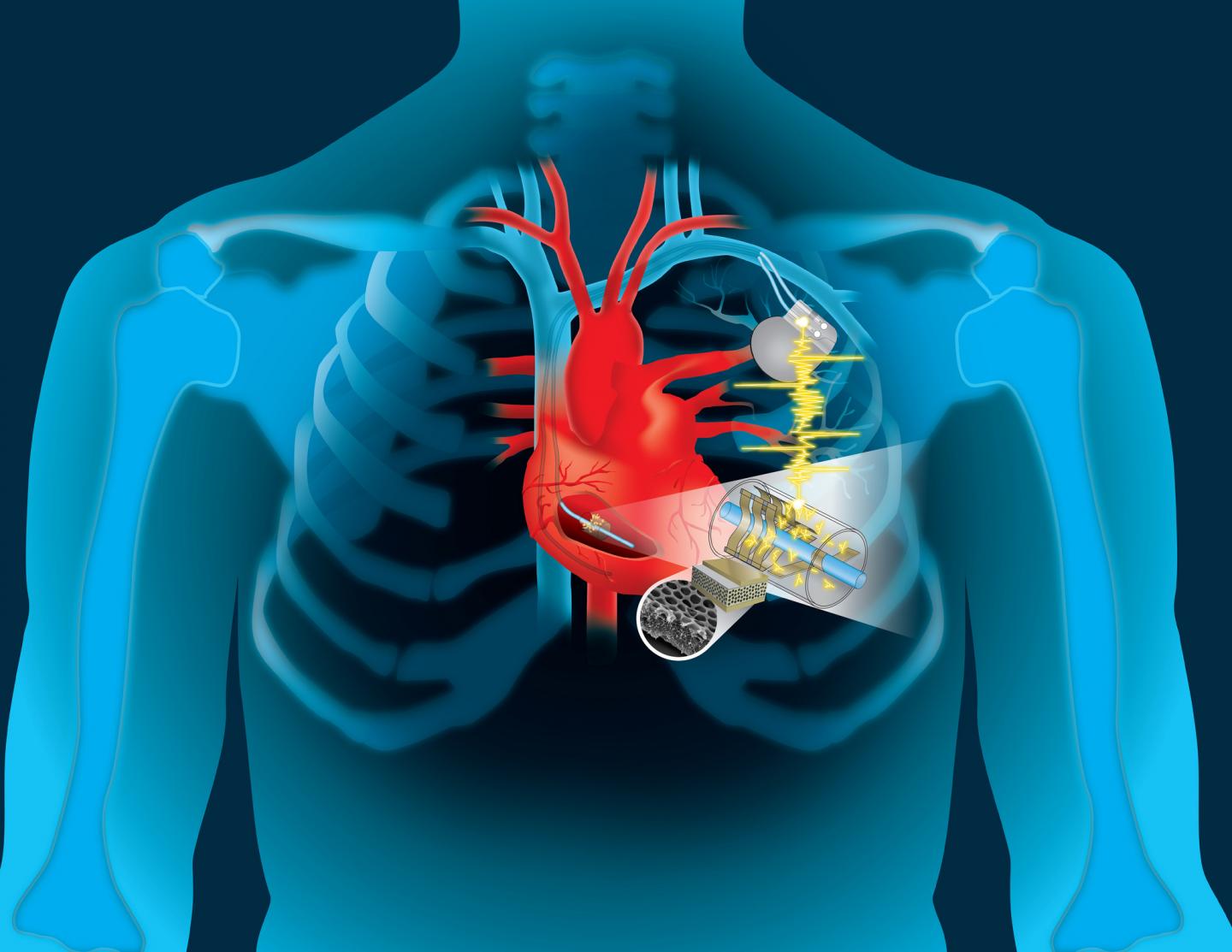
Harnessing the heartbeat to charge batteries
IMAGE

Credit: Patricio R. Sarzosa, Thayer School of Engineering


HANOVER, N.H. – Feb. 4, 2019 – The heart’s motion is so powerful that it can recharge devices that save our lives, according to new research from Dartmouth College.

Using a dime-sized invention developed by engineers at the Thayer School of Engineering at Dartmouth, the kinetic energy of the heart can be converted into electricity to power a wide-range of implantable devices, according to the study funded by the National Institutes of Health.

Millions of people rely on pacemakers, defibrillators and other live-saving implantable devices powered by batteries that need to be replaced every five to 10 years. Those replacements require surgery which can be costly and create the possibility of complications and infections.

“We’re trying to solve the ultimate problem for any implantable biomedical device,” says Dartmouth engineering professor John X.J. Zhang, a lead researcher on the study his team completed alongside clinicians at the University of Texas in San Antonio. “How do you create an effective energy source so the device will do its job during the entire life span of the patient, without the need for surgery to replace the battery?”

“Of equal importance is that the device not interfere with the body’s function,” adds Dartmouth research associate Lin Dong, first author on the paper. “We knew it had to be biocompatible, lightweight, flexible, and low profile, so it not only fits into the current pacemaker structure but is also scalable for future multi-functionality.”

The team’s work proposes modifying pacemakers to harness the kinetic energy of the lead wire that’s attached to the heart, converting it into electricity to continually charge the batteries. The added material is a type of thin polymer piezoelectric film called “PVDF” and, when designed with porous structures — either an array of small buckle beams or a flexible cantilever — it can convert even small mechanical motion to electricity. An added benefit: the same modules could potentially be used as sensors to enable data collection for real-time monitoring of patients.

The results of the three-year study, completed by Dartmouth’s engineering researchers along with clinicians at UT Health San Antonio, were just published in the cover story for Advanced Materials Technologies.

The two remaining years of NIH funding plus time to finish the pre-clinical process and obtain regulatory approval puts a self-charging pacemaker approximately five years out from commercialization, according to Zhang.

“We’ve completed the first round of animal studies with great results which will be published soon,” says Zhang. “There is already a lot of expressed interest from the major medical technology companies, and Andrew Closson, one of the study’s authors working with Lin Dong and an engineering PhD Innovation Program student at Dartmouth, is learning the business and technology transfer skills to be a cohort in moving forward with the entrepreneurial phase of this effort.”

###

Other key collaborators on the study include Dartmouth engineering professor Zi Chen, an expert on thin structure mechanics, and Dr. Marc Feldman, professor and clinical cardiologist at UT Health San Antonio.

Media Contact
Callaway Zuccarello
[email protected]
314-862-4300

Original Source

https://engineering.dartmouth.edu/news/engineers-harvest-hearts-energy-to-power-life-saving-devices

Related Journal Article

http://dx.doi.org/10.1002/admt.201970002

Tags: Biomedical/Environmental/Chemical EngineeringBiotechnologyCardiologyElectrical Engineering/ElectronicsMedicine/Health
Share12Tweet8Share2ShareShareShare2

Related Posts

Paraprobiotics Mitigate BPA-Induced Damage to Male Fertility Linked to Plastic Exposure — Medicine

Paraprobiotics Mitigate BPA-Induced Damage to Male Fertility Linked to Plastic Exposure

May 15, 2026

Digital Health Fear Patterns in Older Cancer Patients

May 15, 2026

A*STAR Scientists Unveil Novel Technique to Decipher RNA Structure’s Impact on Health and Disease

May 15, 2026

Comprehensive Study Finds No Clear Association Between Common Antidepressant Use During Pregnancy and Autism or ADHD in Children

May 15, 2026
Please login to join discussion

POPULAR NEWS

  • Research Indicates Potential Connection Between Prenatal Medication Exposure and Elevated Autism Risk

    843 shares
    Share 337 Tweet 211
  • New Study Reveals Plants Can Detect the Sound of Rain

    729 shares
    Share 291 Tweet 182
  • Salmonella Haem Blocks Macrophages, Boosts Infection

    62 shares
    Share 25 Tweet 16
  • Breastmilk Balances E. coli and Beneficial Bacteria in Infant Gut Microbiomes

    58 shares
    Share 23 Tweet 15

About

We bring you the latest biotechnology news from best research centers and universities around the world. Check our website.

Follow us

Recent News

Paraprobiotics Mitigate BPA-Induced Damage to Male Fertility Linked to Plastic Exposure

Digital Health Fear Patterns in Older Cancer Patients

A*STAR Scientists Unveil Novel Technique to Decipher RNA Structure’s Impact on Health and Disease

Subscribe to Blog via Email

Enter your email address to subscribe to this blog and receive notifications of new posts by email.

Join 82 other subscribers
  • Contact Us

Bioengineer.org © Copyright 2023 All Rights Reserved.

Welcome Back!

Login to your account below

Forgotten Password?

Retrieve your password

Please enter your username or email address to reset your password.

Log In
No Result
View All Result
  • Homepages
    • Home Page 1
    • Home Page 2
  • News
  • National
  • Business
  • Health
  • Lifestyle
  • Science

Bioengineer.org © Copyright 2023 All Rights Reserved.