• HOME
  • NEWS
  • EXPLORE
    • CAREER
      • Companies
      • Jobs
    • EVENTS
    • iGEM
      • News
      • Team
    • PHOTOS
    • VIDEO
    • WIKI
  • BLOG
  • COMMUNITY
    • FACEBOOK
    • INSTAGRAM
    • TWITTER
Tuesday, November 17, 2026
BIOENGINEER.ORG
No Result
View All Result
  • Login
  • HOME
  • NEWS
  • EXPLORE
    • CAREER
      • Companies
      • Jobs
        • Lecturer
        • PhD Studentship
        • Postdoc
        • Research Assistant
    • EVENTS
    • iGEM
      • News
      • Team
    • PHOTOS
    • VIDEO
    • WIKI
  • BLOG
  • COMMUNITY
    • FACEBOOK
    • INSTAGRAM
    • TWITTER
No Result
View All Result
Bioengineer.org
No Result
View All Result
Home NEWS Science News Biology

Engineered Bacteria Produce L-Threonine From Acetate Using pH-Controlled Cultivation

by
November 6, 2026
in Biology
Reading Time: 2 mins read
0
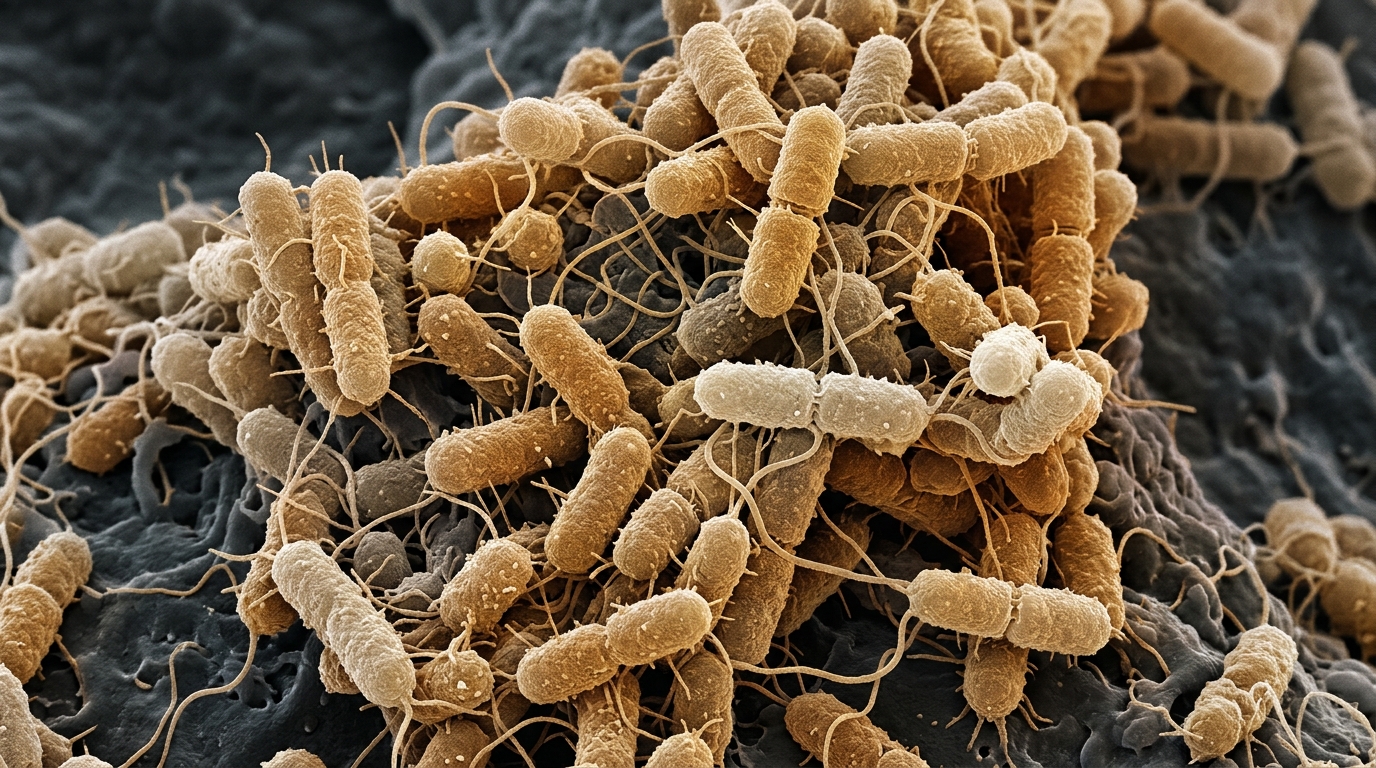
Engineered Bacteria Produce L-Threonine From Acetate Using pH-Controlled Cultivation

Engineered Bacteria Produce L-Threonine From Acetate Using pH-Controlled Cultivation

Share on FacebookShare on TwitterShare on LinkedinShare on RedditShare on Telegram

Researchers have developed a bioproduction process that uses metabolically engineered Corynebacterium glutamicum to synthesize the amino acid L-threonine from acetate as the sole carbon source. Described in Applied Microbiology and Biotechnology, the approach combines rational, genome-based strain engineering with pH-coupled fed-batch cultivation. The work explores acetate as an alternative, non-food feedstock for microbial bioproduction, an application that has remained largely underexplored for amino acid synthesis.

To enable efficient biosynthesis in an acetate minimal medium, the investigators constructed the plasmid-free strain AT-3. This engineered bacterium carries five chromosomal mutations specifically introduced to alleviate feedback inhibition of key metabolic enzymes and redirect carbon flux toward the aspartate pathway.

The team implemented a custom Visual Basic-based feeding script that automatically adjusted the acetic acid feed in direct response to online pH measurements. This pH-controlled feeding strategy improved L-threonine production while maintaining stable cultivation conditions and avoiding feedstocks that compete directly with human food supplies.

The cultivation process demonstrated robust performance when scaled up tenfold, transitioning from 100-milliliter DASbox systems to 1-liter DASGIP bioreactors. Under optimized fed-batch conditions, the engineered strain achieved an L-threonine titer of 10.04 grams per liter and an overall product yield of 0.086 grams per gram of acetate. According to the authors, the findings establish an operational foundation for the further development and refinement of acetate-based amino acid manufacturing processes.

Subject of Research: Microbial production of L-threonine from acetate using engineered Corynebacterium glutamicum

Article Title: L-Threonine production from acetate by metabolically engineered Corynebacterium glutamicum using a pH-controlled fed-batch process

Article References: Broschard, P., Endt, N., Wirtz, A., Glitz, C., Baumgart, M., & Bott, M. (2026). L-Threonine production from acetate by metabolically engineered Corynebacterium glutamicum using a pH-controlled fed-batch process. Applied Microbiology and Biotechnology, 110(1), Article 338. https://doi.org/10.1007/s00253-026-14083-7

Image Credits: AI Generated

DOI: 10.1007/s00253-026-14083-7

Keywords: Corynebacterium glutamicum, L-threonine, acetate, metabolic engineering, fed-batch cultivation, bioreactors, amino acid production, biotechnology, production, metabolically, engineered, Corynebacterium

News Source: Gregory Coleman. (November 6, 2026). Engineered Bacteria Produce L-Threonine From Acetate Using pH-Controlled Cultivation. Scienmag.
Tags: acetateamino acid productionbioreactorsBiotechnologyCorynebacteriumCorynebacterium glutamicumEngineeredfed-batch cultivationL-threonineMetabolic engineeringmetabolicallyproduction
Share12Tweet7Share2ShareShareShare1

Related Posts

Laboratory Evolution Boosts Trehalose Production in Cupriavidus necator via Osmotic Stress Adaptation

Laboratory Evolution Boosts Trehalose Production in Cupriavidus necator via Osmotic Stress Adaptation

November 17, 2026
Inherited Mutations in Manganese Transporters Cause Distinct Metabolic Disorders

Inherited Mutations in Manganese Transporters Cause Distinct Metabolic Disorders

November 17, 2026

CT Findings Prompted Empirical Albendazole Treatment Despite Negative Stool Microscopy in Patient

November 17, 2026

Review Finds African Ethnobiological Knowledge Has Measurable Conservation Value

November 17, 2026

POPULAR NEWS

  • Alloplastic Temporomandibular Joint Replacement Offers Uncertain Benefits After Mandibular Neoplasm Resection

    Alloplastic Temporomandibular Joint Replacement Offers Uncertain Benefits After Mandibular Neoplasm Resection

    29 shares
    Share 12 Tweet 7
  • Serum Mass Spectrometry Predicts Treatment Response in HER2-Positive Breast Cancer

    29 shares
    Share 12 Tweet 7
  • Polypharmacy Linked to Higher Odds of Sarcopenia in Older Adults

    29 shares
    Share 12 Tweet 7
  • Adapted Virtual Presence Tool Proves Feasible in Pilot Manikin Simulation Courses

    29 shares
    Share 12 Tweet 7

About

We bring you the latest biotechnology news from best research centers and universities around the world. Check our website.

Follow us

Recent News

Sexual Dysfunction Signals Early Autonomic Involvement in Rare Hereditary Transthyretin Amyloidosis

Laboratory Evolution Boosts Trehalose Production in Cupriavidus necator via Osmotic Stress Adaptation

Inherited Mutations in Manganese Transporters Cause Distinct Metabolic Disorders

Subscribe to Blog via Email

Enter your email address to subscribe to this blog and receive notifications of new posts by email.

Join 88 other subscribers
  • Contact Us

Bioengineer.org © Copyright 2023 All Rights Reserved.

Welcome Back!

Login to your account below

Forgotten Password?

Retrieve your password

Please enter your username or email address to reset your password.

Log In
No Result
View All Result
  • Homepages
    • Home Page 1
    • Home Page 2
  • News
  • National
  • Business
  • Health
  • Lifestyle
  • Science

Bioengineer.org © Copyright 2023 All Rights Reserved.