Human umbilical vein endothelial cells generally exhibited higher hypoxia-associated reporter fluorescence than human microvascular endothelial cells when cultured within three-dimensional gelatin methacryloyl hydrogel constructs, establishing an observational pattern that directly contrasts with previously reported fluorescence behaviors in conventional two-dimensional cultures. The laboratory study, conducted by researchers affiliated with Leibniz University Hannover, Medizinische Hochschule Hannover, and Freie Universität Berlin, examined oxygen-dependent signaling dynamics in primary human vascular cells and stem cells encapsulated inside engineered hydrogel environments. By tracking hypoxia-responsive fluorescence in three dimensions, the investigation highlights how experimental geometry and microenvironmental context fundamentally alter cellular signaling profiles compared to standard planar culture systems.
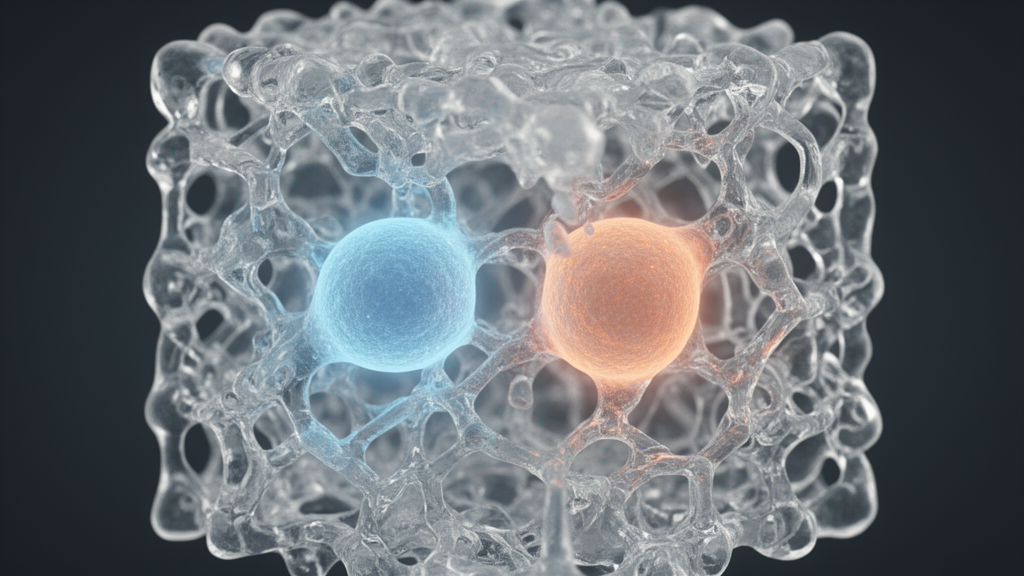
To establish the physical three-dimensional culture environment, the authors synthesized gelatin methacryloyl, commonly designated as GelMA, with a low degree of functionalization measured specifically at 25 percent degree of functionalization. The synthesized material was prepared as a 7 percent weight-per-volume hydrogel formulation for the encapsulation of the cellular specimens. This hydrogel platform provided a physiologically relevant three-dimensional structural setting designed to facilitate the systematic investigation of cellular behavior under controlled microenvironmental parameters, specifically allowing the team to examine cellular adaptations to potential physical limitations in oxygen availability throughout the hydrogel matrix.
The research team evaluated three human cell types to analyze vascular and stromal responses: human umbilical vein endothelial cells, human microvascular endothelial cells, and human adipose-derived mesenchymal stem cells. To dynamically monitor hypoxia-responsive signaling pathways over time, selected cell populations underwent genetic transduction with a specialized hypoxia-responsive reporter sequence known as HRE-dUnaG. This molecular reporter configuration enabled time-resolved visualization and quantification of reporter fluorescence, permitting the researchers to follow intracellular hypoxia signaling directly within both single-cell-type monoculture setups and complex co-culture systems encapsulated within the GelMA biomaterial.
The experimental protocols evaluated both monoculture configurations and co-culture assemblies prepared at defined cell seeding densities over a culture duration of seven days under standard culture conditions. Maintaining the encapsulated cells across this seven-day operational timeframe enabled the investigators to capture progressive, time-resolved shifts in fluorescent reporter output rather than relying on static single-timepoint observations. The defined cell densities permitted targeted comparisons between different initial cell quantities while keeping the underlying GelMA hydrogel chemistry, crosslinking parameters, and surrounding ambient culture conditions consistent throughout the multi-day trial.
Because mixed co-cultures contain multiple interacting cell types that could confound optical signals, the research team designed and applied a targeted reporter swap strategy to obtain cell-specific readouts. In the initial configuration of this approach, one designated cell population was genetically modified with the HRE-dUnaG reporter construct while its corresponding cellular interaction partner was maintained in an unmodified state. The investigators subsequently reversed this modification arrangement, transducing the second partner while leaving the first unmodified, which allowed them to record and analyze reciprocal hypoxia reporter responses originating from each distinct cell type during physical co-cultivation.
The collected experimental readouts demonstrated that co-culture with human adipose-derived mesenchymal stem cells directly altered endothelial reporter fluorescence profiles in the three-dimensional matrices. Reciprocally, reporter-expressing adipose-derived mesenchymal stem cells displayed markedly different fluorescence dynamics depending on whether their co-culture interaction partner consisted of microvascular or umbilical vein endothelial cells. Furthermore, elevated cell densities were generally associated with increased reporter fluorescence in endothelial monocultures, although the researchers observed that specific density-dependent trends and temporal fluorescence trajectories varied across the different tested culture configurations and cellular pairings.
The comparative measurements revealed that human umbilical vein endothelial cells carrying the HRE-dUnaG reporter generally showed higher hypoxia-associated fluorescence than their microvascular counterparts under the tested three-dimensional conditions, demonstrating that endothelial subtypes respond differently to oxygen constraints within hydrogels. These findings demonstrate that cell density, culture duration, and co-culture composition collectively modulate HRE-dUnaG reporter signals inside GelMA hydrogels. The authors concluded that the divergence between three-dimensional constructs and prior two-dimensional observations underscores the essential role of the experimental microenvironment when interpreting hypoxia pathways, establishing a practical framework for future investigations of endothelial-stromal interactions in tissue engineering.
Subject of Research: Hypoxia-associated reporter responses of endothelial subtypes and mesenchymal stem cells in three-dimensional hydrogels
Article Title: Oxygen-dependent responses of endothelial subtypes and adipose-derived mesenchymal stem cell in 3D hydrogels
Article References: Harzi, M., Meyer, N., Schlauch, D., Pepelanova, I., Weinhart, M., & Lavrentieva, A. (2026). Oxygen-dependent responses of endothelial subtypes and adipose-derived mesenchymal stem cell in 3D hydrogels. Frontiers in Bioengineering and Biotechnology, 14, Article 1898254. https://doi.org/10.3389/fbioe.2026.1898254
Image Credits: AI Generated
DOI: 10.3389/fbioe.2026.1898254
Keywords: hydrogel systems, gelatin methacryloyl, GelMA, hypoxia signaling, HRE-dUnaG, reporter fluorescence, endothelial cells, huVECs, huMECs, hAD-MSCs, mesenchymal stem cells, co-culture, monoculture, cell density, tissue engineering, biofabrication
News Source: Gregory Coleman. (November 17, 2026). Endothelial Subtypes Show Contrasting Hypoxia Signals in Engineered 3D Hydrogels. Scienmag.