• HOME
  • NEWS
  • EXPLORE
    • CAREER
      • Companies
      • Jobs
    • EVENTS
    • iGEM
      • News
      • Team
    • PHOTOS
    • VIDEO
    • WIKI
  • BLOG
  • COMMUNITY
    • FACEBOOK
    • INSTAGRAM
    • TWITTER
Wednesday, November 18, 2026
BIOENGINEER.ORG
No Result
View All Result
  • Login
  • HOME
  • NEWS
  • EXPLORE
    • CAREER
      • Companies
      • Jobs
        • Lecturer
        • PhD Studentship
        • Postdoc
        • Research Assistant
    • EVENTS
    • iGEM
      • News
      • Team
    • PHOTOS
    • VIDEO
    • WIKI
  • BLOG
  • COMMUNITY
    • FACEBOOK
    • INSTAGRAM
    • TWITTER
No Result
View All Result
Bioengineer.org
No Result
View All Result
Home NEWS Science News Biology

Beam-Membrane Vocal Fold Model Captures Laryngeal Posturing and Phonation Dynamics

by
November 18, 2026
in Biology
Reading Time: 2 mins read
0
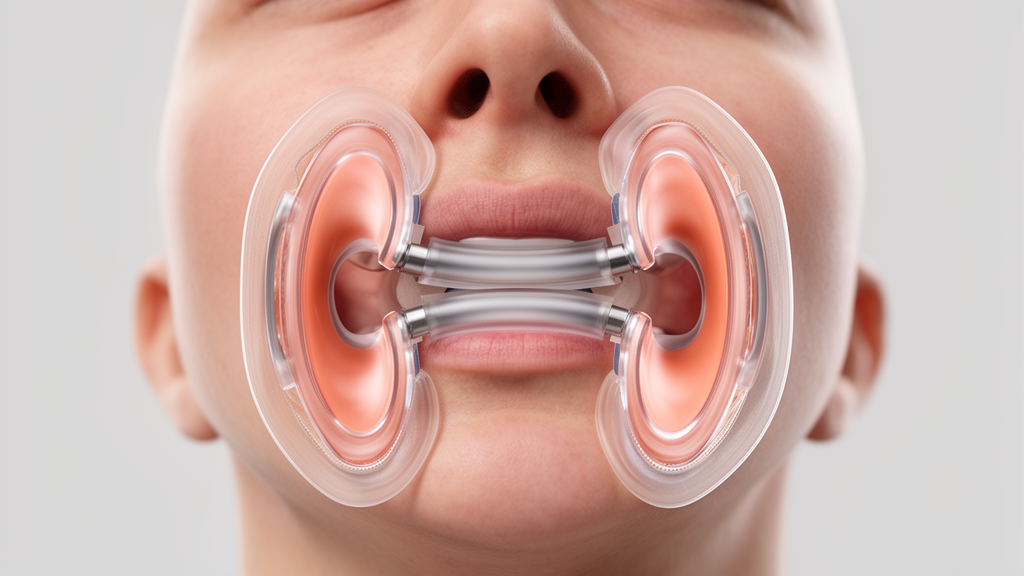
Beam-Membrane Vocal Fold Model Captures Laryngeal Posturing and Phonation Dynamics

Beam-Membrane Vocal Fold Model Captures Laryngeal Posturing and Phonation Dynamics

Share on FacebookShare on TwitterShare on LinkedinShare on RedditShare on Telegram

Researchers have developed a computationally inexpensive biomechanical vocal fold model that incorporates laryngeal posturing and glottal conformation. Created by Mohamed A. Serry, Matías Zañartu, and Sean D. Peterson, the numerical framework addresses how vocal fold postures generated by laryngeal muscle activation influence voice production dynamics.

Clinically, abnormal vocal fold configurations frequently correlate with inefficient phonation and distinct voice disorders. While diverse glottal closure patterns have been observed in clinical settings, the biomechanical mechanisms governing their dynamic behavior and resulting phonatory characteristics remain incompletely understood.

Existing numerical models that incorporate the effects of intrinsic musculature on posturing and glottal conformation are computationally expensive, which limits their suitability for large-scale parametric investigations. To address these demands, the introduced vocal fold model treats the body layer as a composite beam and the cover layer as a coupled membrane.

Under this modeling framework, intrinsic laryngeal muscle activation not only positions the arytenoid cartilages and cricothyroid joint, but also introduces moments at the structural boundaries that directly influence glottal conformation. The model produces phonatory characteristics that remain qualitatively consistent with behaviors documented in high-fidelity finite-element simulations and clinical studies.

These qualitative agreements support the predictive capability of the approach while offering a substantial computational advantage over complex finite-element formulations. Furthermore, the framework provides biomechanical insights into how incomplete glottal closure influences phonation dynamics, serving as a computationally tractable tool for investigating mechanisms that underlie certain voice disorders.

Subject of Research: Biomechanical modeling of vocal fold posturing and glottal conformation during phonation

Article Title: A beam–membrane biomechanical vocal fold model incorporating posturing and glottal conformation

Article References: Serry, M. A., Zañartu, M., & Peterson, S. D. (2026). A beam–membrane biomechanical vocal fold model incorporating posturing and glottal conformation. PLOS Computational Biology, 22(11), e1014936. https://doi.org/10.1371/journal.pcbi.1014936

Image Credits: AI Generated

DOI: 10.1371/journal.pcbi.1014936

Keywords: vocal fold biomechanics, glottal conformation, phonation dynamics, laryngeal muscle activation, beam-membrane model, computational biomechanics, arytenoid cartilages, cricothyroid joint, voice disorders, glottal closure patterns, finite-element models, parametric investigations, vocal fold posturing, vocal fold cover, vocal fold body, incomplete glottal closure

News Source: Drew Townsend. (November 18, 2026). Beam-Membrane Vocal Fold Model Captures Laryngeal Posturing and Phonation Dynamics. Scienmag.


Tags: arytenoid cartilagesbeam-membrane modelcomputational biomechanicscricothyroid jointfinite element modelsglottal closure patternsglottal conformationincomplete glottal closurelaryngeal muscle activationparametric investigationsphonation dynamicsvocal fold biomechanicsvocal fold bodyvocal fold covervocal fold posturingvoice disorders
Share12Tweet7Share2ShareShareShare1

Related Posts

Novel Star-Shaped Polymer Adhesive Prevents Leakage in Ex Vivo Intestinal Model

Novel Star-Shaped Polymer Adhesive Prevents Leakage in Ex Vivo Intestinal Model

November 18, 2026
Wheat Pathogen Multidrug Resistance Driven by Transposons and Polygenic Architecture

Wheat Pathogen Multidrug Resistance Driven by Transposons and Polygenic Architecture

November 18, 2026

Statistical Method Detects Conserved RNA Structures Directly From Raw Sequencing Data

November 18, 2026

Helicobacter pylori persistence driven by metabolic adaptation and regulatory integration

November 18, 2026

POPULAR NEWS

  • Spain NTD Drug Study Reveals Severe Territorial Gaps Across Autonomous Communities

    Spain NTD Drug Study Reveals Severe Territorial Gaps Across Autonomous Communities

    29 shares
    Share 12 Tweet 7
  • Guinea Health Study Reveals Severe Workforce Unemployment Despite Rising Professional Training

    29 shares
    Share 12 Tweet 7
  • Rootstock Signaling Networks Dynamically Reprogram Fruit Quality Across Horticultural Crops

    29 shares
    Share 12 Tweet 7
  • Review Uncovers How Group 2 Innate Lymphoid Cells Bridge Neuroimmune Communication

    29 shares
    Share 12 Tweet 7

About

We bring you the latest biotechnology news from best research centers and universities around the world. Check our website.

Follow us

Recent News

Meta-Analysis Identifies Four Causal Risk Factors for Bladder Cancer

Inhibiting Toll-like Receptor 2 Reduces Age-Related Pancreatic Islet Inflammation and Fibrosis

Spain NTD Drug Study Reveals Severe Territorial Gaps Across Autonomous Communities

Subscribe to Blog via Email

Enter your email address to subscribe to this blog and receive notifications of new posts by email.

Join 88 other subscribers
  • Contact Us

Bioengineer.org © Copyright 2023 All Rights Reserved.

Welcome Back!

Login to your account below

Forgotten Password?

Retrieve your password

Please enter your username or email address to reset your password.

Log In
No Result
View All Result
  • Homepages
    • Home Page 1
    • Home Page 2
  • News
  • National
  • Business
  • Health
  • Lifestyle
  • Science

Bioengineer.org © Copyright 2023 All Rights Reserved.