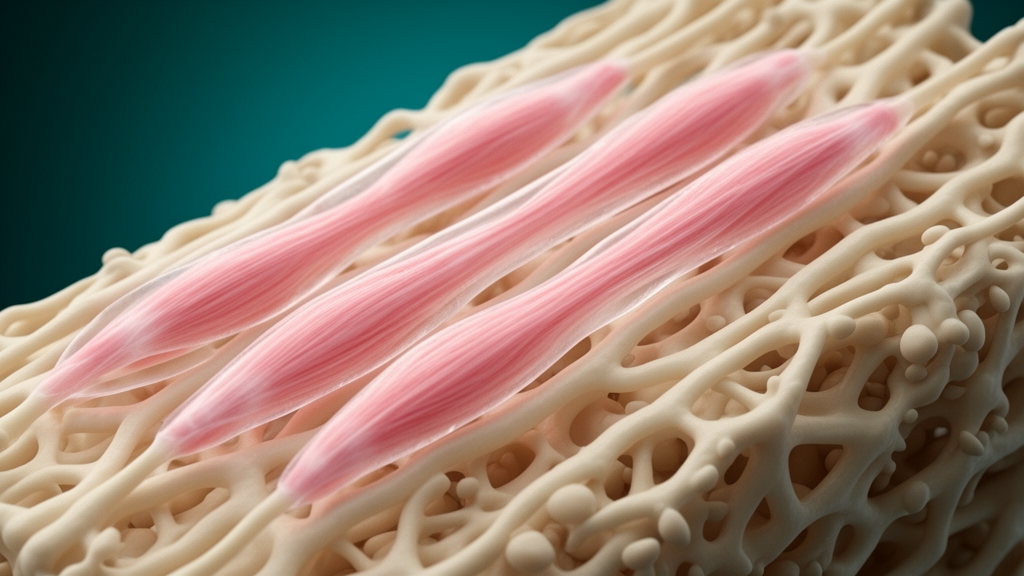
In a notable advance for alternative protein biotechnology, researchers Atsushi Imamura and Kosaku Kurata have shown that edible mushroom fruiting bodies can serve as structural scaffolds to guide the unidirectional alignment of cultured muscle cells using physical processing alone. Conventional animal agriculture consumes extensive feed and water resources while generating greenhouse gas emissions, driving interest in cultured meat grown from animal stem cells. However, replicating the authentic texture and mouthfeel of whole-cut meats such as steak remains a major bioengineering hurdle because native skeletal muscle consists of densely bundled, multinucleated myotubes aligned in a strictly anisotropic orientation. Most cultured meat prototypes remain limited to minced or unstructured paste forms lacking this directional organization. By testing whether the natural hyphal microtopography of common edible fungi can provide contact guidance cues, the study establishes an animal-free, chemical-free scaffold platform capable of inducing aligned cellular structures for cellular agriculture applications.
Developing sustainable alternatives to conventional livestock agriculture has gained urgency as global population expansion accelerates future demands for dietary protein, compounding burdens like deforestation and greenhouse gas emissions. Furthermore, livestock production faces ongoing challenges involving zoonotic diseases, antibiotic-resistant bacteria, and animal welfare issues. Although cultured meat offers a promising technological route to alleviate these pressures, engineering three-dimensional tissues with authentic mouthfeel requires biocompatible scaffolds that guide directional cell growth. Prior tissue engineering studies have tested diverse methods to align myotubes, including applying repetitive electrical stimulation to stacked hydrogel sheets, decellularizing plant tissues, and utilizing three-dimensional bioprinting to assemble muscle, fat, and vascular geometries. Nonetheless, most reported approaches depend on animal-derived hydrogels like collagen, Matrigel, and fibrin, or necessitate extensive chemical processing using surfactants and organic solvents during decellularization. Such reliance presents substantial challenges regarding food safety, consumer acceptance, and sustainability when positioning cultured meat as an alternative to farming.
To circumvent synthetic chemicals and animal-derived components, the authors investigated the fruiting bodies of filamentous fungi as naturally structured culture scaffolds. Edible mushrooms develop an extensive mycelial network of filamentous hyphae that spreads through substrates before aggregating into macroscopic fruiting bodies comprising the stipe and cap. Because fruiting bodies are formed from densely packed, aligned hyphae, they possess inherent anisotropic architectures that can provide physical contact guidance without artificial microfabrication. Furthermore, edible mushrooms consist mainly of polysaccharides and proteins and have been consumed safely for centuries, assuring food compatibility. Drawing on recent regenerative medicine findings showing that fungal mycelium supports cell adhesion and proliferation, the researchers selected three commercial mushroom species: king trumpet mushroom (Pleurotus eryngii), oyster mushroom (Pleurotus ostreatus), and shiitake mushroom (Lentinula edodes). The goal was to establish whether these natural fungal matrices could support muscle differentiation and direct cellular alignment purely through physical cues.
Substrate preparation relied entirely on mechanical cutting and thermal sterilization without any chemical reagents. The central region of each mushroom stipe was cut into 10-millimeter segments, and longitudinal slices with a thickness of 0.4 millimeters were sectioned using a vibratome at approximately two-thirds of the radius from the stipe center. Slices were trimmed to a 10-millimeter width, sealed in sterilization bags on glass slides, autoclaved at 120 degrees Celsius for 20 minutes, and dried overnight at 50 degrees Celsius before storage. Attenuated total reflection Fourier-transform infrared spectroscopy over 399 to 4000 reciprocal centimeters confirmed typical fungal biomacromolecules in all species. Peaks near 3300 reciprocal centimeters corresponded to hydroxyl stretching, while bands between 2930 and 2850 reciprocal centimeters indicated cell-wall fatty acids. Amide I and amide II peaks confirmed proteins and chitin. Crucially, a beta-glucan peak near 878 reciprocal centimeters appeared in Lentinula edodes, whereas mannan peaks near 802 reciprocal centimeters characterized the Pleurotus species.
Surface roughness and structural anisotropy were evaluated on rehydrated fungal substrates using a three-dimensional laser scanning confocal microscope with a 100-times objective lens across four randomly selected measurement regions. Arithmetical mean height (Sa) increased across species, measuring 0.84 plus or minus 0.41 micrometers for Pleurotus eryngii, 1.02 plus or minus 0.16 micrometers for Pleurotus ostreatus, and 1.30 plus or minus 0.52 micrometers for Lentinula edodes. Maximum height (Sz) similarly rose from 7.57 plus or minus 2.74 micrometers to 10.56 plus or minus 1.84 micrometers and 14.61 plus or minus 3.67 micrometers. Conversely, the surface texture anisotropy ratio (Str) decreased from 0.43 plus or minus 0.31 to 0.26 plus or minus 0.09 and 0.15 plus or minus 0.02, demonstrating that Lentinula edodes possessed the strongest surface anisotropy. Roughness mean spacing (Rsm) measured perpendicular to dominant hyphal fibers averaged approximately 10 micrometers across all substrates (9.14, 10.00, and 9.56 micrometers), matching the typical 10 to 100 micrometer diameter of skeletal myotubes.
To evaluate biocompatibility, the researchers assessed the effects of soluble components released from fungal substrates using mouse embryonic mesenchymal stem cells (C3H10T1/2). Cells were seeded in 24-well plates at 10,000 cells per well in standard medium supplemented with 10 percent fetal bovine serum. Fungal substrates were placed in permeable cell culture inserts with 3-micrometer pores at concentrations of 10, 20, 30, and 40 milligrams per milliliter of dry mass. Following 24 hours of co-culture and subsequent medium exchange, cell viability was quantified using a colorimetric tetrazolium-based assay. Across all tested concentrations, fungal substrates produced no detectable cytotoxic effects on co-cultured cells. Although cell proliferation showed a modest concentration-dependent increase across all three species, differences from controls did not reach statistical significance. These observations verified that soluble substances leaching from the autoclaved fungal matrices into the culture medium remained entirely compatible with cell survival, fulfilling an essential safety criterion for edible scaffolding materials.
The investigators also evaluated heat-stable soluble fractions by preparing hot-water extracts from pulverized substrates boiled at 90 degrees Celsius for 60 minutes and filtered through 0.22-micrometer membranes. Under serum-free conditions for 72 hours, control cultures experienced an approximate 40 percent decline in cell numbers relative to the initial seeding baseline. Supplementation with 1 percent volume-by-volume hot-water extract prevented this decline across all species, maintaining cell densities comparable to or above seeding levels, with Pleurotus ostreatus and Lentinula edodes extracts yielding cell numbers more than double control values. However, raising extract concentrations to 10 percent revealed distinct species-dependent effects: growth promotion persisted for Pleurotus eryngii and Pleurotus ostreatus, but a significant decline in cell numbers occurred for Lentinula edodes. The authors noted that high polyphenol concentrations can exert pro-oxidant actions that generate cytotoxic hydrogen peroxide in culture media, underscoring the necessity of controlling soluble compound concentrations in food-derived scaffold systems.
Direct differentiation experiments demonstrated how intrinsic fungal microstructures govern muscle cell alignment. Mesenchymal stem cells were seeded onto fungal slices at 200,000 cells per well and treated with 20 micromolar 5-azacytidine for 72 hours to stimulate myogenic differentiation, followed by 28 days of culture in standard medium. Live-cell calcein-AM fluorescence imaging at 14, 21, and 28 days post-induction confirmed that cells adhered, proliferated, and formed myotube-like structures across all three substrates. However, cellular orientation differed markedly among the mushroom species. On Pleurotus eryngii, aligned myotubes formed only sporadically alongside randomly oriented cells and unelongated morphologies resembling plastic dish controls. Similarly, Pleurotus ostreatus substrates displayed no preferential myotube orientation. In sharp contrast, cells cultured on Lentinula edodes formed elongated myotubes oriented predominantly along the intrinsic longitudinal fiber direction of the fungal substrate throughout the 28-day period, confirming that its anisotropic physical surface effectively guided cellular orientation.
The authors attributed cellular attachment to the favorable surface chemistry of fungal fruiting bodies, where hydrophilic functional groups like hydroxyl, carbonyl, and amide residues promote nonspecific medium protein adsorption without requiring animal-derived adhesion motifs like RGD peptides. Furthermore, structural polysaccharides including beta-glucans and chitin facilitate cell-matrix interactions. The exclusive myotube alignment observed on Lentinula edodes aligns with contact guidance principles, where physical microgrooves matching cellular dimensions orient cytoskeletal elongation. In addition to structural guidance, edible mushrooms provide substantial nutritional benefits. Food composition data indicate that fresh Pleurotus eryngii, Pleurotus ostreatus, and Lentinula edodes contain roughly 3.4 grams, 2.6 grams, and 4.6 to 5.5 grams of dietary fiber per 100 grams, respectively. Utilizing edible fungal scaffolds therefore offers a practical pathway toward hybrid cultured meat products that combine animal-derived proteins with dietary fiber, an approach inspired by earlier systems cultivating animal cells on cereal grain matrices.
Despite these encouraging findings, the authors highlighted several key limitations defining the scope of their proof-of-concept study. First, experiments were conducted using an established mouse embryonic mesenchymal stem cell line, requiring future validation with agricultural myogenic cells like bovine or porcine satellite cells, while differentiation was assessed morphologically without quantifying myogenic markers such as MyoD, myogenin, or myosin heavy chain. Second, the absence of confocal Z-stack imaging or histological cross-sections left internal cellular infiltration uncharacterized beyond the substrate surface. Third, the engineered tissues were insufficiently mature to permit structural and mechanical testing, such as measuring stiffness, anisotropic elasticity, and fracture behavior. Finally, tissue thickness remained constrained by individual fungal slice dimensions, meaning thicker future products will require stacking strategies, nutrient and oxygen diffusion management, and optimization across other fungal species and pure mycelial matrices to develop fully scalable, animal-free cultured meat platforms.
Subject of Research: Edible mushroom fruiting bodies as anisotropic scaffolds for cultured meat
Article Title: Edible anisotropic scaffolds derived from mushroom fruiting bodies enable myotube alignment through physical processing alone
Article References: Imamura, A., & Kurata, K. (2026). Edible anisotropic scaffolds derived from mushroom fruiting bodies enable myotube alignment through physical processing alone. Future Foods, 14, Article 101263. https://doi.org/10.1016/j.fufo.2026.101263
Image Credits: AI Generated
DOI: 10.1016/j.fufo.2026.101263
Keywords: cultured meat, cellular agriculture, edible scaffolds, mushroom fruiting bodies, myotube alignment, Lentinula edodes, Pleurotus eryngii, Pleurotus ostreatus, contact guidance, surface anisotropy, C3H10T1/2 cells, tissue engineering, dietary fiber, hot-water extracts, laser scanning confocal microscopy, infrared spectroscopy, mechanical processing
News Source: Denise Maddox. (November 26, 2026). Edible Mushroom Scaffolds Guide Muscle Cell Alignment Through Physical Processing Alone. Scienmag.