• HOME
  • NEWS
  • EXPLORE
    • CAREER
      • Companies
      • Jobs
    • EVENTS
    • iGEM
      • News
      • Team
    • PHOTOS
    • VIDEO
    • WIKI
  • BLOG
  • COMMUNITY
    • FACEBOOK
    • INSTAGRAM
    • TWITTER
Thursday, November 26, 2026
BIOENGINEER.ORG
No Result
View All Result
  • Login
  • HOME
  • NEWS
  • EXPLORE
    • CAREER
      • Companies
      • Jobs
        • Lecturer
        • PhD Studentship
        • Postdoc
        • Research Assistant
    • EVENTS
    • iGEM
      • News
      • Team
    • PHOTOS
    • VIDEO
    • WIKI
  • BLOG
  • COMMUNITY
    • FACEBOOK
    • INSTAGRAM
    • TWITTER
No Result
View All Result
Bioengineer.org
No Result
View All Result
Home NEWS Science News Technology

Confined Ion Migration Improves Diffusive Memristor Arrays for Neuromorphic Computing

by
November 26, 2026
in Technology
Reading Time: 2 mins read
0
Confined Ion Migration Improves Diffusive Memristor Arrays for Neuromorphic Computing

Confined Ion Migration Improves Diffusive Memristor Arrays for Neuromorphic Computing

Share on FacebookShare on TwitterShare on LinkedinShare on RedditShare on Telegram

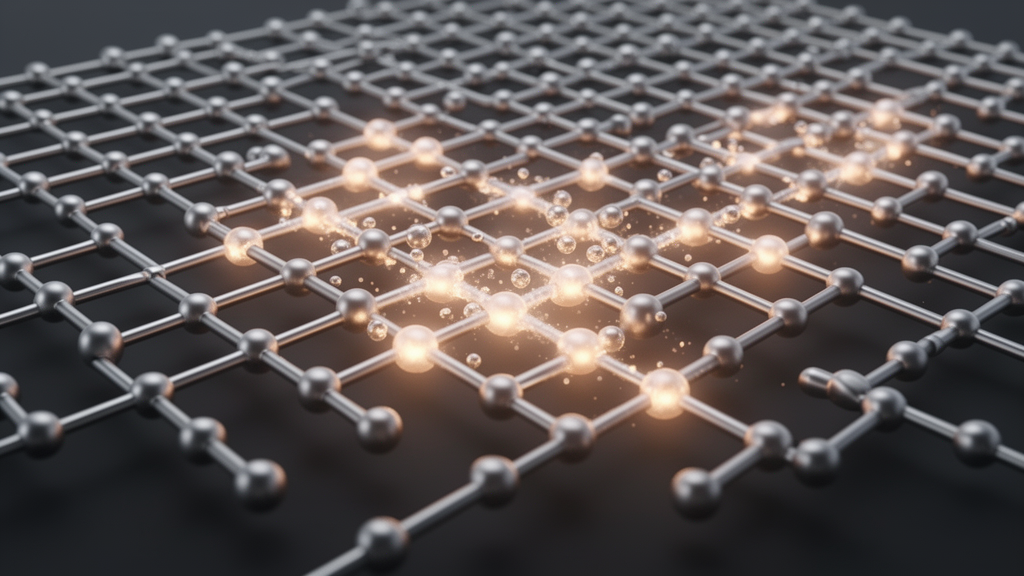
A research team has developed tunable diffusive memristor arrays that achieve controlled relaxation dynamics and improved device uniformity for neuromorphic temporal computing. Reporting in Nature Materials, the researchers demonstrated an integrated framework combining materials engineering and programming protocols to govern the dynamic behavior of diffusive memristor devices, enabling scalable physical emulation of artificial synapses and neurons.

Diffusive memristors are promising candidates for bio-realistic neuromorphic systems due to their dynamic switching and relaxation properties. However, scaling individual devices into functional computing arrays has faced persistent challenges. The stochastic nature of active ionic motion and filament evolution has historically caused severe device-to-device variability and limited tunability, impeding the reliable hardware implementation of larger neuromorphic systems.

To overcome these limitations, the researchers introduced an intrinsic engineering strategy that confines active metal-ion migration within the solid-state matrix. By utilizing percolation pathways inside a thin platinum interfacial layer alongside grain boundaries in a polycrystalline hafnium oxide layer, the team guided ion transport along defined spatial routes. This structural confinement substantially improved switching uniformity across devices and facilitated threshold voltage reduction through the interfacial network.

Alongside intrinsic structural modifications, the authors implemented extrinsic control over device kinetics.

The team evaluated system-level feasibility by assembling a prototype hardware platform that coupled an array of tailored diffusive memristors with a memristive system-on-chip.

Using this integrated platform, the researchers implemented the hierarchy-of-time-surfaces algorithm and evaluated its performance on a downsampled neuromorphic-MNIST benchmark dataset. The experimental hardware achieved a pattern recognition accuracy of 91.14 percent, demonstrating that tailoring ionic relaxation kinetics offers a viable and energy-efficient pathway toward scalable hardware systems for neuromorphic temporal computing and artificial intelligence.

Detailed device characterization provided mechanistic insights into the confined ionic transport occurring within the matrix. By examining how the interfacial network facilitates threshold voltage reduction, the physical investigations clarified the fundamental mechanisms underlying enhanced device control and operational uniformity.

Deploying the diffusive memristor time surface generator alongside the memristive system on chip demonstrates that uniting material engineering with specialized programming resolves persistent integration obstacles. Consequently, the combined framework establishes an effective foundation for scalable and energy efficient neuromorphic platforms capable of realistic emulation of neurons and synapses for next generation artificial intelligence temporal computing hardware.

Subject of Research: Neuromorphic temporal computing with tunable diffusive memristor arrays

Article Title: Tunable diffusive memristor arrays for neuromorphic temporal computing

Article References: Ling, Y., Xiong, Z., Huang, Y., Jaberi Rad, A., Wang, J., Zhao, W., Kumar, K., Wang, Z., Park, J., Nonnenmann, S. S., Bai, P., Zhang, L., Tan, H., & Xia, Q. (2026). Tunable diffusive memristor arrays for neuromorphic temporal computing. Nature Materials. https://doi.org/10.1038/s41563-026-02815-z

Image Credits: AI Generated

DOI: 10.1038/s41563-026-02815-z

Keywords: diffusive memristors, neuromorphic computing, relaxation dynamics, temporal computing, hafnium oxide, platinum interfacial layer, metal-ion migration, filament evolution, device uniformity, programming protocols, relaxation kinetics, hierarchy-of-time-surfaces, neuromorphic-MNIST, system-on-chip, threshold voltage reduction, artificial synapses

News Source: Denise Maddox. (November 26, 2026). Confined Ion Migration Improves Diffusive Memristor Arrays for Neuromorphic Computing. Scienmag.


Tags: artificial synapsesdevice uniformitydiffusive memristorsfilament evolutionhafnium oxidehierarchy-of-time-surfacesmetal-ion migrationneuromorphic computingneuromorphic-MNISTplatinum interfacial layerprogramming protocolsrelaxation dynamicsrelaxation kineticssystem-on-chiptemporal computingthreshold voltage reduction
Share12Tweet7Share2ShareShareShare1

Related Posts

Redundant Wireless Modules and Distributed Motion Control Prevent Multi-Robot Network Disconnections

Redundant Wireless Modules and Distributed Motion Control Prevent Multi-Robot Network Disconnections

November 26, 2026
Mobile Microclimate Mapping Uncovers Pedestrian Heat Stress Hotspots Across Lisbon

Mobile Microclimate Mapping Uncovers Pedestrian Heat Stress Hotspots Across Lisbon

November 26, 2026

Virtual Reality Timing Shapes Career Learning Dynamics in Middle School Classrooms

November 26, 2026

Dynamic Boundary Oversampling Technique Enhances Classification Performance Across Nine Imbalanced Benchmark Datasets

November 26, 2026

POPULAR NEWS

  • Virtual Reality Timing Shapes Career Learning Dynamics in Middle School Classrooms

    Virtual Reality Timing Shapes Career Learning Dynamics in Middle School Classrooms

    29 shares
    Share 12 Tweet 7
  • Symbolic Analysis in Julia Identifies Hidden Model Ambiguities Before Biological Estimation

    29 shares
    Share 12 Tweet 7
  • Entomologists Describe New Cricket Subgenus and Two Species From South America

    29 shares
    Share 12 Tweet 7
  • Trimmed Gutta-Percha Cones Increase Apical Sealer Percentage in Canal Obturation

    29 shares
    Share 12 Tweet 7

About

We bring you the latest biotechnology news from best research centers and universities around the world. Check our website.

Follow us

Recent News

Pediatric Rare Disease AI Tools Require Clinical Oversight and Psychosocial Care Integration

Liver Remodeling and Muscle Breakdown Linked Through Complex Gut Microbiome Pathways

Maternal Stress Links to Mother Adiposity via Emotional Eating but Not Child Weight

Subscribe to Blog via Email

Enter your email address to subscribe to this blog and receive notifications of new posts by email.

Join 89 other subscribers
  • Contact Us

Bioengineer.org © Copyright 2023 All Rights Reserved.

Welcome Back!

Login to your account below

Forgotten Password?

Retrieve your password

Please enter your username or email address to reset your password.

Log In
No Result
View All Result
  • Homepages
    • Home Page 1
    • Home Page 2
  • News
  • National
  • Business
  • Health
  • Lifestyle
  • Science

Bioengineer.org © Copyright 2023 All Rights Reserved.