• HOME
  • NEWS
  • EXPLORE
    • CAREER
      • Companies
      • Jobs
    • EVENTS
    • iGEM
      • News
      • Team
    • PHOTOS
    • VIDEO
    • WIKI
  • BLOG
  • COMMUNITY
    • FACEBOOK
    • INSTAGRAM
    • TWITTER
Monday, July 20, 2026
BIOENGINEER.ORG
No Result
View All Result
  • Login
  • HOME
  • NEWS
  • EXPLORE
    • CAREER
      • Companies
      • Jobs
        • Lecturer
        • PhD Studentship
        • Postdoc
        • Research Assistant
    • EVENTS
    • iGEM
      • News
      • Team
    • PHOTOS
    • VIDEO
    • WIKI
  • BLOG
  • COMMUNITY
    • FACEBOOK
    • INSTAGRAM
    • TWITTER
  • HOME
  • NEWS
  • EXPLORE
    • CAREER
      • Companies
      • Jobs
        • Lecturer
        • PhD Studentship
        • Postdoc
        • Research Assistant
    • EVENTS
    • iGEM
      • News
      • Team
    • PHOTOS
    • VIDEO
    • WIKI
  • BLOG
  • COMMUNITY
    • FACEBOOK
    • INSTAGRAM
    • TWITTER
No Result
View All Result
Bioengineer.org
No Result
View All Result
Home NEWS Science News Biology

Eating human food could mean trouble for urban coyotes, study shows

Bioengineer by Bioengineer
February 25, 2021
in Biology
Reading Time: 2 mins read
0
IMAGE
Share on FacebookShare on TwitterShare on LinkedinShare on RedditShare on Telegram

New U of A research illustrates link between anthropogenic diet, human-like gut bacteria and poor health.
IMAGE

Credit: Colleen Cassady St. Clair

A diet rich in human food may be wreaking havoc on the health of urban coyotes, according to a new study by University of Alberta biologists.

The research team from the Faculty of Science examined the stomach contents, gut microbiome and overall health of nearly 100 coyotes in Edmonton’s capital region. Their results also show coyotes that consume more human food have more human-like gut bacteria–with potential impact on their nutrition, immune function and, based on similar findings in dogs, even behaviour.

“If eating human food disturbs the ‘natural’ coyote gut bacteria, it is possible that eating human food has the potential to affect all these other aspects of coyote health and behaviour as well,” said Scott Sugden, lead author and recent master’s graduate from the Department of Biological Sciences.

“The gut microbiome has been consistently related to various aspects of human health and behaviour, and the same is true for animals,” Sugden noted.

The research also shows that urban coyotes, which eat more human food, also have lower body fat, stressed immune systems and more parasites. The study builds on Sugden’s previous research into the relationship between an anthropogenic, or human, diet and the health of urban coyotes.

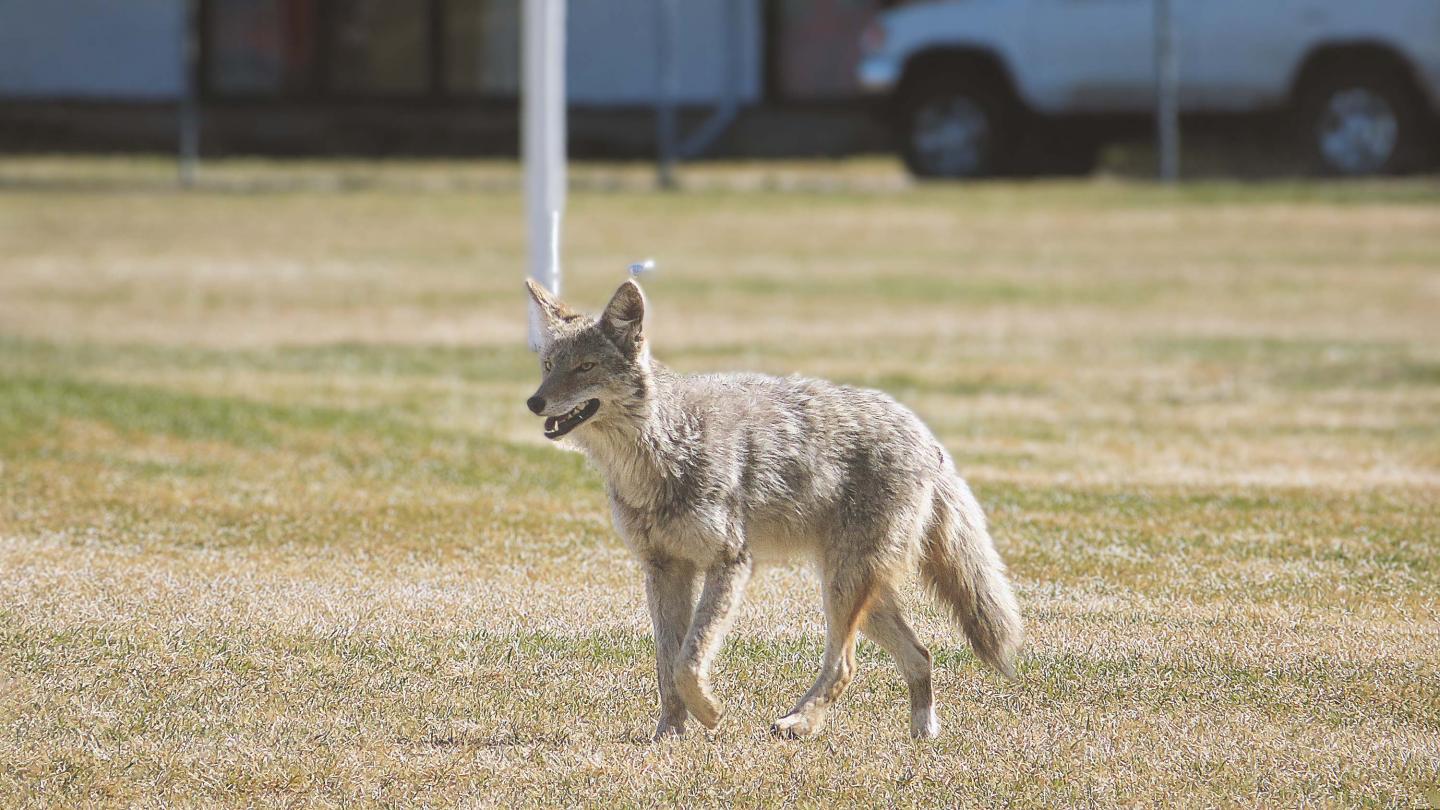
Urban coyotes that subsist on human food have more human-like gut bacteria–which could affect their health, immune function and possibly even their behaviour, according to a U of A study. (Photo: Colleen Cassady St. Clair)

“If access to human food has the potential to affect coyote health and behaviour by disturbing the gut microbiome, it’s important to address the root of the issue by limiting their access to protein-poor human food,” explained Sugden.

“This would likely be more effective, and easier to implement, than trying to manage aggressive coyotes and unhealthy coyotes as separate issues,” he said, adding that another U of A project will more directly address bold urban coyotes.

###

Sugden completed the research under the supervision of ecologist Colleen Cassady St. Clair and microbiologist Lisa Stein, both professors in the Department of Biological Sciences.

The research was funded by the Natural Sciences and Engineering Research Council of Canada. Collaborators include U of A undergraduate student Kyra Ford and Dana Sanderson from MacEwan University, as well as the City of Edmonton’s Animal Care and Control Centre and Animal Damage Control in Sherwood Park.

The study, “An altered microbiome in urban coyotes mediates relationships between anthropogenic diet and poor health,” was published in Scientific Reports.

Media Contact
Katie Willis
[email protected]

Original Source

https://www.ualberta.ca/folio/2021/01/eating-human-food-could-mean-trouble-for-urban-coyotes-study-shows.html

Related Journal Article

http://dx.doi.org/10.1038/s41598-020-78891-1

Tags: BiologyEcology/Environment
Share12Tweet8Share2ShareShareShare2

Related Posts

The concealed geometry behind breeding constraints

The concealed geometry behind breeding constraints

July 18, 2026
Organic fertilizer helps biochar immobilize cadmium in contaminated soil

Organic fertilizer helps biochar immobilize cadmium in contaminated soil

July 18, 2026

Asteroid impact may have reshaped tuna evolution alongside dinosaur extinction

July 18, 2026

Wild snapdragons subtly change color to attract bees

July 17, 2026
Please login to join discussion

POPULAR NEWS

  • Groundbreaking Discovery: New Shark Species Identified for the First Time — Technology and Engineering

    Groundbreaking Discovery: New Shark Species Identified for the First Time

    34 shares
    Share 14 Tweet 9
  • Controlled Study Defines Pediatric Long COVID Features

    32 shares
    Share 13 Tweet 8
  • Behavioral Nudge Boosts Medication Prescriptions for Alcohol Reduction

    35 shares
    Share 14 Tweet 9
  • Clean Cooking and Remittances Slash Somalia’s Ecological Footprints

    31 shares
    Share 12 Tweet 8

About

We bring you the latest biotechnology news from best research centers and universities around the world. Check our website.

Follow us

Recent News

Sleep Quality Links Synergistically with Frailty to Increase Cardiometabolic Multimorbidity in Elderly Chinese

Cognitive reserve helps older adults resist frailty and recover better

Physical Activity and Health Inequality in China’s Older Adults

Subscribe to Blog via Email

Success! An email was just sent to confirm your subscription. Please find the email now and click 'Confirm' to start subscribing.

Join 85 other subscribers
  • Contact Us

Bioengineer.org © Copyright 2023 All Rights Reserved.

Welcome Back!

Login to your account below

Forgotten Password?

Retrieve your password

Please enter your username or email address to reset your password.

Log In
No Result
View All Result
  • Homepages
    • Home Page 1
    • Home Page 2
  • News
  • National
  • Business
  • Health
  • Lifestyle
  • Science

Bioengineer.org © Copyright 2023 All Rights Reserved.