A two-year field study found that combining a dual-strain Azotobacter inoculant with complete foliar nano-NPK produced the strongest growth, physiological and yield outcomes in sugar beet ( Beta vulgaris L.). In the reported comparison, sugar yield increased by 94%, from 3.03 to 5.87 tonnes per hectare, and root yield rose by 65%, from 21.21 to 35.02 tonnes per hectare. The experiment was designed to assess whether integrating plant growth-promoting rhizobacteria with a nanoscale fertilizer could improve sugar beet performance beyond the effects of either input alone.
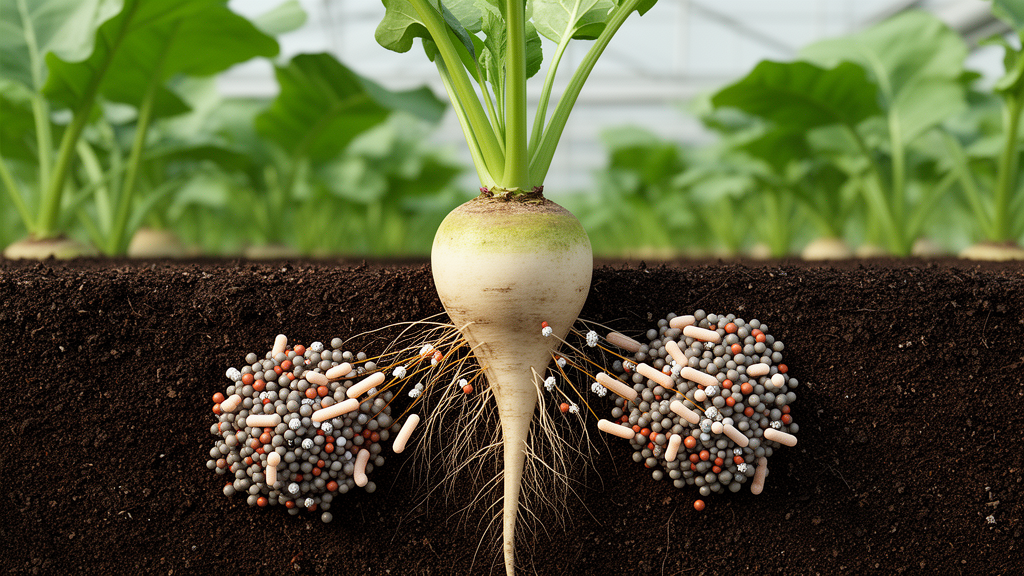
The researchers assigned Azotobacter inoculation to main plots and five nano-NPK formulations to subplots in a split-plot design. The trial therefore compared the combined treatment with individual bacterial or nutrient applications, as well as partial nutrient formulations. The bacterial inoculant contained two Azotobacter species, A. chroococcum and A. vinelandii .
The nano-NPK treatments included formulations supplying different combinations of nitrogen, phosphorus and potassium. The most favorable results occurred when the dual-strain consortium was applied together with the complete N+P+K nano-NPK treatment, rather than with incomplete nutrient formulations. Several measured plant traits improved under the combined treatment.
Total chlorophyll content increased by approximately 122.8%, carotenoid content by 82.6% and leaf area index by 95% relative to the reported comparison. The study also found enhanced nutrient concentrations in leaves and reported improvements across physiological and biochemical traits assessed at harvest. The authors described the combined approach as synergistic and reported improvements in nutrient-use efficiency, although the supplied research summary does not explain the specific biological processes responsible for the observed responses.
The findings come from a two-season field experiment with sugar beet, not from a laboratory-only study or a projection of future production. The split-plot design allowed the researchers to evaluate bacterial inoculation, several nano-NPK formulations and their combinations under field conditions. Measurements included agronomic, physiological and biochemical characteristics evaluated at harvest.
The scope of the evidence remains important when interpreting the results. The study reports outcomes under the conditions tested, and its summary does not establish whether the same responses would occur across different soils, climates, fertilizer regimes or commercial production systems. The supported conclusion is that, under the study conditions, pairing the two-strain Azotobacter consortium with complete foliar nano-NPK delivered markedly higher physiological measures, root production and sugar yield than the comparison treatments.
Individual applications and partial nano-NPK formulations did not match the full combination. The study identifies the combined treatment as promising within its tested field setting, while broader conclusions about performance under other conditions would require additional evidence.
Subject of Research: Field evaluation of dual-strain Azotobacter inoculation and foliar nano-NPK in sugar beet
Article Title: Integrating Azotobacter inoculation with nano-NPK foliar application: a sustainable strategy for enhancing growth, physiology, and sugar yield in sugar beet (Beta vulgaris L.)
Article References: El-Desouky, H. S., Al Hawas, G. H., AL-Huqail, A. A., Al-Enezi, N. A., Zewail, R. M. Y., Yousuf, G. K., Al-Maracy, S. H. A., El-Sherief, A. E., El-Gamal, I. S. H., El-Safy, N. K., & Badawy, A. A. (2026). Integrating Azotobacter inoculation with nano-NPK foliar application: a sustainable strategy for enhancing growth, physiology, and sugar yield in sugar beet (Beta vulgaris L.). BMC Plant Biology, 26(1), Article 1521. https://doi.org/10.1186/s12870-026-09776-0
Image Credits: AI Generated
DOI: 10.1186/s12870-026-09776-0
Keywords: sugar beet, Azotobacter, nano-NPK, nanofertilizers, plant growth promotion, sugar yield, root yield, nutrient-use efficiency, field experiment, sustainable agriculture, Integrating, inoculation
News Source: Alan Morgan. (October 26, 2026). Dual-strain bacteria and nano-NPK boost sugar beet yields. Scienmag.