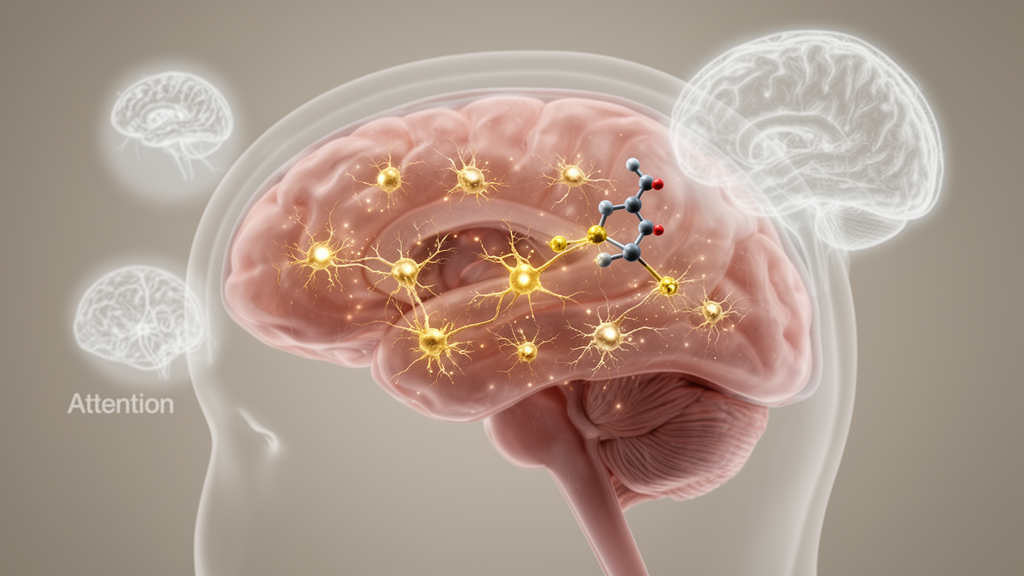
In a 36-month longitudinal study of people with mild cognitive impairment attributed to Alzheimer’s disease, continuous donepezil treatment was associated with an early improvement in global brain-network topology, but that gain stabilized rather than continuing to strengthen. Meanwhile, cognition and volume in the left hippocampus continued to decline, with deterioration accelerating between months 12 and 18. The results indicate that treatment-associated changes unfolded over time and did not amount to sustained protection across every measured outcome.
The researchers began with a cross-sectional analysis of 107 patients with Alzheimer’s-related mild cognitive impairment and 92 normal controls. At baseline, patients had atrophy in the left hippocampus, including several subfields, and widespread abnormalities in gray-matter structural covariance networks. This stage of the research established the abnormalities present before the longitudinal assessment, but its cross-sectional design did not establish what caused the differences between the groups.
For the longitudinal component, the investigators retrospectively enrolled 35 patients who had completed 36 months of continuous donepezil treatment. Linear and piecewise linear mixed-effects models quantified changes in cognitive performance, brain morphology and network-topology measures over that period. Because the study followed a treated cohort without an untreated or placebo comparison group, it could describe temporal patterns during treatment but could not confidently determine how much of those patterns was attributable to donepezil rather than the underlying illness or other influences.
Restricting the analysis to patients who completed treatment and follow-up may also limit how broadly the findings represent all people with Alzheimer’s-related mild cognitive impairment. Mini-Mental State Examination scores declined significantly during the 36 months. The volume of the left hippocampus and multiple hippocampal subfields also decreased significantly, and the models indicated that deterioration accelerated between months 12 and 18.
Thus, despite the early network improvement and enhancement of right-hippocampal nodal metrics, the study did not show that donepezil prevented the progressive loss of cognition or left-hippocampal volume. The authors characterized the long-term benefit as modest and found insufficient evidence for a sustained neuroprotective effect. Taken together, the findings portray a changing pattern rather than a uniform response to treatment.
Global topological measures improved initially and subsequently stabilized, while measures associated with the right hippocampus were significantly enhanced. Those results contrasted with continued cognitive decline and shrinking volume in the left hippocampus and its subfields. The study combines behavioral testing, brain-volume measurements and structural covariance network analysis, providing a multi-level account of change during continuous treatment.
Its retrospective, single-arm design and small longitudinal cohort constrain causal interpretation, so the observed network gains cannot be attributed to donepezil alone or interpreted as evidence that the underlying disease process was reversed.
Subject of Research: Longitudinal changes in cognition, hippocampal volume and structural covariance networks during donepezil treatment of Alzheimer’s-related mild cognitive impairment
Article Title: Dynamic long-term modulation of cognition, brain structure and covariance networks in mild cognitive impairment due to AD by donepezil: A 36-month longitudinal study
Article References: Chen, Y., Tong, Z., Wang, H., Xu, X., Chen, Q., Lu, J., Hu, Y., Zhang, X., Zhao, H., Chen, J., & Zhang, B. (2026). Dynamic long-term modulation of cognition, brain structure and covariance networks in mild cognitive impairment due to AD by donepezil: A 36-month longitudinal study. Journal of Neurology, 273(11), 677. https://doi.org/10.1007/s00415-026-14156-7
Image Credits: AI Generated
DOI: 10.1007/s00415-026-14156-7
Keywords: donepezil, Alzheimer’s disease, mild cognitive impairment, hippocampal atrophy, structural covariance networks, brain-network topology, longitudinal study, cognitive decline, neuroimaging, Dynamic, long-term, modulation
News Source: Cassandra Pierce. (October 22, 2026). Donepezil-linked network gains fade as cognition and hippocampus decline. Scienmag.