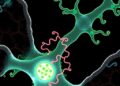
Researchers at St. Jude Children's Research Hospital have discovered that survival of a particularly aggressive form of acute myeloid leukemia (AML) depends on production of a small molecule called heme that is a kind of molecular "battery." The researchers said discovery of this vulnerability points the way to new targeted drug therapies that block heme synthesis, killing the leukemic cells.
Led by John Schuetz, Ph.D., a member of the St. Jude Department of Pharmaceutical Sciences, the research appears today in the scientific journal JCI Insight.
Heme is best known as a component of oxygen-carrying hemoglobin in red blood cells. However, heme also plays essential roles in transporting electrons in biological processes. Among these roles is the machinery for respiration in the cell.
While there had been hints that heme production was affected in leukemia, Schuetz said: "Absolutely nothing was known about the role of heme biosynthesis before our work."
Their first clue to heme's role arose from a computer search. Using the extensive St. Jude genomic database, researchers searched for other genes that were abnormally switched on in a virulent form of AML that is driven by an oncogene called MYCN. This gene is a switch that activates a range of other genes. The scientists pinpointed a particular gene called UROD as being highly activated in the leukemia–a critical finding since UROD is part of the molecular machinery that synthesizes heme.
Especially significant, Schuetz said, was the finding that MYCN-driven leukemias with the most over-activated UROD were far more lethal.
In the laboratory, the researchers found that cells with over-activated MYCN consumed more oxygen and depended on the production of heme to propagate–called self-renewal–as well as to become cancerous. Indeed, the scientists found that suppressing heme production prevented self-renewal.
A key finding was that the researchers could block cancer cell self-renewal in the MYCN cells by blocking heme synthesis.
The investigators also found that they could suppress self-renewal by blocking a "relief-valve" molecule that rids the cells of a building-block molecule of heme. Blocking the relief-valve protein caused the buildup of the molecule, which is toxic to the leukemia cells. Importantly, however, blocking the relief-valve in normal cells produced no ill effects.
Then, in preclinical models of MYCN leukemia, the researchers tested a strategy of knocking out the gene for the safety-valve protein. These knockouts showed a significantly slower disease progression and longer survival. What's more, scientists also found they could cure leukemia in these models by inhibiting the safety-valve protein and ramping up the heme machinery.
"Our findings suggest two drug strategies to treat AML," Schuetz said. "One would be to target UROD, which would reduce heme biosynthesis. Such drugs would selectively affect leukemia cells, because they are so dependent on heme. The other strategy would be to use drugs to inhibit the relief-valve protein and at the same time administer a chemical that is a precursor of heme. This would cause a buildup of toxic molecules that are part of the heme synthesis pathway."
Schuetz said other cancers with an over-activated heme pathway might also be vulnerable to such a treatment strategy. In particular, he said, one type of the brain cancer medulloblastoma shows such over-activation.
In further studies, the researchers will extend their understanding of the heme machinery in AML. For example, said Schuetz, they do not know whether heme's role in cell respiration is the only important one in supporting AML progression, since heme plays a wide range of roles in the cell. Further experiments will also test whether drugs that suppress UROD function in the heme-production machinery can effectively battle AML.
###
The first author is Yu Fukuda, Ph.D., of Pharmaceutical Sciences. Other co-authors are Laura Janke, Ayten Kandilci, Geoffrey Neale, Yiping Fan, Brian Sorrentino, Martine Roussel and Gerard Grosveld, all of St. Jude.
The work was supported by grants (CA194057, CA21745, CA21865, CA194057 and CA96832) from the National Institutes of Health and by ALSAC, the fundraising and awareness organization of St. Jude.
Media Contact
Corey Carmichael
[email protected]
901-530-0563
@StJudeResearch
http://www.stjude.org