• HOME
  • NEWS
  • EXPLORE
    • CAREER
      • Companies
      • Jobs
    • EVENTS
    • iGEM
      • News
      • Team
    • PHOTOS
    • VIDEO
    • WIKI
  • BLOG
  • COMMUNITY
    • FACEBOOK
    • INSTAGRAM
    • TWITTER
Sunday, March 29, 2026
BIOENGINEER.ORG
No Result
View All Result
  • Login
  • HOME
  • NEWS
  • EXPLORE
    • CAREER
      • Companies
      • Jobs
        • Lecturer
        • PhD Studentship
        • Postdoc
        • Research Assistant
    • EVENTS
    • iGEM
      • News
      • Team
    • PHOTOS
    • VIDEO
    • WIKI
  • BLOG
  • COMMUNITY
    • FACEBOOK
    • INSTAGRAM
    • TWITTER
  • HOME
  • NEWS
  • EXPLORE
    • CAREER
      • Companies
      • Jobs
        • Lecturer
        • PhD Studentship
        • Postdoc
        • Research Assistant
    • EVENTS
    • iGEM
      • News
      • Team
    • PHOTOS
    • VIDEO
    • WIKI
  • BLOG
  • COMMUNITY
    • FACEBOOK
    • INSTAGRAM
    • TWITTER
No Result
View All Result
Bioengineer.org
No Result
View All Result
Home NEWS Science News Biology

Discovery of tanycytic TSPO inhibition as a potential therapeutic target for obesity treatment

Bioengineer by Bioengineer
September 19, 2019
in Biology
Reading Time: 3 mins read
0
IMAGE
Share on FacebookShare on TwitterShare on LinkedinShare on RedditShare on Telegram

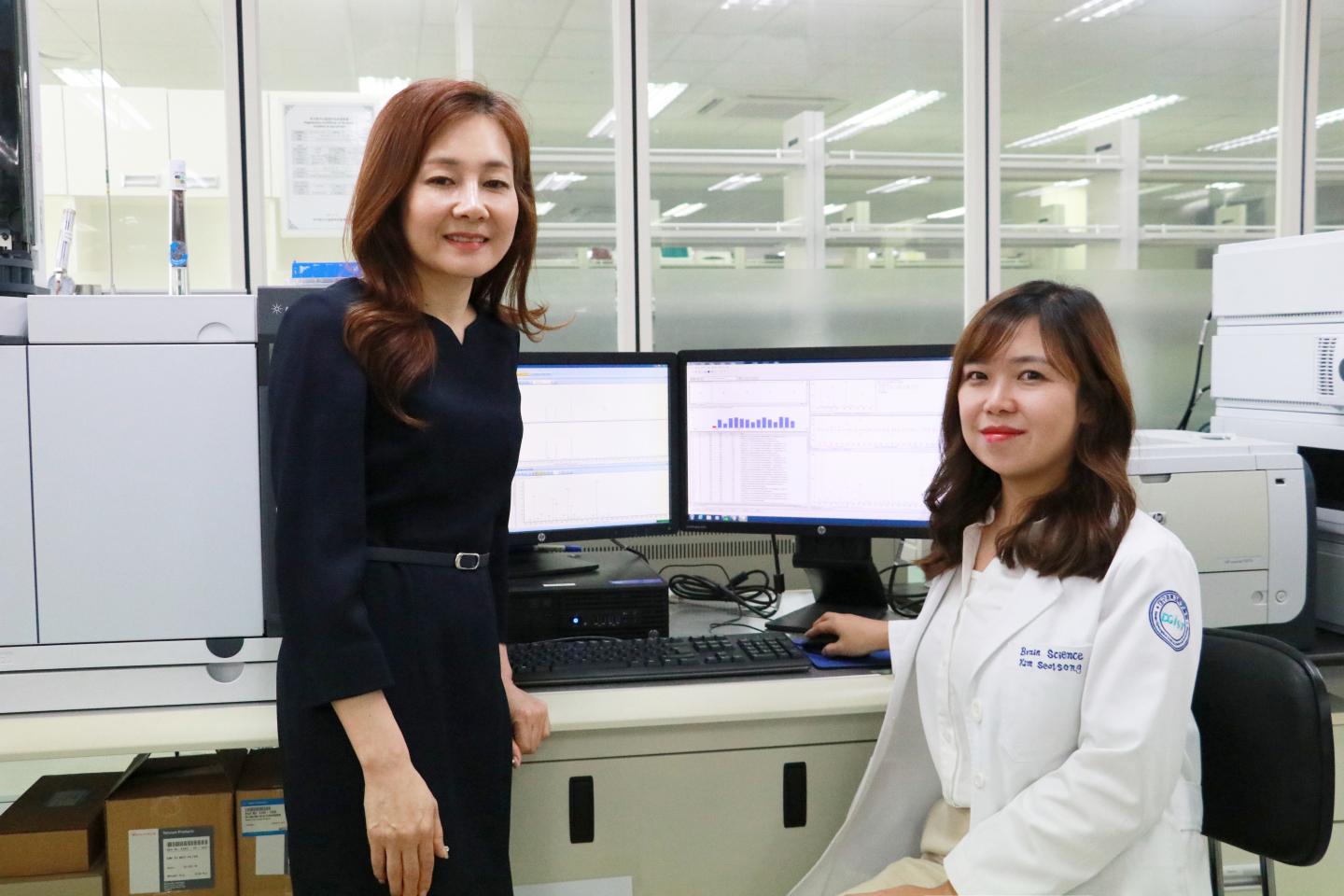
Identified the core mechanism for obesity treatment through brain cell control
IMAGE

Credit: DGIST

DGIST announced on Sept. 5 that Professor Eun-Kyoung Kim (Director of Neurometabolomic Research Center) discovered new targets to prevent and treat high-fat diet-induced obesity. This research achievement is expected to propose a new direction for developing obesity treatment.

Due to westernized eating habits in today’s society, the prevalence of metabolic diseases such as obesity and diabetes has markedly increased. To prevent and treat these diseases, it is important to decrease appetite and increase energy consumption. However, specific mechanisms for effective treatment of metabolic disease has not been elucidated yet.

Based on the knowledge that tanycytes, which connects cerebral ventricle1 and hypothalamus2, detect nutrients in food and control appetite, Dr. Eun-Kyoung Kim’s research team found that ‘TSPO (translocator protein),’ which is a mitochondrial protein in the tanycytes, responds to overnutrition signal and control lipid and energy metabolism. The research team also announced an interesting result that TSPO inhibition increases energy expenditure in the body and decreases appetite.

The research team observed that excessive lipid droplets, the major cellular organelles for the storage of neutral lipids, are accumulated in tanycytes of high-fat diet-induced obese mice. In those mice, inhibition of tanycytic TSPO induced lipophagy, one type of autophagy, breaking down lipid droplets to use them as an energy source via modulating energy homeostasis. As a result, the production of Adenosine Triphosphate (ATP)3 that plays essential roles in cellular energy metabolism was increased. Furthermore, food intake was reduced and energy expenditure was elevated, leading to weight loss when tanycytic TSPO was inhibited in high-fat diet-induced obese mice.

Dr. Kim said clarifying the role of tanycytic TSPO that controls lipophagy helps to understand the functions of these cells in overnutrition state. It implies the possibility to use tanycytic TSPO as a potential therapeutic strategy for metabolic diseases such as obesity.”

###

This research was participated by Seolsong Kim, an integrated M.S.-Ph.D. degree student in the Department of Brain and Cognitive Sciences at DGIST as the first author and was published online on ‘Autophagy‘, a world-renowned journal in the field on August 30. This research was also performed with support from the DGIST convergence project on brain plasticity-based rehabilitation mechanism and technique by the Ministry of Science and ICT as well as the mid-level researcher project by the National Research Foundation of Korea.

    1 Cerebral ventricles: A space inside brain surrounded by structures such as cerebrum, cerebellum, and the brain stem.

    2 Hypothalamus: Connects to pituitary gland and controls appetite and energy metabolism.
    Controls food intake, hunger, and energy homeostasis by receiving the signals of various nutrients and hormones.

    3 Adenosine Triphosphate (ATP): An organic chemical compound with 3 phosphate groups on adenosine. Exists inside the cells of all living things and plays a very important role in energy metabolism.

Media Contact
Eun-Kyoung Kim
[email protected]

Original Source

https://www.dgist.ac.kr/en/html/sub06/060202.html?mode=V&no=cfa28f295d3c9af13ec5ec1dfae79c2d

Related Journal Article

http://dx.doi.org/10.1080/15548627.2019.1659616

Tags: BiologyBiomechanics/BiophysicsBiotechnology
Share12Tweet8Share2ShareShareShare2

Related Posts

Two Salk Scientists Honored as 2025 AAAS Fellows

Two Salk Scientists Honored as 2025 AAAS Fellows

March 27, 2026
How to sway group opinions: Encourage opponents to stay undecided

How to sway group opinions: Encourage opponents to stay undecided

March 23, 2026

Deep Learning Model Maps How Individual Cells Shape Disease Outcomes

March 20, 2026

Removing only 15 female sharks annually could endanger the entire population, scientists warn

March 20, 2026
Please login to join discussion

POPULAR NEWS

  • blank

    Revolutionary AI Model Enhances Precision in Detecting Food Contamination

    96 shares
    Share 38 Tweet 24
  • Imagine a Social Media Feed That Challenges Your Views Instead of Reinforcing Them

    1004 shares
    Share 397 Tweet 248
  • Uncovering Functions of Cavernous Malformation Proteins in Organoids

    54 shares
    Share 22 Tweet 14
  • Promising Outcomes from First Clinical Trials of Gene Regulation in Epilepsy

    51 shares
    Share 20 Tweet 13

About

We bring you the latest biotechnology news from best research centers and universities around the world. Check our website.

Follow us

Recent News

In-Sensor Cryptography Links Physical Process to Digital Identity

Can Psychosocial Factors Influence Cancer Risk?

Depression Factors in Elderly: Pre vs. Post-COVID Analysis

Subscribe to Blog via Email

Enter your email address to subscribe to this blog and receive notifications of new posts by email.

Join 78 other subscribers
  • Contact Us

Bioengineer.org © Copyright 2023 All Rights Reserved.

Welcome Back!

Login to your account below

Forgotten Password?

Retrieve your password

Please enter your username or email address to reset your password.

Log In
No Result
View All Result
  • Homepages
    • Home Page 1
    • Home Page 2
  • News
  • National
  • Business
  • Health
  • Lifestyle
  • Science

Bioengineer.org © Copyright 2023 All Rights Reserved.