That internal nagging feeling that drives you to seek sleep at night and wake in the morning to eat, work, and play, is, it turns out, genetic, and it’s not just in people. Nearly every living organism – from animals to plants as well as several microorganisms and fungi – has an internal body clock, or a circadian rhythm.
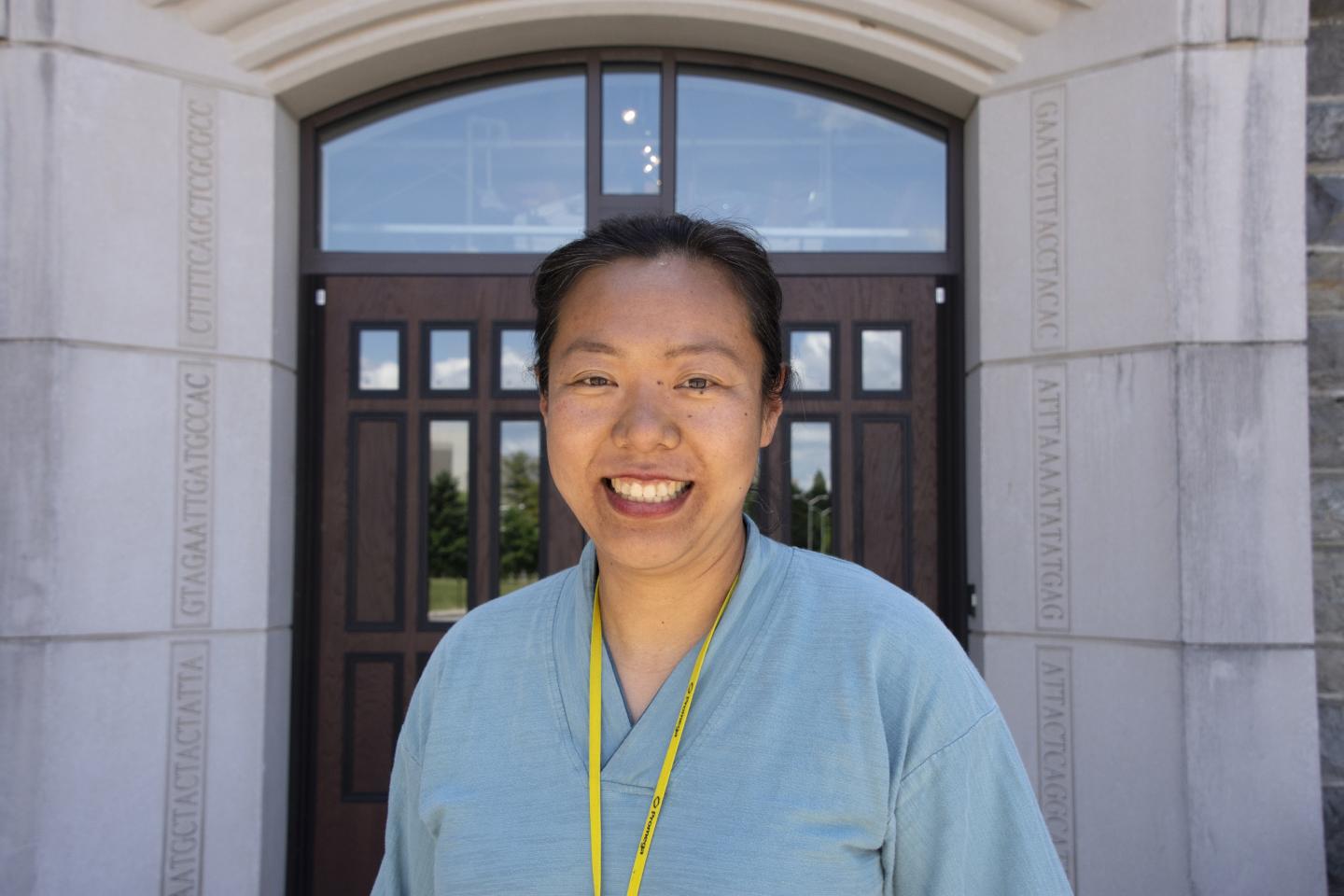
Yet, scientists have been perplexed out how these genes operate. Now, Virginia Tech scientists have taken a step closer to an answer thanks to the DNA of a mouse, a petri dish, and much patience. In a new study published in the journal Genes & Development, Shihoko Kojima, an assistant professor in the Department of Biological Sciences, part of the
Virginia Tech College of Science, and a researcher with the Fralin Life Sciences Institute, and her team has identified a novel gene, Per2AS, that controls the sleep/wake cycle in mice. Per2AS appears to be a new type of gene, known as a non-coding gene. Unlike most other genes, Per2AS is not translated from RNA into a subsequent protein, thus making its function unclear until now.
(Circadian rhythms derives from the Latin circa diem, or “around a day.”)
The study has been in the works for several years. Nine, exactly. Why the long tenure? Well, it’s complicated. Literally. “It was difficult to find out what its job is because Per2AS was a noncoding gene,” Kojima said. “Scientists have accumulated a lot of knowledge and tools to figure out the function of traditional genes. However, these tools cannot be readily applicable to nontraditional genes, such as Per2AS, because most tools are made based on the unique characteristics common to traditional genes.”
In addition to Kojima, the study includes authorship of 13 members of the Virginia Tech, including faculty, former staff, and alumni. They are University Distinguished Professor John Tyson of the Department of Biological Sciences and former director of the systems biology in the Academy of Integrated Science, research specialist Rebecca Mosig; undergraduate alums Allison Castaneda, Jacob Deslauriers, Landon Frazier, Kevin He, Naseem Maghzian, and Camille Schrier, most of who are seeking advanced degrees in health care or research; and Blacksburg High School alums Aarati Pokharel, now at the University of Virginia, and Lily Zhu, now at Johns Hopkins University.
According to Kojima, when Human Genome Project started some 30 years ago, scientists then thought most of our genome is made out of traditional genes, because these genes were believed to control unique traits that we all have – eye and hair color, height and weight, personality. That didn’t turn out to be true.
“It turned out that only 2 percent of our genome is used for traditional genes and the rest appears to be nontraditional genes. There has been a hot debate whether these nontraditional genes are also important for our traits – some say it is DNA junk, while others say they have important functions,” she said.
Growing evidence suggests that at least some nontraditional genes are important for various biological processes, such as neuronal activities, immune functions, and cell differentiation, as well as disease development including cancer, neurodegeneration, and congenital genetic diseases.”
The big takeaway: A nontraditional gene can have functions to control our body clock and therefore is important for our genome to have. In other words, nontraditional genes are as vital as their more basic counterparts.
“People also have an equivalent gene,” Kojima said. “However, it is unclear at this point whether the human version has the same function(s) as the mouse version. Most organisms living on the Earth have a circadian clock because this is an internal timing system important to adapt to the daily environmental changes caused by the Earth’s rotation. The circadian clock of human is not much different from that of rodents or insects.”
What’s next? Kojima wants to study the gene in a live mouse model. Not just from a petri dish. “We also want to know if this gene is in many other organisms. If so, that would mean this gene is very important.”
###
Media Contact
Steven Mackay
[email protected]
Original Source
https:/
Related Journal Article
http://dx.