• HOME
  • NEWS
  • EXPLORE
    • CAREER
      • Companies
      • Jobs
    • EVENTS
    • iGEM
      • News
      • Team
    • PHOTOS
    • VIDEO
    • WIKI
  • BLOG
  • COMMUNITY
    • FACEBOOK
    • INSTAGRAM
    • TWITTER
Thursday, July 2, 2026
BIOENGINEER.ORG
No Result
View All Result
  • Login
  • HOME
  • NEWS
  • EXPLORE
    • CAREER
      • Companies
      • Jobs
        • Lecturer
        • PhD Studentship
        • Postdoc
        • Research Assistant
    • EVENTS
    • iGEM
      • News
      • Team
    • PHOTOS
    • VIDEO
    • WIKI
  • BLOG
  • COMMUNITY
    • FACEBOOK
    • INSTAGRAM
    • TWITTER
  • HOME
  • NEWS
  • EXPLORE
    • CAREER
      • Companies
      • Jobs
        • Lecturer
        • PhD Studentship
        • Postdoc
        • Research Assistant
    • EVENTS
    • iGEM
      • News
      • Team
    • PHOTOS
    • VIDEO
    • WIKI
  • BLOG
  • COMMUNITY
    • FACEBOOK
    • INSTAGRAM
    • TWITTER
No Result
View All Result
Bioengineer.org
No Result
View All Result
Home NEWS Science News Cancer

Discovery may bolster chemotherapy potency while protecting the heart from side-effects

Bioengineer by Bioengineer
February 6, 2019
in Cancer
Reading Time: 2 mins read
0
IMAGE
Share on FacebookShare on TwitterShare on LinkedinShare on RedditShare on Telegram

University of Alberta medical researchers take significant step toward improving cancer care
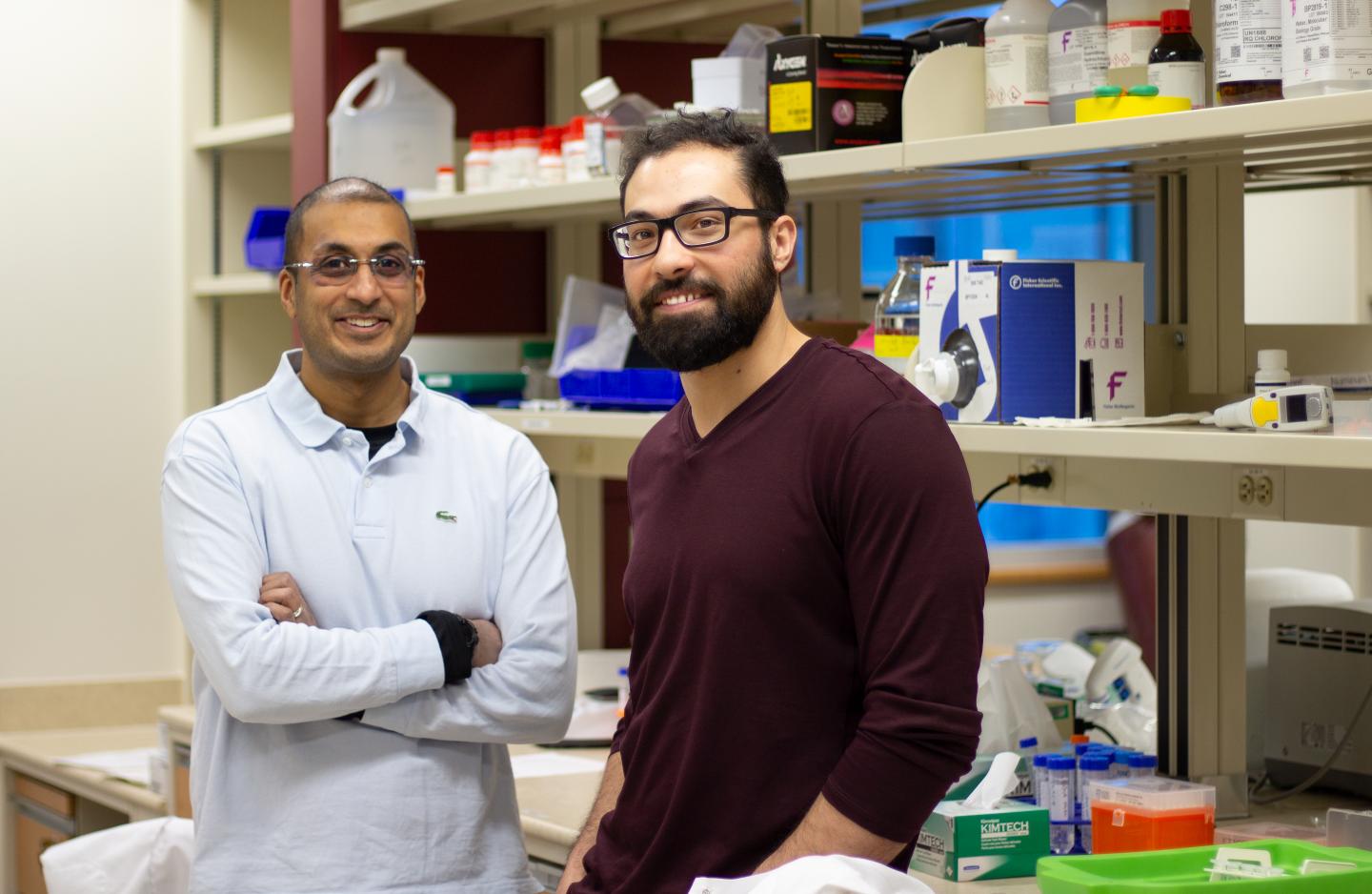
IMAGE

Credit: Jordan Carson


Researchers from the University of Alberta may have found a way to make chemotherapy more effective at treating cancer while blocking its harmful side-effects on the heart.

While chemotherapy can be an effective treatment for cancer, the aggressive attack on cancer cells often cause damage to other cells throughout the body, including the heart, making patients more prone to develop heart problems years down the road.

“At the clinical level, we’ve known for some time that heart dysfunction from chemotherapy is a major issue, but at the scientific level, we’ve only recently begun to look at signalling pathways that may be implicated in this condition,” said Gopi Sutendra, Alberta Innovates Translational Health Chair in Cardio-Oncology at the U of A.

“This is the first targeted therapy at the preclinical level to actually prevent the side-effects of chemotherapy on the heart and simultaneously enhance tumour regression.”

The heart resides in an oxygen-rich environment, compared to a tumour which resides in an oxygen-poor environment.

The team found that the oxidation of proteins–a process that requires oxygen–was preferentially increased in the heart. By stabilizing a specific metabolic protein called pyruvate kinase M2 (PKM2)–also preferentially oxidized in the heart–with a drug compound, the researchers completely prevented heart damage from the chemotherapy, and enhanced the potency of the chemotherapy against lung tumours in preclinical mouse models.

According to Sutendra, chemotherapy affects all tissue, but the heart is especially susceptible. While most other cells will recover quickly, heart cells regenerate more slowly, making damage nearly irreversible. Because of that, protecting heart cells before the damage is done is vitally important.

The researchers hope the findings will soon be able to be tested in clinical trials with similar drugs that stabilize PKM2.

“The beauty of our work is that many of these drugs are already being tried in early-phase clinical trials for other diseases,” said Sutendra. “We’re really happy because we think that we can push it to the next phase where hopefully patients can start seeing some of these treatments in the near future.”

“We also believe the implications of our work may extend to other forms of heart failure as well,” added Bruno Saleme, first author on the study and a recent recipient of the Alberta Innovates Graduate Scholarship.

###

The research, published as a cover story in Science Translational Medicine, was supported by funding from the Canadian Institutes of Health Research, the Heart and Stroke Foundation and the Alberta Innovates Translational Health Chair in Cardio-Oncology.

Media Contact
Ross Neitz
[email protected]
780-492-5986

Tags: Breast CancercancerCardiologyMedicine/Health
Share12Tweet8Share2ShareShareShare2

Related Posts

Apelin-APLNR Pathway: Endothelial Roles in Health

July 2, 2026

Three Clinical Scholars Join Ludwig Institute for Cancer Research

July 2, 2026

Validating 18F-THK5351 for Imaging Astrogliosis

July 2, 2026

Next-Generation HIF-2α Inhibitor Demonstrates Potential in Translational Clinical Trial for Kidney Cancer

July 2, 2026
Please login to join discussion

POPULAR NEWS

  • Detection of EDCs in Breast Milk and Infant Urine Up to Six Months Highlights Early Exposure Risks

    77 shares
    Share 31 Tweet 19
  • Saying Goodbye to PGY-6: Pediatric Fellowship Realities

    103 shares
    Share 41 Tweet 26
  • New Drug Candidate Developed at McMaster Shows Potential for Treating Brain Cancer

    58 shares
    Share 23 Tweet 15
  • KTU Researchers Explore Ultrasound’s Role in Enhancing Blood Flow Beyond Diagnostics

    53 shares
    Share 21 Tweet 13

About

BIOENGINEER.ORG

We bring you the latest biotechnology news from best research centers and universities around the world. Check our website.

Follow us

Recent News

Steatosis Drives Liver Metastasis Diversity in CRC

Unlocking the Mysteries of Alzheimer’s Disease

Pensoft Introduces New Peer-Reviewed Journal of Regeneration to Advance Restorative Biology Across Species

Subscribe to Blog via Email

Enter your email address to subscribe to this blog and receive notifications of new posts by email.

Join 83 other subscribers
  • Contact Us

Bioengineer.org © Copyright 2023 All Rights Reserved.

Welcome Back!

Login to your account below

Forgotten Password?

Retrieve your password

Please enter your username or email address to reset your password.

Log In
No Result
View All Result
  • Homepages
    • Home Page 1
    • Home Page 2
  • News
  • National
  • Business
  • Health
  • Lifestyle
  • Science

Bioengineer.org © Copyright 2023 All Rights Reserved.