• HOME
  • NEWS
  • EXPLORE
    • CAREER
      • Companies
      • Jobs
    • EVENTS
    • iGEM
      • News
      • Team
    • PHOTOS
    • VIDEO
    • WIKI
  • BLOG
  • COMMUNITY
    • FACEBOOK
    • INSTAGRAM
    • TWITTER
Saturday, September 26, 2026
BIOENGINEER.ORG
No Result
View All Result
  • Login
  • HOME
  • NEWS
  • EXPLORE
    • CAREER
      • Companies
      • Jobs
        • Lecturer
        • PhD Studentship
        • Postdoc
        • Research Assistant
    • EVENTS
    • iGEM
      • News
      • Team
    • PHOTOS
    • VIDEO
    • WIKI
  • BLOG
  • COMMUNITY
    • FACEBOOK
    • INSTAGRAM
    • TWITTER
  • HOME
  • NEWS
  • EXPLORE
    • CAREER
      • Companies
      • Jobs
        • Lecturer
        • PhD Studentship
        • Postdoc
        • Research Assistant
    • EVENTS
    • iGEM
      • News
      • Team
    • PHOTOS
    • VIDEO
    • WIKI
  • BLOG
  • COMMUNITY
    • FACEBOOK
    • INSTAGRAM
    • TWITTER
No Result
View All Result
Bioengineer.org
No Result
View All Result
Home NEWS Science News Health

Discovered a new therapeutic target for the treatment of Alzheimer’s disease

Bioengineer by Bioengineer
July 15, 2019
in Health
Reading Time: 2 mins read
0
IMAGE
Share on FacebookShare on TwitterShare on LinkedinShare on RedditShare on Telegram

The results of the study indicate that the levels of the protein SFRP1 are abnormally elevated in the brain and cerebrospinal fluid of Alzheimer’s patients
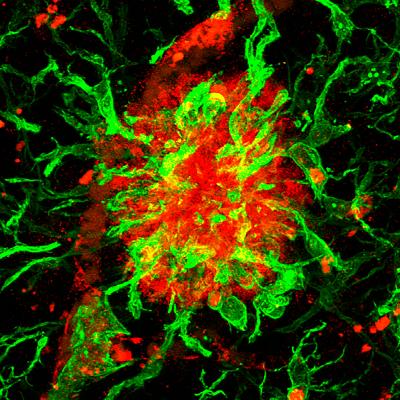
IMAGE

Credit: Pilar Esteve

Experiments performed in mice, in which the main pathogenic markers of the disease have been evaluated, show that the progression of the disease is prevented when the function of this protein is inactivated.

Alzheimer’s disease is characterized by a progressive and irreversible loss of cognitive abilities. “Treatment of the disease represents an unresolved challenge that needs alternative approaches to those currently on trial; there is need of new perspectives that take into account the complexity of the disease. Given its multifactorial origin, these new approaches should be designed against factors that act simultaneously in more than one of the pathological processes of the disease” explains Paola Bovolenta, CSIC researcher at the Molecular Biology Center ‘Severo Ochoa’ (Joint centre of the CSIC and the Autonomous University of Madrid).

This study identifies that the protein SFRP1 (Secreted Frizzled Related Protein 1) is one of those factors. SFRP1 acts in multiple processes and its elevated levels are pathogenic. “We believe that our results represent an innovation in the field of Alzheimer’s disease. We demonstrate that the neutralization of SFRP1 could be a promising therapeutic alternative. This is something that we now need to explore in depth. We also believe that the measure of SFRP1 levels in the cerebrospinal fluid or in serum may represent a useful diagnostic marker in the future, “adds Pilar Esteve, co-responsible of the study and member of the Center for Molecular Biology Severo Ochoa ‘.

###

Pilar Esteve, Javier Rueda-Carrasco, María Inés Mateo, María Jesús Martin-Bermejo, Jonathan Draffin, Guadalupe Pereyra, África Sandonís, Inmaculada Crespo, Inmaculada Moreno, Ester Aso, Paula Garcia-Esparcia, Estrella Gomez-Tortosa, Alberto Rabano, Juan Fortea, Daniel Alcolea, Alberto Lleo, Michael T. Heneka, José M. Valpuesta, José A. Esteban, Isidro Ferrer, Mercedes Dominguez and Paola Bovolenta. Elevated levels of Secreted-Frizzled-Related- Protein 1 contribute to Alzheimer’s disease pathogenesis. Nature Neuroscience. DOI: https://doi.org/10.1038/s41593-019-0432-1

Media Contact
Marta García Gonzalo
[email protected]

Related Journal Article

http://dx.doi.org/10.1038/s41593-019-0432-1

Tags: AgingAlzheimerMedicine/Healthneurobiology
Share12Tweet8Share2ShareShareShare2

Related Posts

Feeling Younger, Moving More: How Aging Attitudes Drive Exercise Habits in Older Adults

September 26, 2026

Weight-Loss Drugs Reshaped Obesity Care, But Surgery Refuses to Fade

September 26, 2026

Scientists Devise a Three-Step Test to Check Whether ICU Data Annotations Can Be Trusted

September 26, 2026

Machine Learning Hunt Pinpoints Gene Linked to a Heart Drug’s Lung Damage

September 26, 2026
Please login to join discussion

POPULAR NEWS

  • Ribosomal Protein RPL28 Emerges as a Driver and Prognostic Marker in Kidney Cancer

    29 shares
    Share 12 Tweet 7
  • Feeling Younger, Moving More: How Aging Attitudes Drive Exercise Habits in Older Adults

    29 shares
    Share 12 Tweet 7
  • Household Biogas Plants Slash Fuelwood Use and Carbon Emissions in Rural Ethiopia

    29 shares
    Share 12 Tweet 7
  • Oxygen Trick Yields First Uniform Semiconducting Monolayer PtSe2 Films for Transistors

    29 shares
    Share 12 Tweet 7

About

BIOENGINEER.ORG

We bring you the latest biotechnology news from best research centers and universities around the world. Check our website.

Follow us

Recent News

Ribosomal Protein RPL28 Emerges as a Driver and Prognostic Marker in Kidney Cancer

Feeling Younger, Moving More: How Aging Attitudes Drive Exercise Habits in Older Adults

Household Biogas Plants Slash Fuelwood Use and Carbon Emissions in Rural Ethiopia

Subscribe to Blog via Email

Enter your email address to subscribe to this blog and receive notifications of new posts by email.

Join 85 other subscribers
  • Contact Us

Bioengineer.org © Copyright 2023 All Rights Reserved.

Welcome Back!

Login to your account below

Forgotten Password?

Retrieve your password

Please enter your username or email address to reset your password.

Log In
No Result
View All Result
  • Homepages
    • Home Page 1
    • Home Page 2
  • News
  • National
  • Business
  • Health
  • Lifestyle
  • Science

Bioengineer.org © Copyright 2023 All Rights Reserved.