The peels, skins, stalks and seeds that most people scrape into the bin at mealtime may be among the richest sources of dietary fibre in the fresh produce aisle. A new study from King’s College London, published in the peer-reviewed International Journal of Food Sciences and Nutrition, analysed twelve common types of fresh produce used in UK foodservice settings and found that the so-called root-to-tip components contained significantly higher levels of dietary fibre than the portions people normally eat in ten of the twelve cases. The findings arrive against a backdrop in which fibre intake across most developed nations falls well short of recommendations, while food waste has grown to what the researchers describe as crisis proportions, prompting the United Nations to set Sustainable Development Goals aimed at tackling both problems simultaneously.
The scale of the mismatch is stark in the UK specifically. Only four percent of British adults meet the recommended minimum daily intake of thirty grams of dietary fibre, and the average consumption sits at just 16.4 grams per day, less than half the target. Meanwhile, approximately ten million tonnes of food is wasted annually in the UK, with fresh fruits and vegetables representing thirty-six percent of that total. The researchers argue that these two problems may be partially connected: a substantial fraction of the produce being discarded is precisely the fraction with the most fibre. Dietary fibre itself plays a well-established role in digestive health, helps reduce the risk of type two diabetes and heart disease, promotes feelings of fullness, and has been associated with reduced risk of cardiovascular disease, certain cancers and premature mortality.
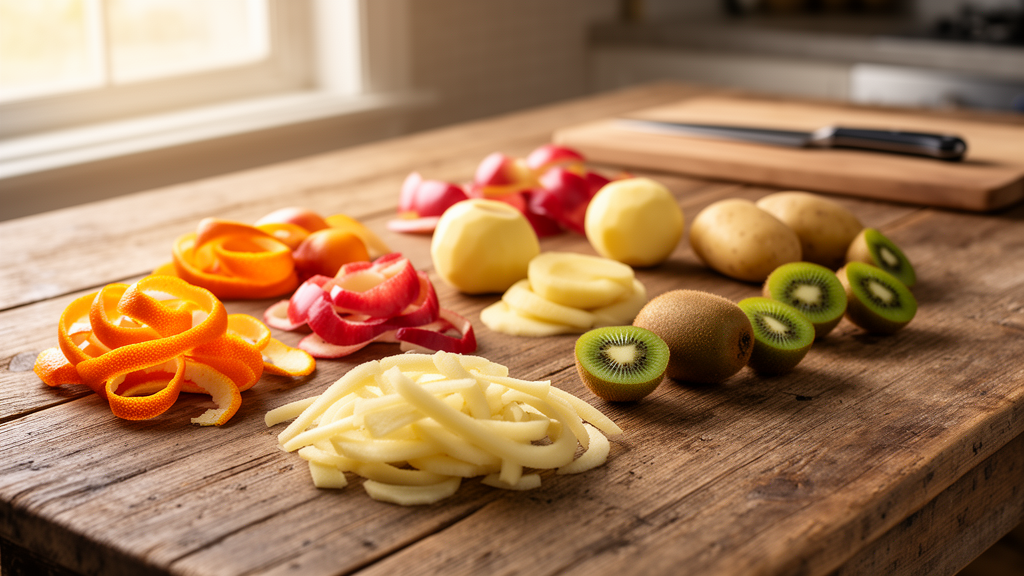
The laboratory work was carried out by an extensive team of experts from King’s College London’s Department of Nutritional Sciences and King’s Food, the university’s catering operation. The produce examined included butternut squash, bell peppers, broccoli, kiwi fruit, pineapple and watermelon. For each item, the team measured the total dietary fibre content of both the root-to-tip components, meaning the peels, skins, seeds and stalks, and the parts typically consumed. The root-to-tip components represented between twenty-five and forty-eight percent of the total weight of the produce, a proportion the study’s project lead describes as a significant share of what shoppers pay for and then throw away.
The individual measurements reveal how dramatic the differences can be. Watermelon rind contained 2.10 grams of fibre per 100 grams, roughly equivalent to the fibre in a slice of wholemeal bread. Butternut squash skin and seeds contained 9.25 grams per 100 grams, nearly as much fibre as a bowl of bran flakes; the researchers note that 100 grams of butternut squash skin and seeds, about the size of a small apple, could provide nearly one-third of the daily recommended fibre intake. The most extreme contrast was pineapple, where the skin and core contained 453.7 percent, or five times, more fibre than the flesh. Eating just the skin and core of a pineapple could supply as much fibre as eating five portions of the flesh alone.
The pattern was not universal, however, and the exceptions matter for how the findings should be interpreted. Broccoli stalks contained 28.4 percent less fibre than the florets people typically eat, meaning that in this case most consumers are already eating the more fibre-rich part of the vegetable. Dr Rachel Gibson, a Reader in Nutrition and Dietetics in King’s Department of Nutritional Sciences, who led the project, said the variation in fibre content between the parts of the food people consume and the parts most throw away was striking. She added that because the discarded components represent up to nearly half the weight of the produce, people are discarding a significant portion of what they buy, and that this is not just a nutritional loss but a financial one.
The research team is careful to frame the work as an argument for better use of whole produce rather than a prescription for specific quantities of unusual foods. Dr Balazs Bajka, Senior Lecturer in Nutritional Sciences, who led the laboratory fibre testing, stressed that the study is not about encouraging people to eat 100 grams of butternut squash skin and seeds to increase fibre intake. Instead, he said, by making better use of the often-overlooked parts of fruits and vegetables as part of everyday meals, there is an opportunity to increase dietary fibre intake in a simple and sustainable way. He also pointed to emerging research suggesting that consuming a wider variety of fibre sources may help maximise the health benefits associated with dietary fibre, though this remains an area of ongoing investigation rather than a settled conclusion.
To explore how people might actually begin incorporating these foods into their diets, and to understand attitudes towards them, the researchers introduced a root-to-tip menu at King’s College London. Before the launch, they tested the concept on a focus group of forty university staff and students. The feedback revealed practical and psychological barriers: participants reported a mental discomfort about eating these items, concerns about digestibility, and a lack of reliable nutritional information online, particularly on social media, where trends change rapidly and credibility is unclear. Lead author Georgia Browne, a Research Assistant at King’s College London, noted that participants viewed nutritional benefits, particularly fibre content, as a stronger motivator than environmental sustainability when considering whether to adopt root-to-tip eating.
The researchers emphasise that root-to-tip eating does not require dramatic dietary changes, only simple modifications to food preparation. At home, they suggest, this could mean leaving skins on kiwi fruit, using broccoli stalks in stir-fries, or incorporating bell pepper seeds into dishes. However, they argue that for tangible results on health at a population level, changes are required at the food manufacturing stage or in the places people go to eat out.
The study carries limitations that the authors themselves flag. Only twelve types of produce were analysed, and each was measured for fibre content when raw, so cooking methods could alter both fibre content and digestibility in ways the laboratory measurements do not capture. The researchers hope future studies will examine how root-to-tip eating can be practically and safely implemented across diverse populations and settings, a question that encompasses food safety, palatability and cultural acceptability as much as nutrition. Concluding the release, Dr Gibson said the work is not about perfection or forcing people to eat unpalatable food, but about recognising the nutritional value in components people have been conditioned to discard, which is why the team trialled the root-to-tip menu at King’s. Even small steps towards using more of the plant, she argued, can have cumulative benefits for health and the environment.
For nutrition science, the study offers a concrete, quantified map of where fibre concentrates within common produce, and it suggests that the fibre gap in wealthy countries may be partly addressable with food already inside people’s kitchens. For waste researchers, it reframes fruit and vegetable preparation waste not merely as an environmental burden but as a nutritional resource whose value depends on whether caterers, manufacturers and home cooks change how they handle it. Whether the striking laboratory differences translate into meaningful improvements in population fibre intake will depend on the implementation research the authors say is still needed, and on whether the barriers identified by their focus group, from discomfort to digestibility concerns, can be overcome in real-world eating environments.
Subject of Research: The dietary fibre content of typically discarded fruit and vegetable components and consumer attitudes towards eating them
Article Title: The parts of fruits and vegetables most throw away could save your health – and the planet
Article References: The parts of fruits and vegetables most throw away could save your health – and the planet. Original publication (Bibliographic details unavailable.)
Image Credits: AI Generated
DOI: Not provided
Keywords: dietary fibre, food waste, root-to-tip eating, nutrition, King's College London, fruit and vegetable peels, foodservice, sustainable eating, public health, butternut squash, pineapple, UK fibre intake
News Source: Daisy Hatcher. (October 30, 2026). Discarded Peels and Skins Hold Up to Five Times More Fibre Than the Parts We Eat. Scienmag.