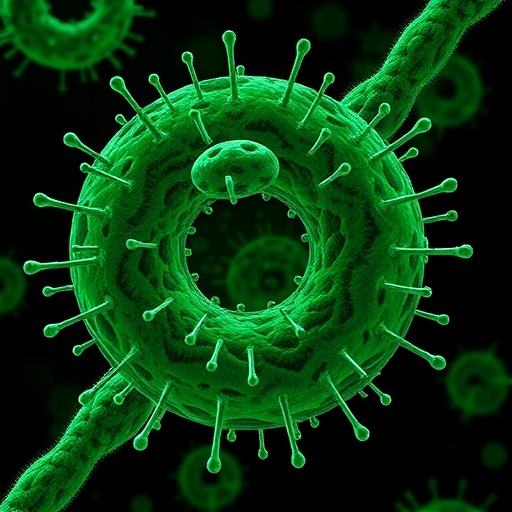
Credit: Baylor College of Medicine
It is well established that diet influences health and disease, but the mechanisms underlying this effect are not fully understood. Shedding light on the diet-health connection, a team led by researchers at Baylor College of Medicine reports today in The American Journal of Clinical Nutrition an association between diet quality and microbiome composition in human colonic mucosa. The researchers found that a high-quality diet is linked to more potentially beneficial bacteria; while a low-quality diet is associated with an increase in potentially harmful bacteria. They propose that modifying the microbiome through diet may be a part of a strategy to reduce the risk of chronic diseases.
“In this study, rather than looking at individual diets, we focused on dietary patterns as defined by the Healthy Eating Index (HEI)-2005 and how they relate to the microbiome,” said corresponding author Dr. Li Jiao, associate professor of medicine-gastroenterology and member of the Dan L Duncan Comprehensive Cancer Center at Baylor College of Medicine. “In a previous study, we found that HEI-2005 is associated with reduced risk of pancreatic cancer.”
Diet is considered a principal factor influencing the structure of the microbial community in the gut, which in turn significantly affects the ability of beneficial or harmful microbes to colonize it. The human gut microbiome also influences nutrient uptake, synthesis of vitamins, energy harvest, chronic inflammation, carcinogen metabolism and the body’s immune and metabolic response, factors that can affect disease risk, Jiao explained.
“One new contribution to this work is that we looked at the microbiome associated with colonic mucosa,” Jiao said. “Most other studies of the human gut microbiome have used fecal samples. We looked at colon mucosal-associated microbiome because we know that this microbiome is different from that in the fecal samples, and it is said to be more related to human immunity and the host-microbiome interaction than the microbiome in fecal samples.”
The researchers used next-generation sequencing techniques to analyze the type and abundance of bacteria present in colonic mucosal biopsies. The samples were obtained endoscopically from enrolled consenting 50- to 75-year-old participants who had a colonoscopy at the Michael E. DeBakey Veterans Affairs Medical Center in Houston between 2013 and 2017. The participants were polyp-free and seemingly healthy. They reported their dietary consumption using a food frequency questionnaire before the colonoscopy.
Dietary quality significantly influences the colon’s microbiome
Jiao and her colleagues found that a good-quality diet as the one recommended by the Dietary Guidelines for Americans to be high in fruits, vegetables and whole grains, and low in added sugar, alcoholic beverages and solid fats is associated with higher abundance of beneficial bacteria such as those with anti-inflammatory properties. A poor-quality diet, on the other hand, is associated with more potentially pathogenic bacteria, such as Fusobacteria, which has been linked to colorectal cancer.
The researchers propose that the effect diet has on the structure of bacterial communities in human colonic mucosa can lead to modifications of innate immunity, inflammation and the risk of chronic diseases.
Their next step is to confirm the study findings in a larger study population. In addition, they want to investigate how bacterial products, or metabolites, such as short-chain fatty acids or secondary bile acids, can modify tissue microenvironment into one that either inhibits or promotes tumor growth or development of other diseases. Also, Jiao and her colleagues are interested in investigating how the unfavorable gut microbiome in individuals consuming a poor diet would respond to tailored dietary intervention using diet, pre- or probiotics, as previous studies have produced mixed results.
“Other factors, such as aging, genetics or certain medications, also influence the risk of disease but we cannot modify them,” Jiao said. “Diet, on the other hand, can be modified and thus provides a strategy to develop a microbiome that promotes healthy living. We suggest that modifying the microbiome through diet may be a part of a plan to reduce the risk of chronic diseases.”
###
Other contributors to this work include Yanhong Liu, Nadim J. Ajami, Hashem B. El-Serag, Clark Hair, David Y. Graham, Donna L. White, Liang Chen, Zhensheng Wang, Sarah Plew, Jennifer Kramer, Rhonda Cole, Ruben Hernaez, Jason Hou, Nisreen Husain, Maria E. Jarbrink-Sehgal, Fasiha Kanwal, Gyanprakash Ketwaroo, Yamini Natarajan, Rajesh Shah, Maria Velez, Niharika Mallepally and Joseph F. Petrosino. The authors are affiliated with one of more of the following institutions: Baylor College of Medicine, Michael E. DeBakey Veterans Affairs Medical Center and Texas Medical Center Digestive Disease Center.
This study was supported by the Cancer Prevention and Research Institute of Texas (RP140767), Gillson Longenbaugh Foundation, Golfers Against Cancer and the NIH grant K07CA181480. Partial support was provided by facilities and resources of the Houston Veterans Affairs Health Services Research & Development Center for Innovations in Quality, Effectiveness and Safety (CIN13-413). Further support came from a Research Training Grant from the Cancer Prevention and Research Institute of Texas (RP160097).
Media Contact
Homa Shalchi
[email protected]
Original Source
https:/
Related Journal Article
http://dx.