Credit: Heloisa Machado
Rio de Janeiro (June 10, 2018) –Since ancient times we have been interested in knowing about our anatomy, physiology and how our bodies respond to different stimulus. Basic understanding of what we are made of and how our bodies work has traditionally relied heavily on investigations using animals as proxies for our own biology. This paradigm started in ancient Greece and has been perpetuated until modern times.
Transgenic, knock-out and so-called "humanized" versions of mice and other animals have progressively been used as models for studying human diseases. However, a growing body of studies and reviews published in the last years have shown that animal models provide fewer new insights into human biology and have been of little use for developing new drugs or interventions than is often assumed. Indeed, 95% of compounds tested in animals fail when tested in humans, due to inefficacy or worse, toxic effects in humans. This reality has called attention to the fact that the animal-based paradigm of biomedical research has failed to deliver the promises made in the last 50 years.
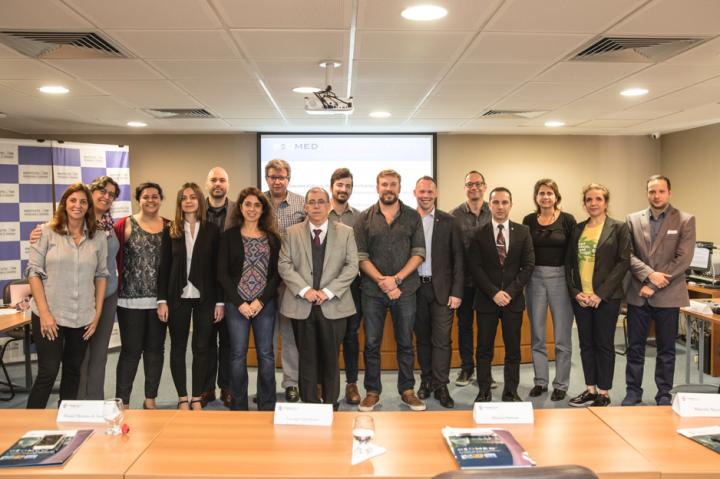
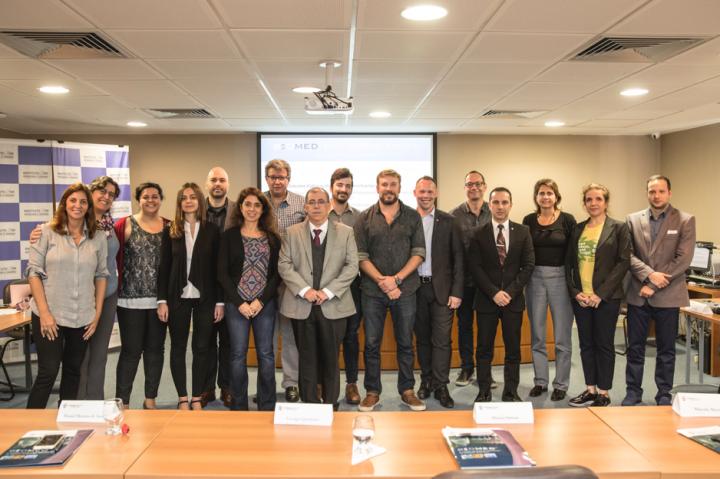
The world's most industrialized economies have been increasingly investing in technologies and opportunities that will eventually replace animal-models used in toxicology and biomedical research. In South America, too, a number of scientists have already recognized this trend and are interested in doing research that do not rely on animal models. Now, the BioMed21 Collaboration, a group of scientists and other stakeholders who together work towards replacing the use of animals in research, has published a paper in the journal Drug Discovery Today entitled "Human-specific approaches to brain research for the 21st century: A South American perspective." The paper reports on a two-day workshop that took place in Rio de Janeiro, in May 2017, organized by Humane Society International in collaboration with D'Or Institute for Research and Education (IDOR). The meeting brought together leading scientists, representing scientific institutions in Brazil and in Argentina, Brazil's National Council for Scientific and Technological Development (CNPq), and other stakeholders to leverage existing national and international projects to improve health research and to engage scientists to shape a new human-specific paradigm for biomedical research in the region.
A number of new technologies that do not rely on animal models are already being used worldwide to study human diseases. The improvement and application of technologies that use human-specific models, such as induced pluripotent stem cells (iPSC) and organs-on-a-chip microphysiological systems, which are tiny models of human organs built on a chip, are gaining track among scientists and those in South America are no exception. Brazil is leader in the region in the development and application of iPSCs and other related in vitro technologies. As reported in this new paper, scientists working in South America are using in vitro and human-specific technologies to study Zika-related microcephaly, Dravet's disease, amyotrophic lateral sclerosis, Parkinson's disease and neuropsychiatric diseases in general. According to Stevens Rehen, IDOR chief research officer and professor at the Biomedical Sciences Institute from Federal University of Rio de Janeiro, and one of the participants in this workshop, "A key benefit of these human-based tools is that the patient's own cells can be used to study his/her disease, test new drugs and develop tailor-made treatments."
In a round-table discussion, participants agreed that the creation of a think-tank could help building consensus around challenging topics related to replacing the use of animals in research. Some of the topics under discussion by the group included the establishment of a science funding strategy and roadmap to ensure sufficient and sustained investment in human biology-based research, ways to facilitate commercial availability and import of human tissues, models and reagents, development of domestic industry/CRO capacity, infrastructure and training. The role of scientific journals in driving or impeding progress towards replacing the use of animal models was also discussed by the group.
###
Media Contact
Marcia Triunfol
[email protected]
351-934-174-565