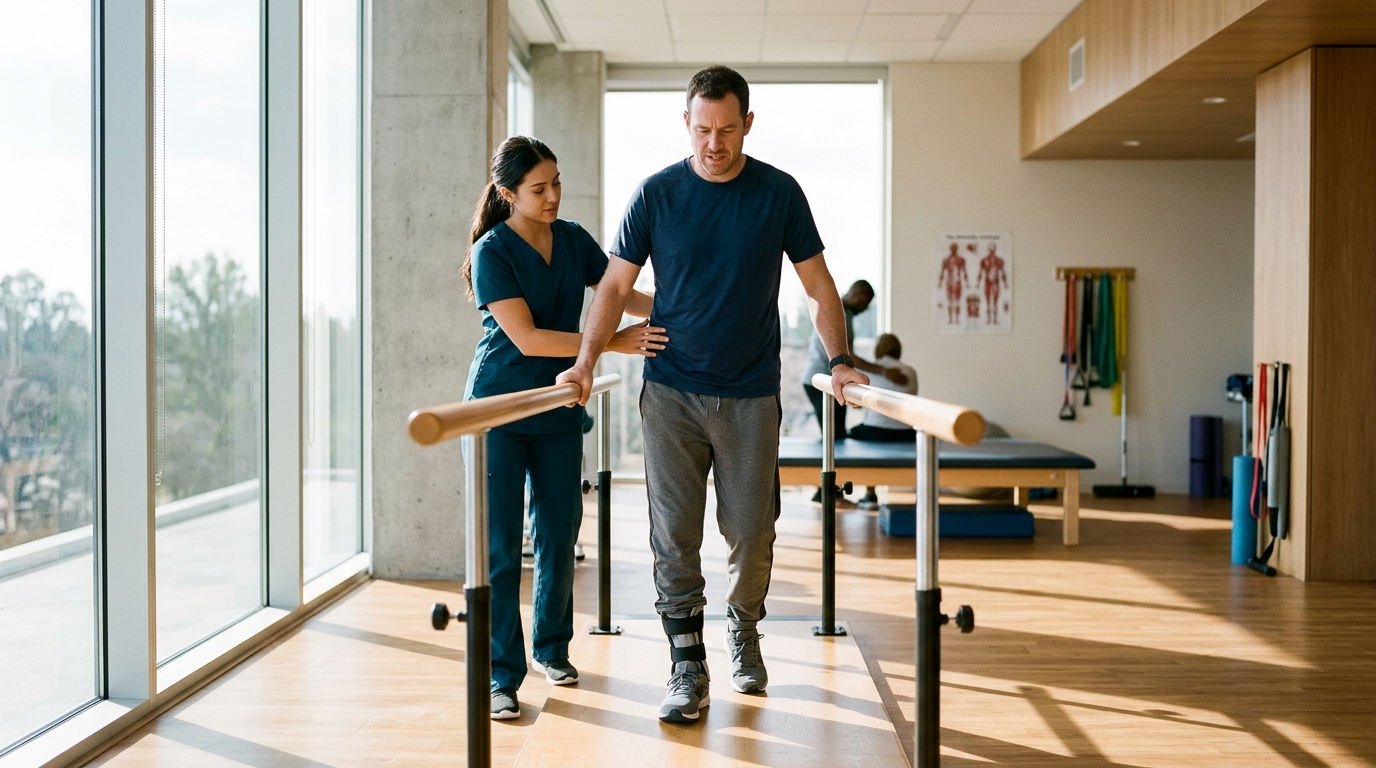
Patients with traumatic spinal cord injuries in northern Pakistan recovered meaningful neurological function even though every one of them waited more than ten days for surgery, according to a retrospective cohort study conducted at Ayub Teaching Hospital in Abbottabad.
The study, published in the Egyptian Journal of Neurosurgery, followed 68 patients operated on between January 2019 and February 2022. All had traumatic spinal cord injuries with preoperative Frankel grades A through D, and all underwent surgery at least ten days after injury because of delayed referral pathways, transportation barriers, limited specialist availability, financial constraints, and restricted operating room capacity. The researchers assessed recovery by measuring the change in Frankel grade between the preoperative assessment and a follow-up conducted 12 to 18 months after surgery.
The cohort comprised 39 males and 29 females with a mean age of 35 years, ranging from 12 to 80. Lumbar fractures were the most common injury pattern, accounting for 48.5 percent of cases, followed by dorsal fractures at 33.8 percent and cervical fractures at 17.6 percent. Most fractures were single-level, and the combined procedure of spinal cord decompression with instrumentation was performed in 60.3 percent of patients, while instrumentation alone was used in the remaining 39.7 percent.
Neurological improvement was quantified as the number of Frankel grades gained. The most frequent outcome was a one-grade improvement, seen in 57.4 percent of patients. Two-grade improvements occurred in 13.2 percent, three-grade improvements in 1.5 percent, and 27.9 percent showed no change. Notably, no patient experienced neurological deterioration after surgery. The authors emphasize that these results should not be interpreted as evidence that delayed intervention is equivalent to early decompression, but they demonstrate that clinically meaningful recovery remains possible even when ideal treatment windows cannot be met.
Preoperative Frankel grade emerged as the strongest predictor of postoperative recovery, with a p-value below 0.001. Among patients who entered surgery with a Frankel grade of D, indicating an incomplete motor and sensory deficit, 96.2 percent improved by one grade to E, meaning no neurological symptoms. Patients with grade C injuries showed more varied outcomes: 41.2 percent improved by one grade, 35.3 percent by two grades, and 23.5 percent showed no improvement. The single patient with a grade B injury improved by three grades. In contrast, the majority of patients with the most severe grade A injuries, representing complete motor and sensory deficit, showed no improvement postoperatively at 58.3 percent, though 29.2 percent improved by one grade and 12.5 percent by two grades.
Fracture level was also significantly associated with recovery, with a p-value of 0.042. Lumbar injuries showed the most favorable outcomes, with 66.7 percent of these patients improving by one Frankel grade and 18.2 percent by two grades. Dorsal fractures followed a similar pattern, with 52.2 percent improving by one grade. Cervical fractures fared worst: 58.3 percent of these patients showed no change in Frankel grade, while 41.7 percent improved by one grade.
Age, sex, fracture multiplicity, and surgical technique showed no significant association with neurological improvement, with p-values of 0.171, 0.192, 1.00, and 0.121 respectively. Fracture morphology, assessed using the AO Spine Injury Classification, showed a tendency to influence recovery but did not reach statistical significance at p = 0.054. Type A1 fractures were the most prevalent morphology at 44.1 percent, followed by type C at 23.5 percent and type A4 at 16.2 percent.
The study’s retrospective design and small sample size limit the strength of its conclusions. The authors note they were unable to assess the impact of MRI findings of the spinal cord or the timing of surgery on postoperative neurological outcomes, because no comparison group undergoing earlier intervention was available. They also did not address several potential predictors, including clinical syndromes, timing of MRI acquisition, presence of intramedullary spinal cord hemorrhage, and facet dislocation. Patients were contacted by telephone for follow-up, and most reported engaging in regular home-based back and limb strengthening and stretching exercises, though none adhered to a formal physiotherapy regimen, leaving the impact of professional physiotherapy within the first three months post-surgery an open question for future research.
Despite these limitations, the findings carry practical weight for clinicians working in low- and middle-income countries, where delayed presentation remains common and outcome data are scarce. The authors searched for comparable studies conducted in Pakistan and found none. They cite a meta-epidemiological study indicating that patients from rural areas had nearly four times the rate of severe in-hospital neurological deficits compared to those from urban areas, and that income inequality measured by the Gini index was associated with increased in-hospital mortality and reduced neurological function at follow-up. In light of these disparities, the authors argue that developing an effective model for managing spinal cord injuries in resource-limited settings is crucial, and they suggest that early decompression could potentially improve outcomes in their setting, though this hypothesis requires validation by future prospective studies.
Meaningful neurological recovery remained achievable despite substantial delays in surgical management, and preoperative neurological status and fracture level were the strongest predictors of improvement. The authors suggest these findings may assist clinicians in counseling patients when early intervention is not feasible, while acknowledging that the impact of surgical timing itself could not be evaluated in this cohort and remains a critical question for future research in LMIC settings.
Subject of Research: Neurological outcomes after delayed surgical management of traumatic spinal cord injury in Pakistan
Article Title: Neurological recovery following delayed surgical management of traumatic spinal cord injury in a resource-limited setting
Article References: Ahmed, S., Khalid, S., Ahmed, A., & Aurangzeb, A. (2026). Neurological recovery following delayed surgical management of traumatic spinal cord injury in a resource-limited setting. Egyptian Journal of Neurosurgery, 41(1), Article 183. https://doi.org/10.1186/s41984-026-00693-w
Image Credits: AI Generated
DOI: 10.1186/s41984-026-00693-w
Keywords: spinal cord injury, delayed surgery, Frankel grade, neurological recovery, Pakistan, LMIC, retrospective cohort, decompression, fracture level, Ayub Teaching Hospital, Neurological, recovery
News Source: Ophelia Keating. (November 6, 2026). Delayed Spine Surgery Still Restored Movement in Most Spinal Cord Injury Patients. Scienmag.