• HOME
  • NEWS
  • EXPLORE
    • CAREER
      • Companies
      • Jobs
    • EVENTS
    • iGEM
      • News
      • Team
    • PHOTOS
    • VIDEO
    • WIKI
  • BLOG
  • COMMUNITY
    • FACEBOOK
    • INSTAGRAM
    • TWITTER
Thursday, November 19, 2026
BIOENGINEER.ORG
No Result
View All Result
  • Login
  • HOME
  • NEWS
  • EXPLORE
    • CAREER
      • Companies
      • Jobs
        • Lecturer
        • PhD Studentship
        • Postdoc
        • Research Assistant
    • EVENTS
    • iGEM
      • News
      • Team
    • PHOTOS
    • VIDEO
    • WIKI
  • BLOG
  • COMMUNITY
    • FACEBOOK
    • INSTAGRAM
    • TWITTER
No Result
View All Result
Bioengineer.org
No Result
View All Result
Home NEWS Science News Biology

Deep learning tool EnzyREx links unannotated proteins to orphan enzyme reactions

by
November 7, 2026
in Biology
Reading Time: 2 mins read
0
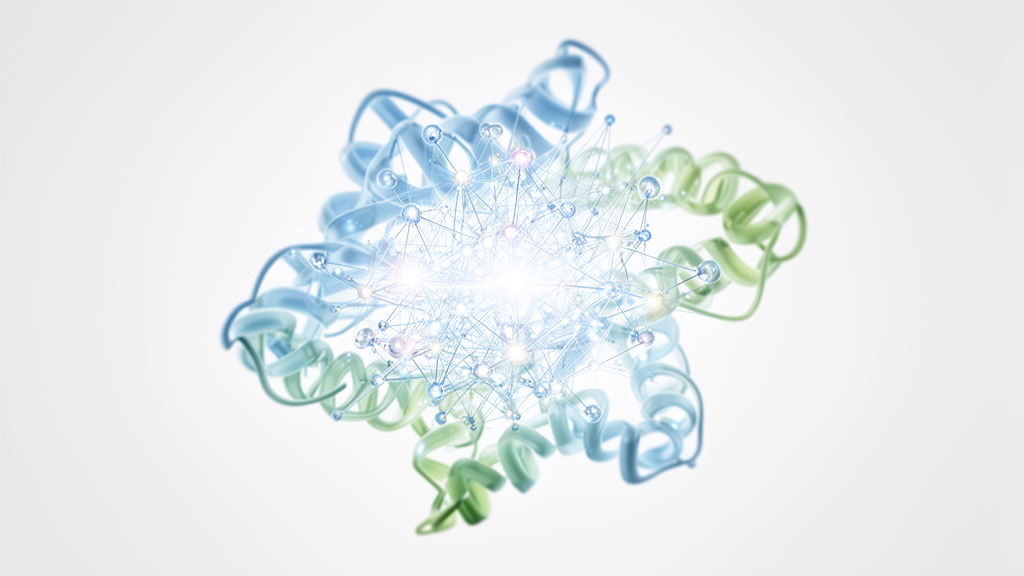
Deep learning tool EnzyREx links unannotated proteins to orphan enzyme reactions

Deep learning tool EnzyREx links unannotated proteins to orphan enzyme reactions

Share on FacebookShare on TwitterShare on LinkedinShare on RedditShare on Telegram

Orphan enzymes, whose corresponding genes remain unidentified, represent a major gap in functional annotation in genomic analysis. A team reporting in Genome Biology now presents EnzyREx, an AI-based framework for comprehensive enzyme screening designed to explore novel enzyme candidates and close part of that gap.

EnzyREx consists of two deep learning models. The first classifies proteins as enzymes or non-enzymes, while the second predicts catalytic capability for enzyme-reaction pairs. Together, the models aim to connect proteins that lack functional annotation with reactions whose genes have never been identified.

According to the study, both models achieved performance comparable to or better than that of existing software, providing a benchmark for how well the approach matches current computational tools for enzyme annotation.

The researchers applied EnzyREx to 1,255 microbiome-related orphan reactions. In that screen, the framework identified candidate proteins for 897 of those reactions, a substantial share of the set that previously lacked gene associations.

The framework is described as a scalable approach for linking unannotated proteins to orphan reactions and extending functional annotation. Because microbiome datasets often contain large numbers of proteins of unknown function, a screening method that operates comprehensively across reactions could help researchers interpret which metabolic capabilities remain unassigned in their data.

The work addresses a persistent problem in genomics: genome sequences reveal many open reading frames, but not all encoded proteins can be assigned to known enzymatic functions. Reactions observed biochemically without a known gene are termed orphan reactions, and proteins without assigned function are left unannotated. EnzyREx targets this annotation gap directly by predicting which proteins could carry out which reactions.

By classifying proteins first and then predicting catalytic capability for enzyme-reaction pairs, the two-stage design separates the question of whether a protein is an enzyme at all from the question of which reaction it may catalyze. The reported benchmark results indicate that this design performs at least as well as existing software in both tasks.

The identification of candidates for 897 of 1,255 microbiome-related orphan reactions suggests that a large fraction of microbiome reaction gaps may be addressable with current deep learning methods, although the framework reports candidates rather than experimentally confirmed gene assignments.

EnzyREx thus offers a computational route to extending functional annotation across microbiome datasets, turning lists of unannotated proteins into testable hypotheses about which enzymes might fill known metabolic reactions.

Subject of Research: A deep learning framework for comprehensive enzyme screening that links unannotated proteins to orphan enzyme reactions

Article Title: EnzyREx: deep learning enables reaction-based comprehensive enzyme screening

Article References: Hirota, K., & Yamada, T. (2026). EnzyREx: deep learning enables reaction-based comprehensive enzyme screening. Genome Biology. https://doi.org/10.1186/s13059-026-04312-7

Image Credits: AI Generated

DOI: 10.1186/s13059-026-04312-7

Keywords: EnzyREx, deep learning, orphan enzymes, functional annotation, enzyme screening, microbiome, enzyme-reaction pairs, protein classification, genomics, bioinformatics, deep, learning

News Source: Blake Davidson. (November 7, 2026). Deep learning tool EnzyREx links unannotated proteins to orphan enzyme reactions. Scienmag.

Tags: Bioinformaticsdeepdeep learningenzyme screeningenzyme-reaction pairsEnzyRExfunctional annotationGenomicslearningMicrobiomeorphan enzymesprotein classification
Share12Tweet7Share2ShareShareShare1

Related Posts

Afghan Returnees Face Severe Plant Knowledge Erosion Linked to Forced Expulsion

Afghan Returnees Face Severe Plant Knowledge Erosion Linked to Forced Expulsion

November 19, 2026
Bacillus Velezensis Switches Metabolic Pathways to Survive Graded Sodium Selenite Stress

Bacillus Velezensis Switches Metabolic Pathways to Survive Graded Sodium Selenite Stress

November 19, 2026

Mouse Study Maps Chromatin and Splicing Shifts Driving Sertoli Cell Maturation

November 19, 2026

ERBB4 Upregulation Contributes to Parathyroid Dysfunction in Secondary Hyperparathyroidism

November 19, 2026

POPULAR NEWS

  • Mouse Study Maps Chromatin and Splicing Shifts Driving Sertoli Cell Maturation

    Mouse Study Maps Chromatin and Splicing Shifts Driving Sertoli Cell Maturation

    29 shares
    Share 12 Tweet 7
  • Meta-Analysis Identifies Major Factors Shaping Clinical Healthcare Provider Performance

    29 shares
    Share 12 Tweet 7
  • Layered Double Hydroxide Nanomaterials Advance Targeted Drug Delivery Across Biomedical Applications

    29 shares
    Share 12 Tweet 7
  • Lovastatin and 1-MCP Suppress Scald Genes in Cold-Stored Apples

    29 shares
    Share 12 Tweet 7

About

We bring you the latest biotechnology news from best research centers and universities around the world. Check our website.

Follow us

Recent News

Frequent Antenatal Visits and Early Initiation Boosted Preventive Malaria Therapy in Kenya

Multicenter Case Series Expands Phenotypic Spectrum in FBXW7 Related Neurodevelopmental Disorder

Coal Gangue Replacement Up to Thirty Percent Optimizes Geopolymer Pervious Concrete

Subscribe to Blog via Email

Enter your email address to subscribe to this blog and receive notifications of new posts by email.

Join 88 other subscribers
  • Contact Us

Bioengineer.org © Copyright 2023 All Rights Reserved.

Welcome Back!

Login to your account below

Forgotten Password?

Retrieve your password

Please enter your username or email address to reset your password.

Log In
No Result
View All Result
  • Homepages
    • Home Page 1
    • Home Page 2
  • News
  • National
  • Business
  • Health
  • Lifestyle
  • Science

Bioengineer.org © Copyright 2023 All Rights Reserved.