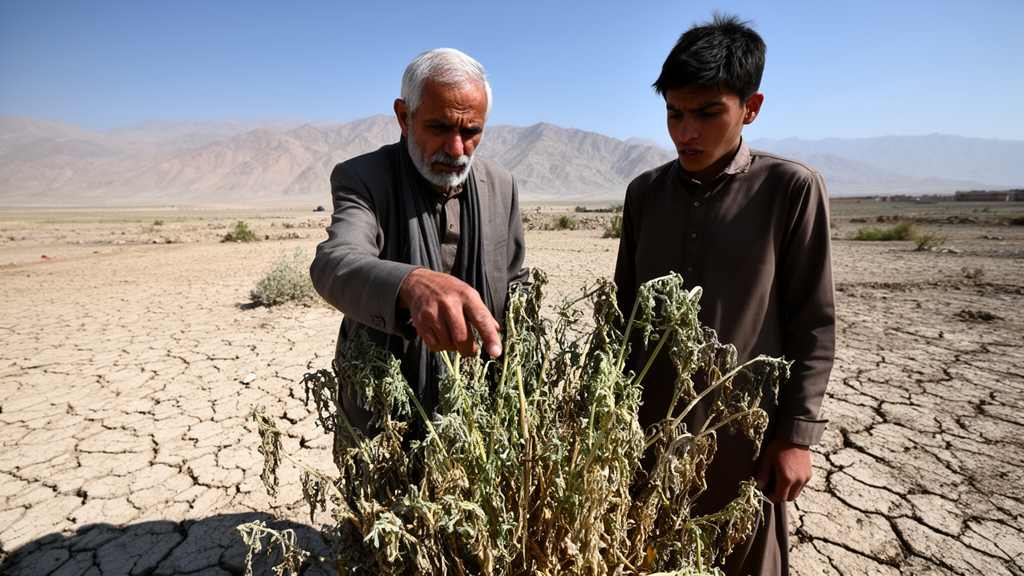
Afghan returnees repatriated from Pakistan experience severe erosion and fragmentation of their local ecological knowledge, retaining only a fraction of their traditional wild food and medicinal plant practices. In a field assessment conducted at a transit facility in eastern Afghanistan, researchers found that 83 percent of reported plant taxa survived solely as memories rather than active traditions. Crucially, the investigation revealed that the manner of return—specifically whether families returned voluntarily or were forcibly expelled—served as the primary statistical predictor of botanical knowledge retention, outweighing conventional demographic markers such as age, gender, and the duration of displacement.
The research was carried out over a four-week period in May 2025 at the Omari Refugee Temporary Shelter Centre located in Nangarhar Province, eastern Afghanistan. This facility serves as a high-turnover transit station where displaced households typically pass through within days of crossing the international border at Torkham. Working in accordance with the International Society of Ethnobiology Code of Ethics, the research team conducted semi-structured interviews in Pashto and Farsi/Dari with 142 adult returnees, comprising 61 men and 81 women selected through stratified random sampling.
The investigation focused specifically on ethnobotanical knowledge surrounding wild food plants and herbal teas, two domains integral to Afghan domestic culture and social life. Gathered wild greens traditionally define the spring diet and evoke the memory of home villages across Afghanistan, while herbal infusions represent the primary domestic response to common ailments including coughs, fevers, and digestive discomfort. In addition, herbal teas serve as an essential medium of hospitality structuring Pashtun social interactions. Because these dried botanicals are lightweight, durable, and inexpensive, they historically constituted the most portable components of Afghan biocultural heritage, making their disappearance particularly diagnostic of cultural erosion.
Across the entire sample of 142 interviewees, participants identified a combined total of only 23 plant taxa, representing 23 distinct genera and 18 botanical families. This documented inventory reflects an exceptionally depleted botanical repertoire among the returning population. On average, respondents recalled merely 0.56 plant taxa each. Furthermore, 63 percent of the surveyed returnees were unable to name a single wild food or medicinal plant taxon, illustrating widespread biocultural loss across the transit cohort.
Of the 23 recorded plant taxa, 19 taxa (83 percent) were cited exclusively as recollections of past practices rather than ongoing activities. Only a single plant taxon was reported as still being actively foraged by the respondents, while three additional taxa were maintained solely through commercial purchase or limited cultivation. The medicinal plant Trachyspermum ammi emerged as the single taxon mentioned by more than 10 percent of the surveyed returnees, standing out as an isolated survivor within an otherwise heavily fractured ethnobotanical corpus.
Statistical analyses demonstrated that the circumstances of repatriation exerted a decisive influence on botanical recall. Returnees who repatriated voluntarily recalled nearly twice as many plant taxa as those who suffered forced expulsion, a difference confirmed through Mann–Whitney U testing (U = 912.0, p = 0.008, rank-biserial correlation r = 0.31). Furthermore, voluntary returnees were markedly more likely to name at least one plant, with 64 percent recalling a taxon compared to only 33 percent of expelled individuals, yielding an adjusted odds ratio of 3.81 (95 percent confidence interval: 1.42 to 10.21, p = 0.008). In contrast, differences based on participant gender were negligible and lacked statistical significance.
The investigators determined that the erosion of ethnobotanical knowledge was primarily governed by procurement channels during displacement rather than an intrinsic failure to value botanical traditions. During prolonged exile in Pakistan, every one of the 19 plant taxa that now survive only in memory had been procured through commercial transactions in local bazaars rather than through wild harvesting. Consequently, the four taxa that remain in active contemporary use correspond strictly to items that require zero land access to harvest and can be acquired for minimal expense.
To evaluate broader trajectories of biocultural change, the authors compared their findings against published data from a cohort of Afghan refugees still residing across the border in Pakistan. This comparative analysis documented a steep decline from nine active plant genera among long-term refugees in Pakistan to just four active genera among the repatriated group in Afghanistan. The two populations shared only one active genus, Trachyspermum ammi, resulting in an exceptionally low Jaccard similarity index of J = 0.08 between the cohorts.
To contextualize these findings, the study introduces the theoretical concept of dormant or inert knowledge—information that remains culturally remembered but has ceased to be behaviorally practiced. The researchers emphasize that double displacement, encompassing initial exile followed by repatriation, generates a more severe pattern of biocultural fragmentation than single-step voluntary migration, compounded by urban living and the cultural stigmatization of foraging. The authors caution that dormant ethnobotanical knowledge carries an inherent expiration date, inevitably vanishing once the final living generation possessing memory of practical harvesting and preparation passes away.
Based on their empirical findings, the authors outline targeted interventions for international humanitarian frameworks, including the United Nations High Commissioner for Refugees and the Food and Agriculture Organization. Recommendations include incorporating local ecological knowledge documentation and screened native seed distribution into emergency returnee response programmes, while targeting expelled households first. The researchers also advocate establishing community pharmacopoeia gardens at temporary transit shelters, instituting school-based ethnobotanical transmission programs in resettlement zones, and prioritizing the 19 dormant taxa to document fragile procedural knowledge before it is permanently lost.
To rigorously evaluate the determinants of botanical retention, the research team implemented a comprehensive analytical workflow across the survey data. Beyond calculating the frequency of quotation for every reported plant taxon, the investigators evaluated differences in the total number of recalled taxa using Mann–Whitney U and Kruskal–Wallis tests. The researchers subsequently constructed both Poisson and logistic generalised linear models to determine which variables accounted for variation in recall. These quantitative models demonstrated that conventional demographic attributes failed to explain retention patterns. Across the surveyed returnee population, differences based on participant sex, age, and length of exile proved negligible and statistically non-significant. Instead, whether an individual underwent forced expulsion or returned voluntarily served as the single decisive empirical factor distinguishing those who retained botanical knowledge from those who recalled nothing.
The observed 83 percent rate of local ecological knowledge erosion positions Afghan returnees among the most severe cases of biocultural depletion documented in migrant ethnobotany. The authors argue that this acute collapse reflects the compounding pressures of forced mobility, prolonged urbanisation, and the cultural stigmatisation of foraging practices during exile. Within the emerging framework of refugee ethnobiology, the researchers conceptualise the layered trajectory of exile followed by repatriation as a double displacement that inflicts qualitatively distinct damage compared to voluntary or single-step migratory movements.
The investigation also established that the erosion of ethnobotanical knowledge was governed primarily by commercial procurement channels rather than an intrinsic loss of cultural appreciation for plants. During their protracted exile in Pakistan, returnees acquired every one of the 19 taxa that now survive only in memory from local bazaars rather than through gathering. The four taxa remaining in active use persist solely because they can be obtained without access to land and for next to nothing. That cross-border comparison demonstrated a dramatic collapse from nine active plant genera down to just four, with Trachyspermum ammi persisting as the sole shared genus between the two groups.
Central to the study’s analytical contribution is the formulation of dormant or inert knowledge as a distinct theoretical condition where ethnobotanical information remains culturally remembered but ceases to be behaviourally practiced. The researchers stress that this dormant state carries an unavoidable expiry date, persisting only as long as living generations who previously gathered or administered the plants survive. Crucially, the 19 taxa preserved exclusively in memory represent the sole remaining repository of nuanced practical competence. Abstract plant names alone fail to preserve essential contextual details regarding gathering seasons, specific ecological habitats, preparation methods, and therapeutic dosages. Consequently, when the final generation possessing direct recollection of these practices passes away without transmitting their functional expertise, the remaining biocultural heritage permanently lapses.
To mitigate this irreversible biocultural loss, the authors propose concrete policy measures intended for integration into international emergency relief architectures, specifically calling upon the United Nations High Commissioner for Refugees and the Food and Agriculture Organization. A central recommendation involves embedding ethnobotanical documentation and targeted seed distribution directly into emergency frameworks for returning households, restricting distributed plant material to taxa native or long naturalised in the receiving region and screening it against the national invasive-species inventory. Furthermore, establishing community pharmacopoeia gardens at high-turnover transit facilities like the Omari shelter provides an accessible tool to support immediate health needs and revitalise botanical knowledge. Safe mobility networks and home garden schemes should prioritise expelled households first, complemented by school-based transmission programmes and longitudinal monitoring across forced displacement cycles.
Subject of Research: Erosion of local ecological plant knowledge among Afghan returnees
Article Title: Back-and-forth moribund ethnobotany: erosion and fragmentation of Local Ecological Knowledge among Afghan returnees in contemporary Afghanistan and perspectives for an ethnobiology of the refugees
Article References: Manduzai, A. K., Karimi, A. G., & Pieroni, A. (2026). Back-and-forth moribund ethnobotany: erosion and fragmentation of Local Ecological Knowledge among Afghan returnees in contemporary Afghanistan and perspectives for an ethnobiology of the refugees. Journal of Ethnobiology and Ethnomedicine. https://doi.org/10.1186/s13002-026-00960-y
Image Credits: AI Generated
DOI: 10.1186/s13002-026-00960-y
Keywords: Local Ecological Knowledge, ethnobotany, Afghan returnees, forced migration, double displacement, Trachyspermum ammi, wild food plants, herbal teas, Nangarhar Province, Omari Temporary Shelter Centre, dormant knowledge, biocultural heritage, repatriation, refugee ethnobiology, plant foraging, Jaccard similarity index, pharmacopoeia gardens
News Source: Drew Townsend. (November 19, 2026). Afghan Returnees Face Severe Plant Knowledge Erosion Linked to Forced Expulsion. Scienmag.