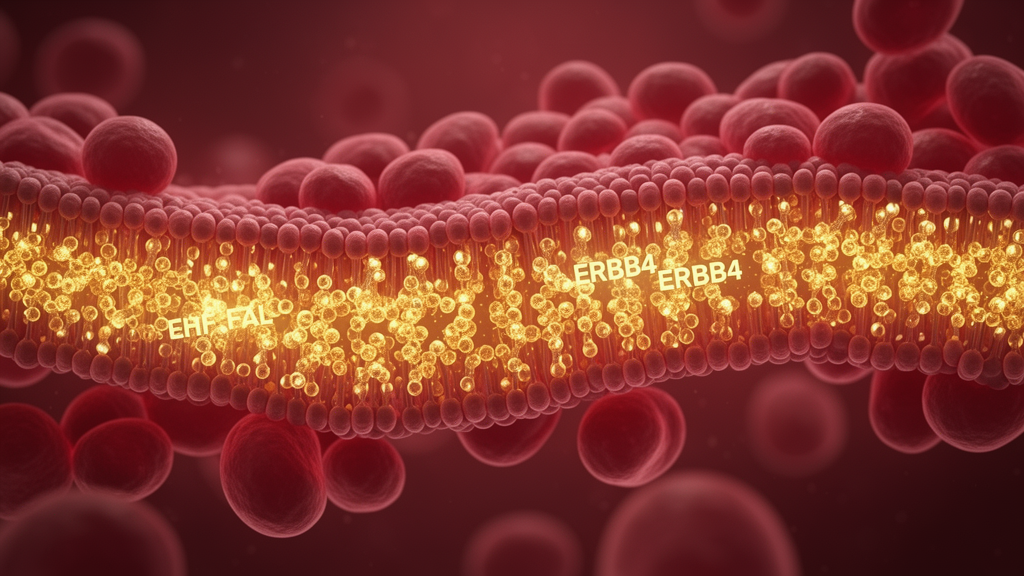
Integrated transcriptomic analyses and single-nucleus RNA sequencing of human parathyroid tissues have identified ERBB4 as a markedly upregulated gene that contributes to parathyroid cell dysfunction and the progression of secondary hyperparathyroidism in chronic kidney disease. Published in Frontiers in Cell and Developmental Biology, the research demonstrates that parathyroid gland hyperfunction in affected patients involves significant transcriptional changes and pathway activation. Experimental evaluations showed that targeting ERBB4 and ERBB signaling directly suppresses cellular proliferation and reduces parathyroid hormone secretion.
Secondary hyperparathyroidism represents a frequent and serious complication of chronic kidney disease, characterized clinically and pathologically by parathyroid hyperplasia alongside excessive parathyroid hormone secretion. Patients experiencing chronic kidney disease face ongoing parathyroid overactivity, yet the precise regulatory mechanisms governing secondary hyperparathyroidism progression have remained incompletely understood.
To investigate the molecular alterations in diseased tissue, researchers generated single-nucleus RNA sequencing profiles of parathyroid tissues collected from patients with secondary hyperparathyroidism and control subjects. The application of single-nucleus RNA sequencing allowed the investigators to establish a comprehensive transcriptional landscape directly comparing human normal parathyroid glands with parathyroid glands affected by secondary hyperparathyroidism. This single-nucleus resolution enabled high-resolution profiling of gene expression patterns across parathyroid cell populations between normal and diseased states.
Within this single-nucleus transcriptomic landscape, the authors performed pseudotime trajectory analysis to examine cell differentiation dynamics. The pseudotime trajectory analysis revealed a progressive enrichment of the ERBB signaling pathway along trajectories leading toward terminal cell states during parathyroid cell differentiation. Subsequent analyses of the single-nucleus RNA-seq data confirmed robust activation of ERBB signaling throughout parathyroid tissues from patients with secondary hyperparathyroidism, linking pathway activity to terminal cell differentiation states.
To screen for key candidate genes involved in the disorder, the researchers integrated multiple RNA sequencing datasets, incorporating bulk transcriptomic data and publicly available transcriptomic data alongside their newly generated single-nucleus profiles. Integrated transcriptomic analyses identified ERBB4 as a markedly upregulated gene in parathyroid tissues obtained from patients with secondary hyperparathyroidism. Single-nucleus transcriptomic evaluations further revealed that ERBB4 demonstrated particularly high expression in oxyphil cells within the diseased parathyroid tissues.
Following the transcriptomic discovery of ERBB4 upregulation, the researchers examined whether these alterations corresponded to changes in protein levels within patient samples. Immunohistochemistry was performed on parathyroid tissues collected from uremic patients diagnosed with secondary hyperparathyroidism. The immunohistochemistry analyses confirmed elevated ERBB4 protein levels in the parathyroid tissues of uremic patients, providing validation that the transcriptional increase in ERBB4 corresponds to heightened protein presence in chronic kidney disease-associated secondary hyperparathyroidism.
To establish the biological relevance of ERBB4 and ERBB pathway activation, the study conducted in vitro functional experiments using primary parathyroid cells derived directly from patients with secondary hyperparathyroidism. In these patient-derived primary parathyroid cell cultures, experimental inhibition of ERBB4 or the wider ERBB signaling pathway suppressed parathyroid cell proliferation. Furthermore, inhibiting ERBB4 or ERBB signaling effectively reduced excessive parathyroid hormone secretion in the cultured patient cells.
Together, the findings generate high-resolution transcriptomic profiles of human secondary hyperparathyroidism parathyroid tissues, delineating critical cellular pathological features at single-nucleus resolution. By demonstrating marked ERBB4 upregulation in oxyphil cells, pathway activation along differentiation trajectories, elevated protein levels in uremic tissue, and proliferation suppression upon pathway inhibition, the study identifies ERBB4 as a potential contributor to parathyroid gland hyperfunction in chronic kidney disease-associated secondary hyperparathyroidism.
Subject of Research: ERBB4 expression and ERBB signaling in secondary hyperparathyroidism
Article Title: ERBB4 contributes to parathyroid cell dysfunction and progression of secondary hyperparathyroidism
Article References: Ji, L., & Hu, Z. (2026). ERBB4 contributes to parathyroid cell dysfunction and progression of secondary hyperparathyroidism. Frontiers in Cell and Developmental Biology, 14, Article 1878179. https://doi.org/10.3389/fcell.2026.1878179
Image Credits: AI Generated
DOI: 10.3389/fcell.2026.1878179
Keywords: secondary hyperparathyroidism, chronic kidney disease, ERBB4, ERBB signaling, parathyroid hormone, single-nucleus RNA sequencing, transcriptomics, parathyroid hyperplasia, oxyphil cells, pseudotime trajectory analysis, immunohistochemistry, primary parathyroid cells, cell proliferation, parathyroid gland hyperfunction, uremia, bulk RNA sequencing, parathyroid cell differentiation
News Source: Drew Townsend. (November 19, 2026). ERBB4 Upregulation Contributes to Parathyroid Dysfunction in Secondary Hyperparathyroidism. Scienmag.