

• HOME
  • NEWS
  • EXPLORE
    • CAREER
      • Companies
      • Jobs
    • EVENTS
    • iGEM
      • News
      • Team
    • PHOTOS
    • VIDEO
    • WIKI
  • BLOG
  • COMMUNITY
    • FACEBOOK
    • INSTAGRAM
    • TWITTER
Saturday, January 10, 2026
BIOENGINEER.ORG
No Result
View All Result
  • Login
  • HOME
  • NEWS
  • EXPLORE
    • CAREER
      • Companies
      • Jobs
        • Lecturer
        • PhD Studentship
        • Postdoc
        • Research Assistant
    • EVENTS
    • iGEM
      • News
      • Team
    • PHOTOS
    • VIDEO
    • WIKI
  • BLOG
  • COMMUNITY
    • FACEBOOK
    • INSTAGRAM
    • TWITTER
  • HOME
  • NEWS
  • EXPLORE
    • CAREER
      • Companies
      • Jobs
        • Lecturer
        • PhD Studentship
        • Postdoc
        • Research Assistant
    • EVENTS
    • iGEM
      • News
      • Team
    • PHOTOS
    • VIDEO
    • WIKI
  • BLOG
  • COMMUNITY
    • FACEBOOK
    • INSTAGRAM
    • TWITTER
No Result
View All Result
Bioengineer.org
No Result
View All Result
Home NEWS Science News Health

Deep learning helps predicting occult peritoneal metastasis in stomach cancer

Bioengineer by Bioengineer
January 7, 2021
in Health
Reading Time: 2 mins read
0
IMAGE
Share on FacebookShare on TwitterShare on LinkedinShare on RedditShare on Telegram

IMAGE

Credit: SIAT

Stomach cancer, or gastric cancer, is a common gastrointestinal malignancy. Peritoneal metastasis occurs in a majority of patients with advanced stomach cancer and is considered as an aggressive disease with poor outcomes.

Patients with peritoneal metastasis are typically not eligible for curative surgery. Therefore, preoperative detection and diagnosis of peritoneal metastasis are critical to inform treatment decision-making and avoid unnecessary surgery.

A new study published in the JAMA Network Open on Jan. 5 shows that deep learning can help predicting the occult peritoneal metastasis in stomach cancer. It provides a novel and noninvasive approach for stomach cancer patients and may inform individualized surgical management of stomach cancer.

The study was conducted by Dr. XIE Yaoqin’s group from the Shenzhen Institutes of Advanced Technology (SIAT) of the Chinese Academy of Sciences, Dr. LI Ruijiang from Stanford University, Dr. LI Guoxin from Nanfang Hospital, and Dr. ZHOU Zhiwei from Sun Yat-sen University Cancer Center.

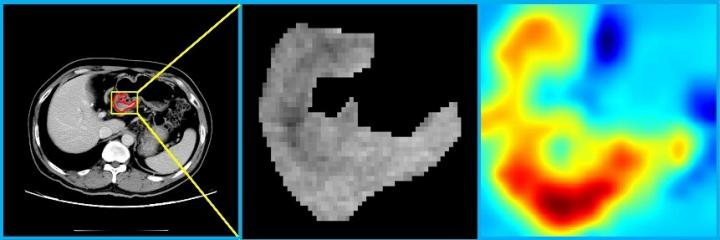
The researchers developed a deep learning model called Peritoneal Metastasis Network (PMetNet) to predict clinically occult peritoneal metastasis using preoperative computed tomography (CT) images in patients with stomach cancer.

Dr. JIANG Yuming from Stanford University, one co-first author of this study, explained that the proposed deep learning model may serve as a reliable noninvasive tool for the early identification of patients with clinically occult peritoneal metastasis.

“It can also inform individualized preoperative treatment decision-making and may avoid unnecessary surgery and complications,” said Ph.D. candidate LIANG Xiaokun from SIAT, the other co-first author.

###

Media Contact
ZHANG Xiaomin
[email protected]

Original Source

http://english.cas.cn/

Tags: cancerDiagnosticsMedicine/Health
Share12Tweet8Share2ShareShareShare2

Related Posts

Wearable NIR OLEDs Enable Non-Invasive Hair Treatment

January 10, 2026

FDX1-Driven Cuproptosis Worsens Cholestatic Liver Damage

January 10, 2026

China’s Multi-Center Study on Preterm Small-for-Gestational-Age Neonates

January 10, 2026

Compassion Fatigue in Nursing Interns: Stress and Solutions

January 10, 2026
Please login to join discussion

POPULAR NEWS

  • Enhancing Spiritual Care Education in Nursing Programs

    154 shares
    Share 62 Tweet 39
  • PTSD, Depression, Anxiety in Childhood Cancer Survivors, Parents

    145 shares
    Share 58 Tweet 36
  • Impact of Vegan Diet and Resistance Exercise on Muscle Volume

    46 shares
    Share 18 Tweet 12
  • SARS-CoV-2 Subvariants Affect Outcomes in Elderly Hip Fractures

    45 shares
    Share 18 Tweet 11

About

We bring you the latest biotechnology news from best research centers and universities around the world. Check our website.

Follow us

Recent News

Wearable NIR OLEDs Enable Non-Invasive Hair Treatment

Hydrocortisone Safe for Preterm Infants’ Heart Health

FDX1-Driven Cuproptosis Worsens Cholestatic Liver Damage

Subscribe to Blog via Email

Enter your email address to subscribe to this blog and receive notifications of new posts by email.

Join 71 other subscribers
  • Contact Us

Bioengineer.org © Copyright 2023 All Rights Reserved.

Welcome Back!

Login to your account below

Forgotten Password?

Retrieve your password

Please enter your username or email address to reset your password.

Log In
No Result
View All Result
  • Homepages
    • Home Page 1
    • Home Page 2
  • News
  • National
  • Business
  • Health
  • Lifestyle
  • Science

Bioengineer.org © Copyright 2023 All Rights Reserved.


