• HOME
  • NEWS
  • EXPLORE
    • CAREER
      • Companies
      • Jobs
    • EVENTS
    • iGEM
      • News
      • Team
    • PHOTOS
    • VIDEO
    • WIKI
  • BLOG
  • COMMUNITY
    • FACEBOOK
    • INSTAGRAM
    • TWITTER
Saturday, May 30, 2026
BIOENGINEER.ORG
No Result
View All Result
  • Login
  • HOME
  • NEWS
  • EXPLORE
    • CAREER
      • Companies
      • Jobs
        • Lecturer
        • PhD Studentship
        • Postdoc
        • Research Assistant
    • EVENTS
    • iGEM
      • News
      • Team
    • PHOTOS
    • VIDEO
    • WIKI
  • BLOG
  • COMMUNITY
    • FACEBOOK
    • INSTAGRAM
    • TWITTER
  • HOME
  • NEWS
  • EXPLORE
    • CAREER
      • Companies
      • Jobs
        • Lecturer
        • PhD Studentship
        • Postdoc
        • Research Assistant
    • EVENTS
    • iGEM
      • News
      • Team
    • PHOTOS
    • VIDEO
    • WIKI
  • BLOG
  • COMMUNITY
    • FACEBOOK
    • INSTAGRAM
    • TWITTER
No Result
View All Result
Bioengineer.org
No Result
View All Result
Home NEWS Science News Chemistry

Decoding self-initiative: How the brain governs goal-directed actions

Bioengineer by Bioengineer
June 4, 2024
in Chemistry
Reading Time: 3 mins read
0
Two-photon microscopy helps researchers to observe brain mesocortical axon terminals (bright green) during a self-initiated lever-press task.
Share on FacebookShare on TwitterShare on LinkedinShare on RedditShare on Telegram

Ever wondered how your brain decides when to act? Initiating actions with a specific goal in mind is a complex process. Previous research has identified certain parts of the brain and chemical signals involved. However, it remains unclear what information these signals convey and how they spark initiative.
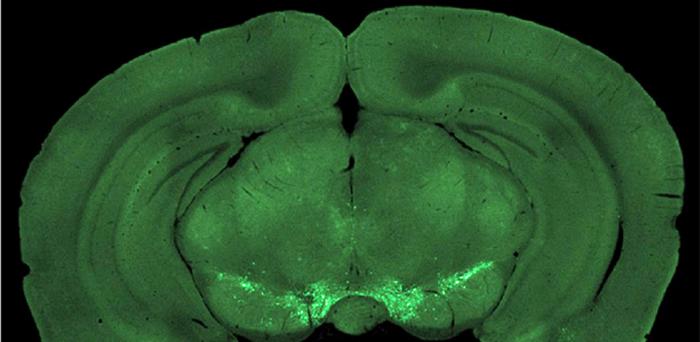
Two-photon microscopy helps researchers to observe brain mesocortical axon terminals (bright green) during a self-initiated lever-press task.

Credit: M. Ohtake, K. Abe, M. Hasegawa, T. Itokazu, et al., doi 10.1117/1.NPh.11.3.033408.

Ever wondered how your brain decides when to act? Initiating actions with a specific goal in mind is a complex process. Previous research has identified certain parts of the brain and chemical signals involved. However, it remains unclear what information these signals convey and how they spark initiative.

Recent research reported in Neurophotonics dives into this mystery by investigating how mice time their actions in pursuit of rewards, exploring the role of a specific brain pathway called the mesocortical pathway, in the context of self-initiated movement.

They created a task for mice where they could press a lever at will and receive a reward. The mice would receive a better reward if they waited longer before pressing. The research team found that a certain type of brain signal, mediated by dopamine and its “D2” receptors, plays a crucial role in these self-timed actions. That brain signal kicks into gear just before the mice decide to press a lever but, surprisingly, doesn’t fire up when the mice respond to cues.

To understand better why that might be, the team used a novel imaging technique to observe the activity of these brain signals — just before the mice initiated their actions. They discovered a gradual increase in activity in certain parts of the brain about half a second before the self-timed presses. Remarkably, this increase in activity occurred regardless of whether the mice pressed the lever quickly for a small reward or waited for a larger one.

According to senior author Takashi Sato, principal investigator in the Sato Brain Lab at the Medical University of South Carolina, “These findings offer tantalizing clues into the brain’s inner workings and contribute to a deeper understanding of how brains control goal-directed behavior.”

The research results raise some interesting questions: How might disruptions in the dopamine-mediated signaling pathway affect an individual’s ability to time their actions effectively? Are there parallels between the mechanisms observed in mice and those at play in human decision-making processes? Could manipulating dopamine receptors lead to novel interventions for conditions characterized by impaired impulse control, such as addiction or ADHD?

For details about the research advance, see the original Gold Open Access article by M. Ohtake, K. Abe, M. Hasegawa, T. Itokazu, et al., “Encoding of self-initiated actions in axon terminals of the mesocortical pathway,” Neurophotonics 11(3), 033408 (2024) doi, 10.1117/1.NPh.11.3.033408.

The article appears in the Special Section on Understanding of Neural Circuits with Neurophotonics, edited by Hiroshi Makino, Jennifer Li, Drew Robson, and Spencer LaVere Smith, (in progress) in Neurophotonics Volume 11 Issue 3.


Journal

Neurophotonics

DOI

10.1117/1.NPh.11.3.033408

Article Title

Encoding of self-initiated actions in axon terminals of the mesocortical pathway

Article Publication Date

9-May-2024

Share12Tweet8Share2ShareShareShare2

Related Posts

Transforming Microalgae Waste into High-Performance Membranes for Enhanced Municipal Wastewater Treatment — Chemistry

Transforming Microalgae Waste into High-Performance Membranes for Enhanced Municipal Wastewater Treatment

May 29, 2026
Hydrochar Transforms Agricultural Waste into a Potent Solution for Healthier, Carbon-Rich Soils — Chemistry

Hydrochar Transforms Agricultural Waste into a Potent Solution for Healthier, Carbon-Rich Soils

May 29, 2026

FAPESP Aims to Strengthen Scientific Collaboration Between São Paulo and the United Kingdom

May 29, 2026

Mild Ketone-to-Ketyl Conversion Enables Redox-Neutral Coupling

May 29, 2026

POPULAR NEWS

  • ESMO 2025: mRNA COVID Vaccines Enhance Efficacy of Cancer Immunotherapy

    319 shares
    Share 128 Tweet 80
  • Multi-Hospital Study Reveals Long Covid Burden Is Twice as High as Current Estimates

    81 shares
    Share 32 Tweet 20
  • Common Food Preservatives Associated with Elevated Blood Pressure and Increased Heart Disease Risk

    56 shares
    Share 22 Tweet 14
  • New Study Reveals Plants Can Detect the Sound of Rain

    736 shares
    Share 294 Tweet 184

About

We bring you the latest biotechnology news from best research centers and universities around the world. Check our website.

Follow us

Recent News

Psychosocial Factors Shape Sexual Satisfaction in Older Adults

Polymyxin Resistance Evolution and Fitness Costs in Acinetobacter

Frailty, Depression, and Cognitive Decline in Parkinson’s

Subscribe to Blog via Email

Enter your email address to subscribe to this blog and receive notifications of new posts by email.

Join 82 other subscribers
  • Contact Us

Bioengineer.org © Copyright 2023 All Rights Reserved.

Welcome Back!

Login to your account below

Forgotten Password?

Retrieve your password

Please enter your username or email address to reset your password.

Log In
No Result
View All Result
  • Homepages
    • Home Page 1
    • Home Page 2
  • News
  • National
  • Business
  • Health
  • Lifestyle
  • Science

Bioengineer.org © Copyright 2023 All Rights Reserved.