• HOME
  • NEWS
  • EXPLORE
    • CAREER
      • Companies
      • Jobs
    • EVENTS
    • iGEM
      • News
      • Team
    • PHOTOS
    • VIDEO
    • WIKI
  • BLOG
  • COMMUNITY
    • FACEBOOK
    • INSTAGRAM
    • TWITTER
Friday, June 26, 2026
BIOENGINEER.ORG
No Result
View All Result
  • Login
  • HOME
  • NEWS
  • EXPLORE
    • CAREER
      • Companies
      • Jobs
        • Lecturer
        • PhD Studentship
        • Postdoc
        • Research Assistant
    • EVENTS
    • iGEM
      • News
      • Team
    • PHOTOS
    • VIDEO
    • WIKI
  • BLOG
  • COMMUNITY
    • FACEBOOK
    • INSTAGRAM
    • TWITTER
  • HOME
  • NEWS
  • EXPLORE
    • CAREER
      • Companies
      • Jobs
        • Lecturer
        • PhD Studentship
        • Postdoc
        • Research Assistant
    • EVENTS
    • iGEM
      • News
      • Team
    • PHOTOS
    • VIDEO
    • WIKI
  • BLOG
  • COMMUNITY
    • FACEBOOK
    • INSTAGRAM
    • TWITTER
No Result
View All Result
Bioengineer.org
No Result
View All Result
Home NEWS Science News Biology

Dams exacerbate the consequences of climate change on river fish

Bioengineer by Bioengineer
September 14, 2020
in Biology
Reading Time: 2 mins read
0
IMAGE
Share on FacebookShare on TwitterShare on LinkedinShare on RedditShare on Telegram

IMAGE

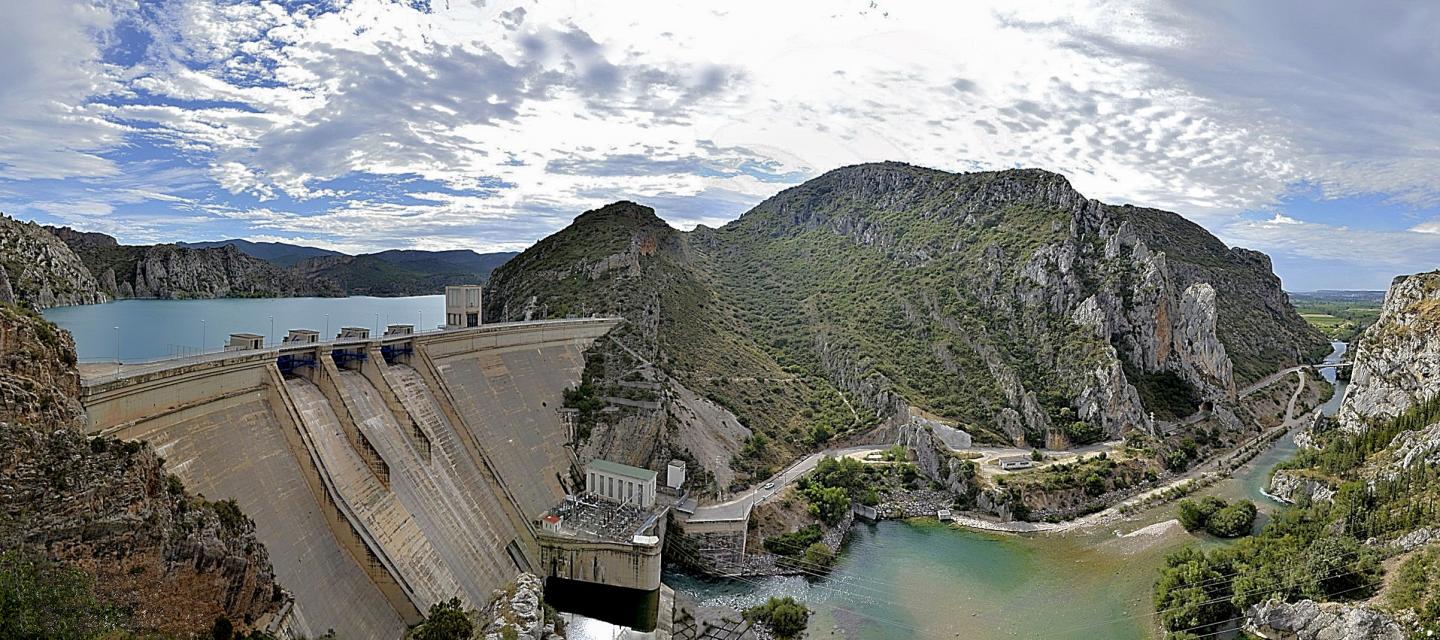
Credit: Manuel Portero / CC BY-SA (https://creativecommons.org/licenses/by-sa/4.0)

A potential response of river fish to environmental changes is to colonize new habitats. But what happens when dams and weirs restrict their movement? And are native and alien species similarly affected? Researchers from the Leibniz-Institute of Freshwater Ecology and Inland Fisheries (IGB) and the Spanish University of Girona (UdG) have addressed these questions in a recent study.

River ecosystems are frequently fragmented by dams and weirs. As a result, native fish are often restricted in their movement along the river course and are unable to colonize new habitats. Thus, barriers impede native species from adjusting their distributions in response to the effects of climate change such as changes in water temperature and quality.

On the other hand, river fragmentation might also limit the further spread of invasive alien species. Using the Ebro River in Spain as an example, the research team has investigated how habitats of native and alien fish species change under different climate scenarios and how dams mediate habitat accessibility.

“The Ebro River is particularly vulnerable and threatened by climate change and species invasions. In addition, the Ebro River is fragmented by over 300 dams and many smaller barriers, which makes it even worse for the native fish species”, said Emili GarcĂ­a-Berthou, Professor at the University of Girona and co-author of the study.

By applying a spatial modelling framework, the authors showed that losses of native species and gains of alien species and consequentially most pronounced biodiversity changes are particularly expected in the lower and mid reaches of larger Ebro River tributaries. According to their results, the majority of species are projected to shift their range in upstream direction with alien species such as eastern mosquitofish, wels catfish and common carp showing especially large habitat gains.

“The Ebro River system is home to several endemic species that exclusively occur on the Iberian Peninsula. These species are particularly imperilled by barriers that limit movements in response to climate change. Whether dams can effectively prevent the spread of alien species is questionable. In fact, the establishment of alien fishes is often facilitated by the changed flow and habitat conditions that result from damming rivers”, said IGB researcher Johannes Radinger, lead author of the study.

The results clearly show that fish communities in highly fragmented rivers affected by climate change will be particularly affected by biodiversity changes and species loss in the future. “Effective conservation of fishes should focus on the restoration of habitats and the natural flow regime, improvements of connectivity for native species and the control of alien species, particularly the prevention of further introductions”, concluded the authors.

###

Media Contact
Johannes Radinger
[email protected]

Original Source

https://www.fv-berlin.de/en/info-for/the-media-and-public/news/staudaemme-verschaerfen-auswirkungen-des-klimawandels-auf-fische

Related Journal Article

http://dx.doi.org/10.1111/gcb.15320

Tags: BiodiversityBiologyClimate ChangeEcology/EnvironmentFisheries/AquacultureMarine/Freshwater Biology
Share12Tweet8Share2ShareShareShare2

Related Posts

Natural Hallucinogens: Evolution’s Ecological Tools, Not Mere Chemical Byproducts

June 25, 2026

This Famous Butterfly Revealed: Three Distinct Species Hidden in One

June 25, 2026

Scientists Attack Soybean Cyst Nematode by Starving Its Food Source

June 25, 2026

Decoding the Secret Code of a Crucial Immune Sensor

June 24, 2026
Please login to join discussion

POPULAR NEWS

  • Saying Goodbye to PGY-6: Pediatric Fellowship Realities

    103 shares
    Share 41 Tweet 26
  • Multi-Hospital Study Reveals Long Covid Burden Is Twice as High as Current Estimates

    92 shares
    Share 36 Tweet 23
  • Detection of EDCs in Breast Milk and Infant Urine Up to Six Months Highlights Early Exposure Risks

    77 shares
    Share 31 Tweet 19
  • New Drug Candidate Developed at McMaster Shows Potential for Treating Brain Cancer

    58 shares
    Share 23 Tweet 15

About

We bring you the latest biotechnology news from best research centers and universities around the world. Check our website.

Follow us

Recent News

Tracking Lanthanide-Labeled Microplastics in Plants

POSTECH Researchers Slash Cost of Reconstituted Cell-Free Systems by 95%

AI and Physics Collaborate to Design Advanced Hydrogen Storage Materials

Subscribe to Blog via Email

Success! An email was just sent to confirm your subscription. Please find the email now and click 'Confirm' to start subscribing.

Join 82 other subscribers
  • Contact Us

Bioengineer.org © Copyright 2023 All Rights Reserved.

Welcome Back!

Login to your account below

Forgotten Password?

Retrieve your password

Please enter your username or email address to reset your password.

Log In
No Result
View All Result
  • Homepages
    • Home Page 1
    • Home Page 2
  • News
  • National
  • Business
  • Health
  • Lifestyle
  • Science

Bioengineer.org © Copyright 2023 All Rights Reserved.