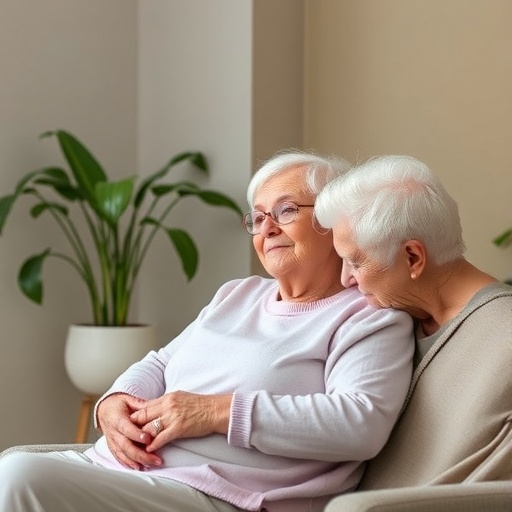
In the rapidly aging populations across the globe, the plight of older adults dwelling in rural areas is becoming a pressing public health concern. Among them, China’s rural “empty-nest” older adults—those who live alone or only with their spouse because their children have moved away—represent a particularly vulnerable demographic. A recent groundbreaking study published in BMC Geriatrics in 2026 sheds new light on how activities of daily living (ADLs) are intricately linked to their self-care ability, while uncovering the critical psychological factors mediating this association, namely social alienation and psychological resilience.
Activities of daily living, encompassing fundamental self-care tasks such as bathing, dressing, eating, and mobility, are essential indicators of an elderly person’s capacity to maintain independence. Traditionally, health assessments have focused primarily on the physical aspects of these tasks. However, this study posits a more nuanced understanding, emphasizing that the ability to perform ADLs in rural China is not merely a physical challenge but one complicated by social and psychological dimensions. The researchers sought to unravel how social alienation, a state of isolation and loneliness, coupled with the psychological resilience—the mental toughness to cope and bounce back from adversity—creates a complex chain that influences elderly self-care abilities.
The study’s extensive data collection across rural Chinese communities provides an unprecedented window into the daily challenges faced by empty-nest older adults. The researchers implemented validated psychometric instruments to quantify social alienation and psychological resilience, alongside meticulous assessments of ADL performance. Their analytical approach employed chain mediation models, a sophisticated statistical technique that elucidates the pathways through which one variable affects another via intermediary factors. This methodological precision enabled the team to delineate how diminished social connectedness indirectly impairs self-care by eroding psychological resilience.
Underlying the findings is a profound narrative about the intersection of societal transformation and individual well-being. As younger generations migrate to urban centers in search of economic opportunities, their aging parents are left behind in rural settings marked by infrastructural limitations and scarce healthcare resources. The resultant social alienation emerges not only from physical isolation but also from feelings of abandonment and marginalization. This emotional detachment diminishes elders’ motivation and capacity to engage in self-care activities, perpetuating a detrimental cycle of decline.
Psychological resilience emerges from the study as a pivotal moderator, a shield that can mitigate the harms of social alienation. Resilient individuals exhibited greater adaptability and maintained better self-care behaviors despite social challenges. This highlights the critical role of mental health interventions and community-based programs aimed at fostering resilience in rural elderly populations. The researchers emphasize that boosting psychological resilience could serve as a strategic focal point for public health efforts designed to preserve autonomy among aging adults in under-resourced settings.
The implications for policy and practice are substantial. Current eldercare models often center on physical rehabilitation and medical management without adequately addressing the psychosocial dimensions identified in this study. Integrative approaches that encompass social engagement initiatives—such as community centers, peer support networks, and digital connectivity tools—could counter social alienation. Concurrently, psychological resilience can be enhanced through tailored counseling, mindfulness practices, and cognitive-behavioral therapies that align with cultural values.
Moreover, the research sheds light on the cascading effects of loneliness beyond mental health, directly influencing physical function and overall health trajectories. The interplay between mind and body is starkly displayed in the chain mediation results, where social isolation compromises psychological fortitude, leading to deteriorated self-care ability. This underscores the necessity of holistic healthcare paradigms that recognize psychosocial well-being as inseparable from physical health, especially for vulnerable elderly groups.
From a methodological standpoint, the study is a model of rigor and innovation. The authors carefully controlled for confounding variables such as chronic diseases, socioeconomic status, and education, strengthening the validity of their conclusions. Their use of longitudinal data offers insights into temporal dynamics, revealing how changes in social connections and resilience precede declines in ADLs. This temporal analysis facilitates predictive frameworks to identify at-risk individuals for early intervention.
Science and technology can intersect productively with these findings. Emerging digital health platforms tailored for rural elderly users could incorporate social networking features and resilience training modules. Smartphone applications connected to remote health monitoring can keep social contacts active and provide psychological support, addressing dual facets revealed by the study. Additionally, leveraging artificial intelligence to detect patterns signaling declining resilience or increasing alienation might enable proactive healthcare outreach.
This study also contributes significantly to gerontological theory by challenging reductionist views of aging that focus predominantly on physical degeneration. It advances a biopsychosocial model, integrating biological, psychological, and social perspectives to fully comprehend the complexities faced by rural empty-nest older adults. The nuanced understanding from this research invites a paradigm shift in how societies value and support their aging populations, advocating for inclusive strategies that address multi-dimensional needs.
Community stakeholders and policymakers in China and other nations facing rural depopulation should take note. Investment in elder-friendly infrastructure, mental health resources, and social programs is urgently warranted. The study reinforces that self-care capability among the elderly is not solely a product of individual health but is deeply embedded in relational and psychological contexts. Supporting these dimensions enhances quality of life and reduces burdens on healthcare systems.
The narrative emerging from this research resonates universally, offering lessons that transcend geographic boundaries. Aging is a global phenomenon, and the causes and consequences of social alienation are common challenges in many societies. Understanding the chain mediation between social isolation, resilience, and functional ability serves as a blueprint for global aging policy aimed at fostering healthy longevity.
In sum, this landmark study from Jiang, Zhang, Sun, and colleagues maps a critical pathway by which activities of daily living influence self-care ability through social and psychological mediators in China’s rural empty-nest elderly. Its insights demand a recalibration of eldercare approaches—from fragmented medical services to integrative care models that nurture social bonds and psychological strength. As the blueprints of future societies are drawn, integrating these scientific findings will be essential to crafting compassionate aging environments and enabling older adults to thrive in place with dignity.
—
Subject of Research: The association between activities of daily living and self-care ability in China’s rural empty-nest older adults, focusing on the mediating roles of social alienation and psychological resilience.
Article Title: Unpacking the association of activities of daily living on self-care ability in China’s rural empty-nest older adults: the chain mediation of social alienation and psychological resilience.
Article References: Jiang, Z., Zhang, L., Sun, Q. et al. Unpacking the association of activities of daily living on self-care ability in China’s rural empty-nest older adults: the chain mediation of social alienation and psychological resilience. BMC Geriatr (2026). https://doi.org/10.1186/s12877-026-07707-0
Image Credits: AI Generated
Tags: activities of daily living and independenceaging in rural Chinaelderly loneliness and isolationempty-nest elderly challengesimpact of social factors on elderly healthmental health and agingpsychological resilience in older adultsresilience as a coping mechanismrural elderly public health concernsrural geriatric care studiesself-care ability in aging populationssocial alienation effects on seniors