• HOME
  • NEWS
  • EXPLORE
    • CAREER
      • Companies
      • Jobs
    • EVENTS
    • iGEM
      • News
      • Team
    • PHOTOS
    • VIDEO
    • WIKI
  • BLOG
  • COMMUNITY
    • FACEBOOK
    • INSTAGRAM
    • TWITTER
Saturday, June 27, 2026
BIOENGINEER.ORG
No Result
View All Result
  • Login
  • HOME
  • NEWS
  • EXPLORE
    • CAREER
      • Companies
      • Jobs
        • Lecturer
        • PhD Studentship
        • Postdoc
        • Research Assistant
    • EVENTS
    • iGEM
      • News
      • Team
    • PHOTOS
    • VIDEO
    • WIKI
  • BLOG
  • COMMUNITY
    • FACEBOOK
    • INSTAGRAM
    • TWITTER
  • HOME
  • NEWS
  • EXPLORE
    • CAREER
      • Companies
      • Jobs
        • Lecturer
        • PhD Studentship
        • Postdoc
        • Research Assistant
    • EVENTS
    • iGEM
      • News
      • Team
    • PHOTOS
    • VIDEO
    • WIKI
  • BLOG
  • COMMUNITY
    • FACEBOOK
    • INSTAGRAM
    • TWITTER
No Result
View All Result
Bioengineer.org
No Result
View All Result
Home NEWS Science News Biology

Cyanobacteria in water and on land identified as source of methane

Bioengineer by Bioengineer
January 16, 2020
in Biology
Reading Time: 2 mins read
0
IMAGE
Share on FacebookShare on TwitterShare on LinkedinShare on RedditShare on Telegram

IMAGE

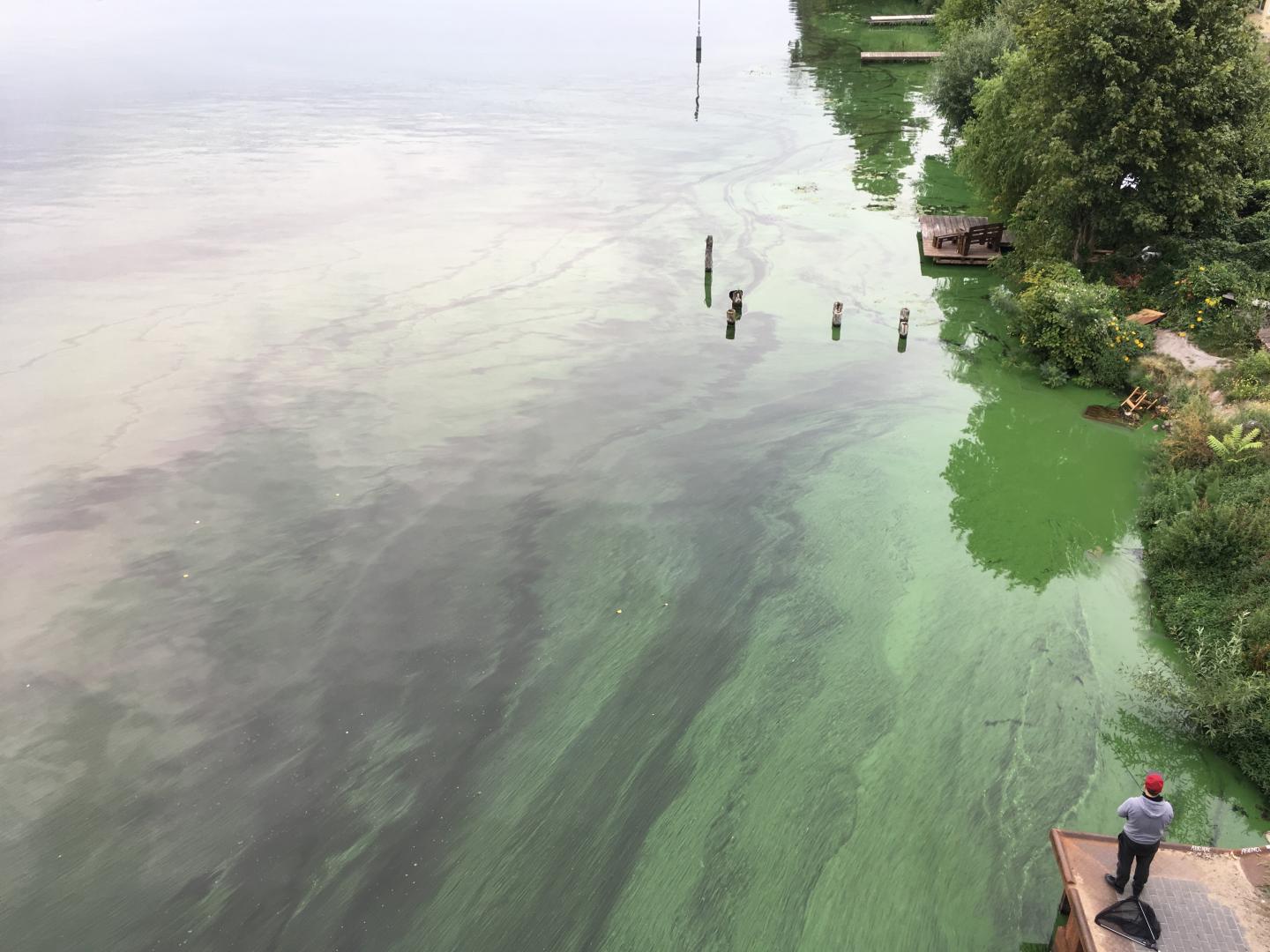
Credit: Angelina Tittmann


Cyanobacteria, also known as blue-green algae, are among the most common organisms on Earth. A research team led by the Leibniz-Institute of Freshwater Ecology and Inland Fisheries (IGB) and Heidelberg University has now shown for the first time that Cyanobacteria produce relevant amounts of methane in oceans, inland waters and on land. Due to climate change, “Cyanobacteria blooms” increase in frequency and extent, amplifying the release of methane from inland waters and oceans to the atmosphere.

Methane generation by microorganisms is traditionally considered to take place only under strictly anoxic conditions by microbes of the domain Archaea. This assumption is refuted by the results of the present study led by Dr. Mina Bizic from IGB. The international research team investigated seventeen cyanobacterial species that occur in the sea, freshwater and soil. “Cyanobacteria in surface water are a previously unknown source of methane and we were able to show for the first time that these bacteria produce the greenhouse gas methane during photosynthesis,” states Dr. Mina Bizic. To do so, Thomas Klintzsch from Heidelberg University used isotopically labelled carbon to evaluate how methane is formed in the cell during the conversion of light energy into chemical energy.

In laboratory experiments, the team compared the amount of methane produced by Cyanobacteria with the amounts produced by methanogenic archaea and organisms with cell nuclei (eukaryotes). “Cyanobacteria produce less methane than archaea, but more methane than eukaryotes. It is difficult to estimate the global amount of methane produced by Cyanobacteria because there is a severe lack of detailed data on the biomass of these organisms in water and soil,” says co-author Frank Keppler, Professor at the Institute of Earth Sciences at Heidelberg University.

More blue-green algal blooms mean higher methane emissions

It may be that Cyanobacteria have been producing the greenhouse gas methane already since the early days of Earth. Cyanobacteria are well known for the Great Oxygenation event that took place 2.5 billion years ago, but the oldest known fossils (stromatolites) are deposits of Cyanobacteria¬-like organism found in 3.5 billion-year-old rocks in Western Australia.

Cyanobacteria are widespread all over the world occurring in almost any illuminated environment. Some species develop particularly well in seawater or fresh water with high nutrient loads and warm temperatures. As a result of climate change, mass developments, so-called cyanobacteria or blue-green algae blooms, already occur more frequently and will do so to a greater extent in the future. “According to our current findings, this will also increase the emission of the greenhouse gas methane from various aquatic systems, which in turn increases climate change,” says senior author Prof. Hans-Peter Grossart, researcher at IGB.

###

Media Contact
Mina Bizic
[email protected]
49-330-826-9969

Original Source

https://www.igb-berlin.de/en/news/cyanobacteria-water-and-land-identified-source-methane

Related Journal Article

http://dx.doi.org/10.1126/sciadv.aax5343

Tags: BacteriologyBiochemistryBiologyClimate ChangeEcology/EnvironmentMarine/Freshwater BiologyMicrobiology
Share12Tweet8Share2ShareShareShare2

Related Posts

Natural Hallucinogens: Evolution’s Ecological Tools, Not Mere Chemical Byproducts

June 25, 2026

This Famous Butterfly Revealed: Three Distinct Species Hidden in One

June 25, 2026

Scientists Attack Soybean Cyst Nematode by Starving Its Food Source

June 25, 2026

Decoding the Secret Code of a Crucial Immune Sensor

June 24, 2026
Please login to join discussion

POPULAR NEWS

  • Saying Goodbye to PGY-6: Pediatric Fellowship Realities

    103 shares
    Share 41 Tweet 26
  • Multi-Hospital Study Reveals Long Covid Burden Is Twice as High as Current Estimates

    92 shares
    Share 36 Tweet 23
  • Detection of EDCs in Breast Milk and Infant Urine Up to Six Months Highlights Early Exposure Risks

    77 shares
    Share 31 Tweet 19
  • New Drug Candidate Developed at McMaster Shows Potential for Treating Brain Cancer

    58 shares
    Share 23 Tweet 15

About

We bring you the latest biotechnology news from best research centers and universities around the world. Check our website.

Follow us

Recent News

Tracking Lanthanide-Labeled Microplastics in Plants

POSTECH Researchers Slash Cost of Reconstituted Cell-Free Systems by 95%

AI and Physics Collaborate to Design Advanced Hydrogen Storage Materials

Subscribe to Blog via Email

Success! An email was just sent to confirm your subscription. Please find the email now and click 'Confirm' to start subscribing.

Join 82 other subscribers
  • Contact Us

Bioengineer.org © Copyright 2023 All Rights Reserved.

Welcome Back!

Login to your account below

Forgotten Password?

Retrieve your password

Please enter your username or email address to reset your password.

Log In
No Result
View All Result
  • Homepages
    • Home Page 1
    • Home Page 2
  • News
  • National
  • Business
  • Health
  • Lifestyle
  • Science

Bioengineer.org © Copyright 2023 All Rights Reserved.