• HOME
  • NEWS
  • EXPLORE
    • CAREER
      • Companies
      • Jobs
    • EVENTS
    • iGEM
      • News
      • Team
    • PHOTOS
    • VIDEO
    • WIKI
  • BLOG
  • COMMUNITY
    • FACEBOOK
    • INSTAGRAM
    • TWITTER
Friday, September 25, 2026
BIOENGINEER.ORG
No Result
View All Result
  • Login
  • HOME
  • NEWS
  • EXPLORE
    • CAREER
      • Companies
      • Jobs
        • Lecturer
        • PhD Studentship
        • Postdoc
        • Research Assistant
    • EVENTS
    • iGEM
      • News
      • Team
    • PHOTOS
    • VIDEO
    • WIKI
  • BLOG
  • COMMUNITY
    • FACEBOOK
    • INSTAGRAM
    • TWITTER
  • HOME
  • NEWS
  • EXPLORE
    • CAREER
      • Companies
      • Jobs
        • Lecturer
        • PhD Studentship
        • Postdoc
        • Research Assistant
    • EVENTS
    • iGEM
      • News
      • Team
    • PHOTOS
    • VIDEO
    • WIKI
  • BLOG
  • COMMUNITY
    • FACEBOOK
    • INSTAGRAM
    • TWITTER
No Result
View All Result
Bioengineer.org
No Result
View All Result
Home NEWS Science News Health

Curcumin is the spice of life when delivered via tiny nanoparticles

Bioengineer by Bioengineer
March 5, 2020
in Health
Reading Time: 2 mins read
0
IMAGE
Share on FacebookShare on TwitterShare on LinkedinShare on RedditShare on Telegram

Treatment for Alzheimer’s and genital herpes
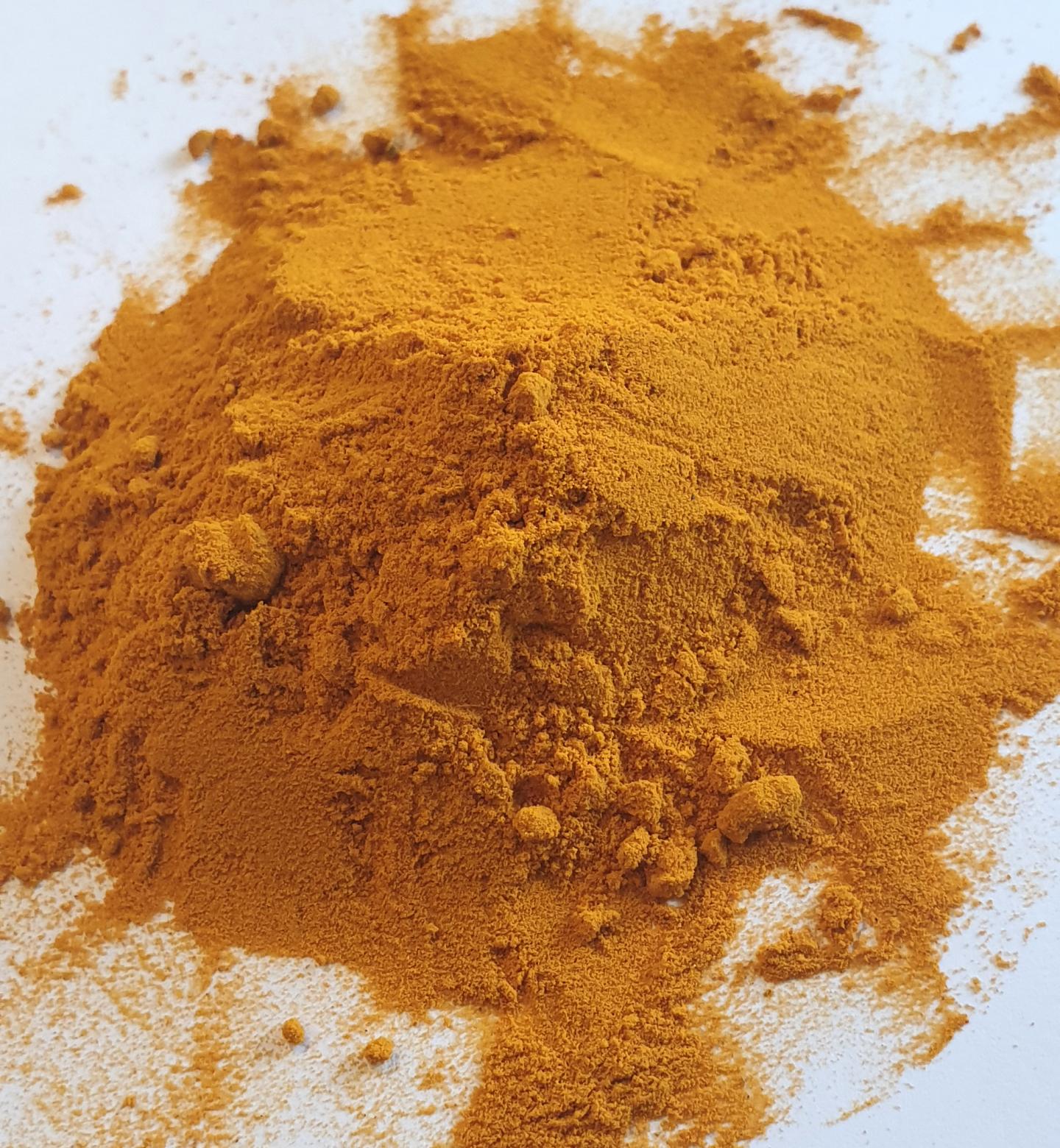
IMAGE

Credit: University of South Australia


For years, curry lovers have sworn by the anti-inflammatory properties of turmeric, but its active compound, curcumin, has long frustrated scientists hoping to validate these claims with clinical studies.

The failure of the body to easily absorb curcumin has been a thorn in the side of medical researchers seeking scientific proof that curcumin can successfully treat cancer, heart disease, Alzheimer’s and many other chronic health conditions.

Now, researchers from the University of South Australia (UniSA), McMaster University in Canada and Texas A&M University have shown that curcumin can be delivered effectively into human cells via tiny nanoparticles.

Sanjay Garg, a professor of pharmaceutical science at UniSA, and his colleague Dr Ankit Parikh are part of an international team that has developed a nano formulation which changes curcumin’s behaviour to increase its oral bioavailability by 117 per cent.

The researchers have shown in animal experiments that nanoparticles containing curcumin not only prevents cognitive deterioration but also reverses the damage. This finding paves the way for clinical development trials for Alzheimer’s.

Co-author Professor Xin-Fu Zhou, a UniSA neuroscientist, says the new formulation offers a potential solution for Alzheimer’s disease.

“Curcumin is a compound that suppresses oxidative stress and inflammation, both key pathological factors for Alzheimer’s, and it also helps remove amyloid plaques, small fragments of protein that clump together in the brains of Alzheimer disease patients,” Prof Zhou says.

The same delivery method is now being tested to show that curcumin can also prevent the spread of genital herpes.

“To treat genital herpes (HSV-2) you need a form of curcumin that is better absorbed, which is why it needs to be encapsulated in a nano formulation,” Prof Garg says.

“Curcumin can stop the genital herpes virus, it helps in reducing the inflammation and makes it less susceptible to HIV and other STIs,” Prof Garg says.

Women are biologically more vulnerable to genital herpes as bacterial and viral infections in the female genital tract (FGT) impair the mucosal barrier. Curcumin, however, can minimize genital inflammation and control against HSV-2 infection, which would assist in the prevention of HIV infection in the FGT.

###

Their findings have been published in the International Journal of Molecular Sciences and Drug Delivery and Translational Research as part I and part II. All these papers are available by contacting [email protected]

Media Contact
Candy Gibson
[email protected]
61-883-020-961

Related Journal Article

http://dx.doi.org/10.3390/ijms21010337

Tags: AIDS/HIVAlzheimerClinical TrialsMedicine/Health
Share12Tweet8Share2ShareShareShare2

Related Posts

Hidden RNA Errors Found at the Synapse in Frontotemporal Dementia

September 25, 2026

AI-Powered Map Reveals How Europe Spends €840 Million on Cancer Research

September 25, 2026

Transparent AI Model Hits 95% Accuracy in Choosing Immunotherapy for Head and Neck Cancer

September 25, 2026

Gene Networks Point to Interferon Decline as Driver of Severe Dengue in India

September 25, 2026
Please login to join discussion

POPULAR NEWS

  • Open-Source R Pipeline Brings Reproducible Automation to Targeted Mass Spectrometry

    29 shares
    Share 12 Tweet 7
  • Engineered vaccinia virus GC001 shows potent tumour killing and clean safety profile

    29 shares
    Share 12 Tweet 7
  • Red Blood Cell Membranes Rewire Endothelial Metabolism to Spark New Vessel Growth

    29 shares
    Share 12 Tweet 7
  • From Soil to Plate: How Tiny Plastics Climb the Food Chain

    29 shares
    Share 12 Tweet 7

About

We bring you the latest biotechnology news from best research centers and universities around the world. Check our website.

Follow us

Recent News

Open-Source R Pipeline Brings Reproducible Automation to Targeted Mass Spectrometry

Engineered vaccinia virus GC001 shows potent tumour killing and clean safety profile

Red Blood Cell Membranes Rewire Endothelial Metabolism to Spark New Vessel Growth

Subscribe to Blog via Email

Enter your email address to subscribe to this blog and receive notifications of new posts by email.

Join 85 other subscribers
  • Contact Us

Bioengineer.org © Copyright 2023 All Rights Reserved.

Welcome Back!

Login to your account below

Forgotten Password?

Retrieve your password

Please enter your username or email address to reset your password.

Log In
No Result
View All Result
  • Homepages
    • Home Page 1
    • Home Page 2
  • News
  • National
  • Business
  • Health
  • Lifestyle
  • Science

Bioengineer.org © Copyright 2023 All Rights Reserved.