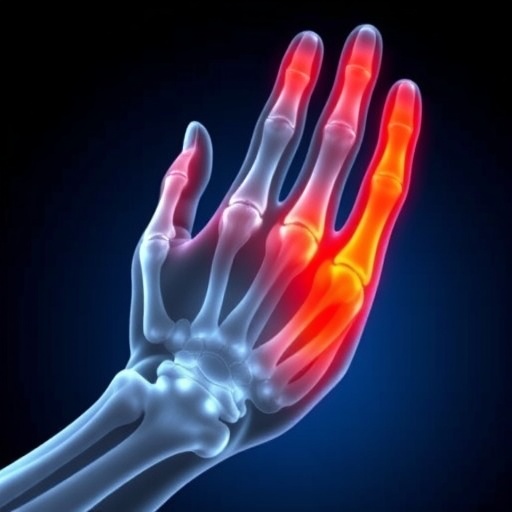
In a groundbreaking study soon to be published in BMC Complementary Medicine and Therapy, researchers have explored the potential therapeutic effects of curcumin, the active component of turmeric, on hand osteoarthritis. This condition, which affects millions of individuals worldwide, leads to painful and debilitating symptoms that significantly diminish quality of life. The research presents vital findings on the efficacy and safety of curcumin, pushing the boundaries of traditional treatment modalities used for osteoarthritis.
While curcumin is often acknowledged for its anti-inflammatory and antioxidant properties, rigorous clinical evidence supporting its effectiveness in osteoarthritis management has been limited. This pilot study aimed to fill that gap by meticulously investigating the outcomes of curcumin supplementation in a controlled environment. The study employed a double-blinded, randomized controlled trial design to ensure that results would be both reliable and scientifically valid.
The investigation involved a cohort of patients diagnosed with hand osteoarthritis, characterized by joint pain, stiffness, and functional limitations. Participants were carefully selected based on stringent inclusion and exclusion criteria, ensuring a homogenous group that would yield the most accurate results. They were randomly assigned to either a curcumin supplementation group or a placebo group, allowing for a direct comparison of outcomes.
Over the course of the trial, patients in the curcumin group received a standardized dosage of curcumin, while those in the placebo group received an inert substance. Throughout the study period, various clinical parameters were assessed, including pain levels, joint function, and overall quality of life. These metrics provided a comprehensive picture of how curcumin influences the symptoms of osteoarthritis.
Preliminary results have shown promising trends in pain reduction and improved joint function among those receiving curcumin. Participants reported substantial decreases in pain intensity, measured through established pain scales. These findings are significant, especially given that current pharmacological options for osteoarthritis are often accompanied by unwanted side effects, making natural alternatives highly sought after.
Additionally, the study meticulously monitored safety parameters to ensure that curcumin supplementation posed no adverse effects. Participants were instructed to report any side effects or complications, and results indicated a favorable safety profile, aligning with previous research that suggests curcumin is generally well-tolerated. This is an encouraging development for the integration of curcumin into management protocols for osteoarthritis.
As the research unfolds, it is essential to highlight that the study has its limitations. Being a pilot study, the sample size was relatively small and focused solely on hand osteoarthritis. Researchers call for larger scale studies to validate these findings across diverse populations and varying degrees of osteoarthritis severity. Such expansion could cement curcumin’s role in therapeutics, potentially reshaping how patients manage this condition in the future.
Moreover, the biological mechanisms underlying curcumin’s effects are also being scrutinized. Its anti-inflammatory properties suggest that curcumin may inhibit pro-inflammatory cytokines, thereby reducing inflammation in affected joints. Understanding these pathways will be vital for the scientific community to fully grasp how curcumin can be used most effectively in clinical practice.
This innovative trial represents a step forward in the search for alternative treatments for osteoarthritis. With ongoing discussions in the medical community about integrating complementary and alternative medicines into standard care, findings such as these could assist in reshaping treatment paradigms for chronic conditions. Patients increasingly seek holistic approaches, and studies like this provide the evidence needed to support such requests.
As we look forward to the full publication of these findings, the implications could be far-reaching. Policymakers, healthcare providers, and patients alike may benefit from the insights gathered through this rigorous investigation. A successful demonstration of curcumin’s efficacy could influence not only clinical guidelines but also the broader understanding of how dietary supplements can play a critical role in managing chronic inflammatory conditions.
Moving forward, the research team encourages further investigation into the optimal formulations and dosages of curcumin to maximize therapeutic effects. Future studies should also investigate the long-term effects of curcumin supplementation, which is essential for developing comprehensive management strategies for osteoarthritis. The knowledge accumulated from this trial could establish a foundation for subsequent investigations aimed at enhancing patient outcomes.
Ultimately, this pilot study signifies a beacon of hope for those suffering from hand osteoarthritis. If substantiated by larger trials, curcumin could become a staple in the treatment armamentarium against this challenging condition. As the scientific community anticipates the complete results, many patients look forward to potentially adding a natural remedy to their therapeutic regimen, paving the way for more integrative approaches in medicine.
Subject of Research: Efficacy and Safety of Curcumin in Patients with Hand Osteoarthritis
Article Title: Efficacy and safety of curcumin in patients with hand osteoarthritis: a pilot double-blinded randomised controlled trial
Article References: Tuntiyatorn, P., Lerspongpaibool, C., Kanchanathepsak, T. et al. Efficacy and safety of curcumin in patients with hand osteoarthritis: a pilot double-blinded randomised controlled trial. BMC Complement Med Ther 25, 356 (2025). https://doi.org/10.1186/s12906-025-05096-2
Image Credits: AI Generated
DOI:
Keywords: Curcumin, Osteoarthritis, Hand Osteoarthritis, Double-Blinded Trial, Randomised Controlled Trial
Tags: anti-inflammatory properties of curcuminclinical study on curcumincomplementary medicine for osteoarthritiscurcumin supplementation in osteoarthritisefficacy of curcumin for pain reliefevidence-based alternative therapieshand osteoarthritis treatmentimproving quality of life with curcuminmanaging symptoms of hand osteoarthritisrandomized controlled trial in arthritissafety of curcumin supplementationturmeric benefits for joint pain