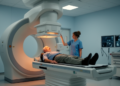
A retrospective study of 30 patients with lung cancer found that CT image co-registration produced postoperative iodine-125 seed-implant dose estimates that were more consistent with the preoperative plan than conventional immediate postoperative verification, particularly for D90. D90 is the minimum dose covering 90% of the target volume. Bonferroni-corrected comparisons found a significant difference between the preoperative plan and conventional verification for D90, but not between the plan and co-registration verification.
The result concerns agreement between dose calculations, rather than evidence of superior clinical outcomes. The researchers reviewed patients who underwent iodine-125 seed implantation at their center between January 2021 and December 2024. The cohort included 13 cases of adenocarcinoma, nine of squamous cell carcinoma and eight other tumor types.
All patients received a prescribed dose of 140 Gy, with reported seed activity of 0.73 ± 0.99 mCi. Each patient underwent both forms of dosimetric verification, permitting paired comparisons with the preoperative plan and between the two verification methods. For image co-registration verification, investigators imported preoperative contrast-enhanced CT images into a three-dimensional treatment planning system, followed by the final intraoperative non-contrast CT scan.
They performed rigid co-registration of the two CT datasets and manually delineated the target volume on the fused images. Under the conventional method, the final intraoperative non-contrast CT was imported directly into the treatment planning system, and the target volume was delineated on those images. Seeds were then identified and postoperative dose-volume histograms were generated for both approaches.
The evaluated measures were target volume, D90, and V90, V100, V150 and V200, which represented the percentages of the target volume receiving 90%, 100%, 150% and 200% of the prescription dose, respectively. Paired t-tests assessed differences against the preoperative plan and between verification groups, with Bonferroni correction applied to post hoc comparisons. Normality testing indicated that target volume and all dosimetric parameters were normally distributed.
Compared with the preoperative plan, conventional postoperative verification showed statistically significant differences in target volume, D90, V150 and V200. The co-registration method showed significant differences only in V150 and V200. Target volume also differed significantly between the conventional and co-registration groups.
Post hoc testing identified a significant D90 difference between the preoperative plan and conventional verification, but not between the plan and co-registration verification. V200 differed significantly from the preoperative plan in both groups. The supplied report is internally inconsistent about V100: its post hoc summary says V100 differed significantly from the plan in both verification groups, while also saying there was no significant difference in V100.
A firm conclusion for that measure therefore cannot be drawn from the available text. Follow-up chest CT scans performed one to six months after implantation were evaluated with Response Evaluation Criteria in Solid Tumors version 1.1. The reported outcomes were complete response in five patients, partial response in 14, stable disease in nine and progressive disease in two.
No adverse reactions or grade 3 or higher complications were observed. These clinical results were recorded alongside the dosimetric analysis, but the study does not establish that the co-registration method caused better responses or fewer complications. The findings are limited by the retrospective design, small single-center cohort and short follow-up interval.
Subject of Research: Dosimetric verification of CT co-registration after iodine-125 seed implantation for lung cancer
Article Title: Impact of CT image co-registration on dosimetric verification in ¹²⁵I seed implantation for lung cancer
Article References: Ke, X., Huimin, Y., Hongtao, Z., Guohui, C., Xiaoli, L., Jinxin, Z., Zezhou, L., & Juan, W. (2026). Impact of CT image co-registration on dosimetric verification in ¹²⁵I seed implantation for lung cancer. BMC Cancer. https://doi.org/10.1186/s12885-026-16797-3
Image Credits: AI Generated
DOI: 10.1186/s12885-026-16797-3
Keywords: lung cancer, iodine-125 seed implantation, CT co-registration, dosimetric verification, D90, dose-volume histogram, treatment planning, retrospective cohort, Impact, image, co-registration, dosimetric
News Source: Nathaniel Bowman. (October 20, 2026). CT co-registration yields more stable D90 verification in 30-patient retrospective lung cancer study. Scienmag.