• HOME
  • NEWS
  • EXPLORE
    • CAREER
      • Companies
      • Jobs
    • EVENTS
    • iGEM
      • News
      • Team
    • PHOTOS
    • VIDEO
    • WIKI
  • BLOG
  • COMMUNITY
    • FACEBOOK
    • INSTAGRAM
    • TWITTER
Saturday, June 27, 2026
BIOENGINEER.ORG
No Result
View All Result
  • Login
  • HOME
  • NEWS
  • EXPLORE
    • CAREER
      • Companies
      • Jobs
        • Lecturer
        • PhD Studentship
        • Postdoc
        • Research Assistant
    • EVENTS
    • iGEM
      • News
      • Team
    • PHOTOS
    • VIDEO
    • WIKI
  • BLOG
  • COMMUNITY
    • FACEBOOK
    • INSTAGRAM
    • TWITTER
  • HOME
  • NEWS
  • EXPLORE
    • CAREER
      • Companies
      • Jobs
        • Lecturer
        • PhD Studentship
        • Postdoc
        • Research Assistant
    • EVENTS
    • iGEM
      • News
      • Team
    • PHOTOS
    • VIDEO
    • WIKI
  • BLOG
  • COMMUNITY
    • FACEBOOK
    • INSTAGRAM
    • TWITTER
No Result
View All Result
Bioengineer.org
No Result
View All Result
Home NEWS Science News Health

Crown-of-thorns eat themselves out of house and home

Bioengineer by Bioengineer
November 4, 2020
in Health
Reading Time: 3 mins read
0
IMAGE
Share on FacebookShare on TwitterShare on LinkedinShare on RedditShare on Telegram

IMAGE

Credit: Morgan Pratchett.

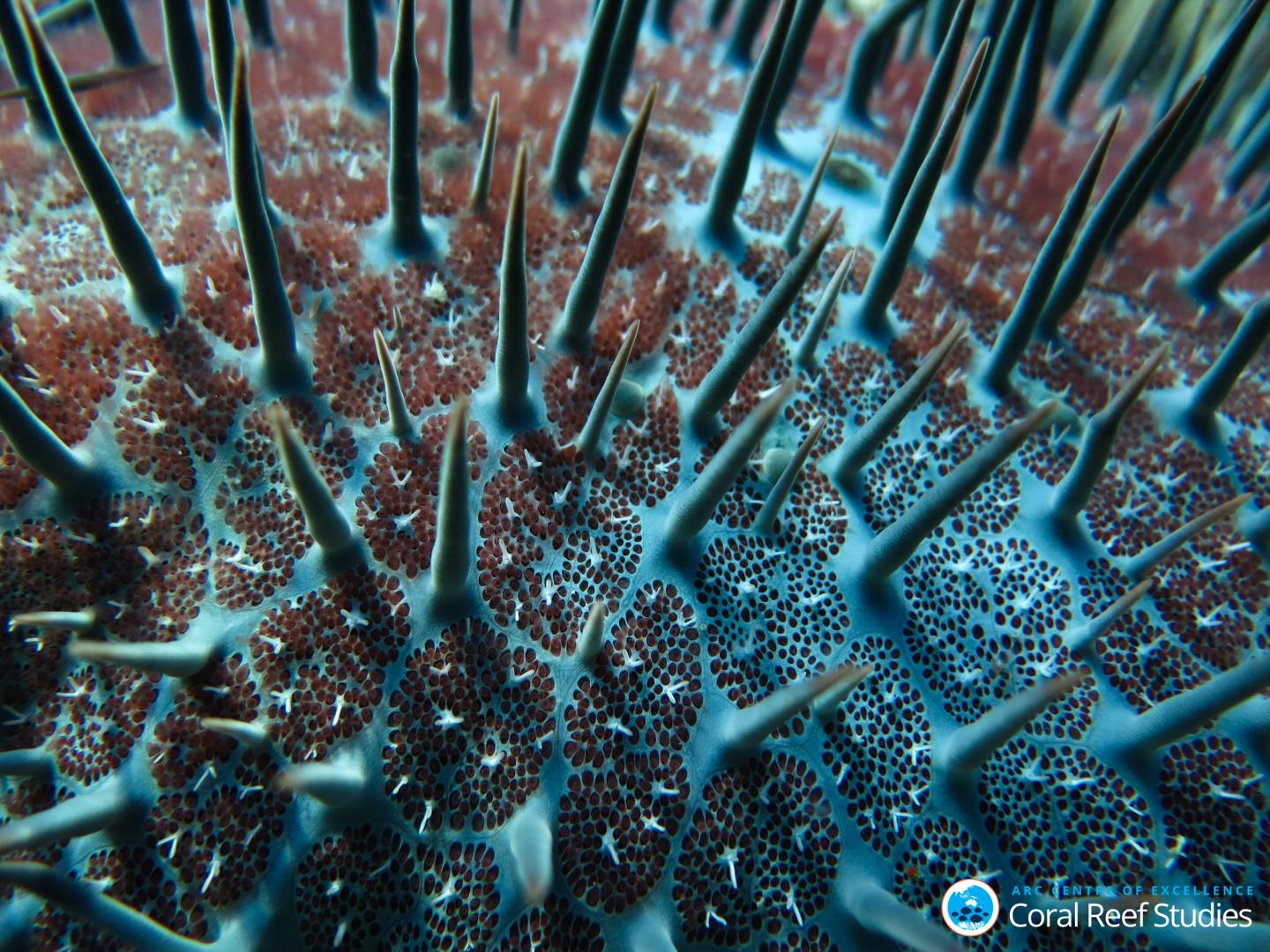
A world-first study on the Great Barrier Reef shows crown-of-thorns starfish have the ability to find their own way home–a behaviour previously undocumented–but only if their neighbourhood is stocked with their favourite food: corals.

Australian researchers observed the starfish emerging from their shelters in the afternoons so they could feed on coral during the night before returning home at dawn.

“The crown-of-thorns starfish often partied all night, slept-in and only those with a well-stocked larder found their way home–so it’s very much a teenager model of behaviour,” said lead author Dr Scott Ling from the Institute for Marine and Antarctic Studies at the University of Tasmania.

“Their preferred prey is Acropora corals,” said co-author Professor Morgan Pratchett from the ARC Centre of Excellence for Coral Reef Studies at James Cook University (CoralCoE at JCU). Acropora is an important coral species–for the past two million years they have been the building blocks of reefs across the world.

“When populations of Acropora dropped, the starfish didn’t return home,” Prof Pratchett said. “Their behaviour is directly linked to the local abundance of Acropora.”

The results of the study show healthy reefs with a high cover of these corals may encourage crown-of-thorns aggregations and outbreaks. The outbreaks cause extensive, widespread and sustained coral loss throughout the Indo-Pacific region.

Similar examples of predator infestations driving environmental devastation include sea urchins overgrazing on kelp forests and coral reef fishes munching through patches of seagrass.

The researchers used in-situ time-lapse photography to track the movements of 58 starfish in the northern and southern Great Barrier Reef during an outbreak in 2015. In the absence of their preferred Acropora coral prey, starfish were typically homeless and instead roamed up to 20 metres per day.

“Unlike sea urchins that can switch diet once they overgraze kelp forests, results of the time-lapse monitoring indicate that the starfish will consume available Acropora and ultimately eat themselves out of house and home before dispersing in search of new feeding grounds,” Dr Ling said.

Previous outbreaks on the Great Barrier Reef were recorded in 1962, 1979, 1993 and 2009. Though mass-coral bleaching due to global warming is now the greatest threat to coral reefs worldwide, the combined impact of mass-bleaching and crown-of-thorns outbreaks is potentially catastrophic for coral reefs.

“By better understanding the behaviour of these starfish we can help prevent and control their outbreaks, which will help alleviate the pressures on coral reefs,” Prof Pratchett said.

###

PAPER

Ling S, Cowan Z, Boada J. Flukes B, Pratchett M. (2020). ‘Homing behaviour by destructive crown-of-thorns starfish is triggered by local availability of coral prey’. Proceedings of the Royal Society B. DOI: 10.1098/rspb.2020.1341

IMAGERY

Photos and video are available for media use at: https://www.dropbox.com/sh/js8m1awj5a5wxg0/AADNLsOrI_5FcaaQ8R6edoqga?dl=0. Please note these are for single use with this story only, not for any other story. Credit must be given to the content owner in the filename. No archival permissions are granted.

CONTACTS

Prof Morgan Pratchett (AEST, Townsville)

P: +61 (0)488 112 295

E: [email protected]

Dr Scott Ling (AEDT, Hobart)

P: +61 (0)418376240

E: [email protected]

FURTHER INFORMATION

Melissa Lyne / CoralCoE at JCU (AEDT, Sydney)

P: +61 (0) 415 514 328

E: [email protected]

Media Contact
Melissa Lyne
[email protected]

Related Journal Article

http://dx.doi.org/10.1098/rspb.2020.1341

Tags: BiologyClimate ChangeDevelopmental/Reproductive BiologyEcology/EnvironmentMarine/Freshwater BiologyParasitologyPopulation Biology
Share12Tweet8Share2ShareShareShare2

Related Posts

Tracking Lanthanide-Labeled Microplastics in Plants

June 25, 2026

Neural Design Enables Zero-Shot Drug-Binding Proteins

June 25, 2026

Genomic Insights into Human Skin Fungi Diversity

June 25, 2026

Chiral Laser Gyroscopes Surpass Lock-In Limit

June 25, 2026
Please login to join discussion

POPULAR NEWS

  • Saying Goodbye to PGY-6: Pediatric Fellowship Realities

    103 shares
    Share 41 Tweet 26
  • Multi-Hospital Study Reveals Long Covid Burden Is Twice as High as Current Estimates

    92 shares
    Share 36 Tweet 23
  • Detection of EDCs in Breast Milk and Infant Urine Up to Six Months Highlights Early Exposure Risks

    77 shares
    Share 31 Tweet 19
  • New Drug Candidate Developed at McMaster Shows Potential for Treating Brain Cancer

    58 shares
    Share 23 Tweet 15

About

We bring you the latest biotechnology news from best research centers and universities around the world. Check our website.

Follow us

Recent News

Tracking Lanthanide-Labeled Microplastics in Plants

POSTECH Researchers Slash Cost of Reconstituted Cell-Free Systems by 95%

AI and Physics Collaborate to Design Advanced Hydrogen Storage Materials

Subscribe to Blog via Email

Success! An email was just sent to confirm your subscription. Please find the email now and click 'Confirm' to start subscribing.

Join 82 other subscribers
  • Contact Us

Bioengineer.org © Copyright 2023 All Rights Reserved.

Welcome Back!

Login to your account below

Forgotten Password?

Retrieve your password

Please enter your username or email address to reset your password.

Log In
No Result
View All Result
  • Homepages
    • Home Page 1
    • Home Page 2
  • News
  • National
  • Business
  • Health
  • Lifestyle
  • Science

Bioengineer.org © Copyright 2023 All Rights Reserved.