• HOME
  • NEWS
  • EXPLORE
    • CAREER
      • Companies
      • Jobs
    • EVENTS
    • iGEM
      • News
      • Team
    • PHOTOS
    • VIDEO
    • WIKI
  • BLOG
  • COMMUNITY
    • FACEBOOK
    • INSTAGRAM
    • TWITTER
Saturday, June 27, 2026
BIOENGINEER.ORG
No Result
View All Result
  • Login
  • HOME
  • NEWS
  • EXPLORE
    • CAREER
      • Companies
      • Jobs
        • Lecturer
        • PhD Studentship
        • Postdoc
        • Research Assistant
    • EVENTS
    • iGEM
      • News
      • Team
    • PHOTOS
    • VIDEO
    • WIKI
  • BLOG
  • COMMUNITY
    • FACEBOOK
    • INSTAGRAM
    • TWITTER
  • HOME
  • NEWS
  • EXPLORE
    • CAREER
      • Companies
      • Jobs
        • Lecturer
        • PhD Studentship
        • Postdoc
        • Research Assistant
    • EVENTS
    • iGEM
      • News
      • Team
    • PHOTOS
    • VIDEO
    • WIKI
  • BLOG
  • COMMUNITY
    • FACEBOOK
    • INSTAGRAM
    • TWITTER
No Result
View All Result
Bioengineer.org
No Result
View All Result
Home NEWS Science News Health

Critical window for re-infection with HIV after stem cell transplantation

Bioengineer by Bioengineer
May 14, 2020
in Health
Reading Time: 2 mins read
0
IMAGE
Share on FacebookShare on TwitterShare on LinkedinShare on RedditShare on Telegram

IMAGE

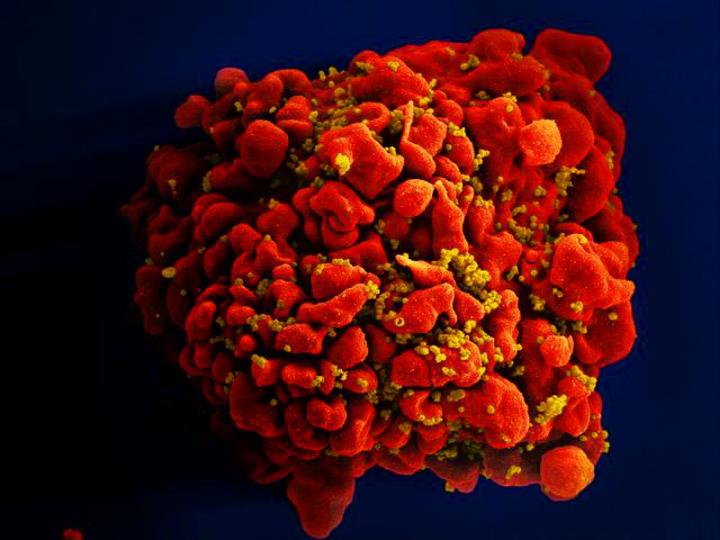
Credit: NIAID

Some people with HIV need to undergo an allogeneic stem cell transplantation in order to treat different types of blood cancer. Most of the patient’s immune cells are eliminated during these transplantations. Stem cells from a healthy donor are then used to replace the patient’s damaged bone marrow and restore their immune system.

“In the first weeks after an allogeneic stem cell transplantation, during which the donorĀ“s cells and the patientĀ“s cells still exist together, the CD4+ T cells (helper cells) were strongly activated. This activation could promote reactivation of the HI virus and re-seeding of the infection in expanding CD4+ donor T-cells,” according to the study’s first author, Dr. Johanna Eberhard from the UKE.

In cooperation with researchers from the Pasteur Institute, Dr. Eberhard found that new, specific T-cell responses to HIV proteins from donor cells developed after this time. This indicates that the donor cells were in contact with HI viruses during their expansion and had learnt to react against them. This confirms the existence of a “window of vulnerability” during which infection of donor cells can occur, said Dr. Eberhard.

“Together with the results of previous studies, these results show a weak point that may explain why allogeneic stem cell transplants may not completely remove the virus from the body, despite a drastic reduction in the number of infected cells. Additional immunotherapy or gene therapy may be required to achieve ongoing, spontaneous control of HIV infection in people with HIV after allogeneic stem cell transplantation,” said the co-author of the study, Associate Professor Dr. Julian Schulze zur Wiesch, senior physician in the medical clinic and polyclinic of the UKE, who carries out research with his working group at the German Center for Infection Research on topics related to curing HIV.

###

IciStem Consortium

The study is one of the projects being carried out by the international IciStem consortium, which has been researching the mechanisms leading to a successful decrease in the reservoir of HIV after allogeneic stem cell transplantation since 2014. The IciStem consortium (http://www.icistem.org) has been conducting an observational study since 2014, which includes patients infected with HIV who need an allogeneic stem cell transplant due to a serious haematological disease. The IciStem consortium consists of a European panel of experts that includes haematologists, infectiologists, virologists and immunologists.

Media Contact
Dr. Julian Schulze zur Wiesch
[email protected]

Original Source

https://www.dzif.de/en/critical-window-re-infection-hiv-after-stem-cell-transplantation

Related Journal Article

http://dx.doi.org/10.1126/scitranslmed.aay9355

Tags: AIDS/HIVInfectious/Emerging DiseasesMedicine/Health
Share12Tweet8Share2ShareShareShare2

Related Posts

Tracking Lanthanide-Labeled Microplastics in Plants

June 25, 2026

Neural Design Enables Zero-Shot Drug-Binding Proteins

June 25, 2026

Genomic Insights into Human Skin Fungi Diversity

June 25, 2026

Chiral Laser Gyroscopes Surpass Lock-In Limit

June 25, 2026
Please login to join discussion

POPULAR NEWS

  • Saying Goodbye to PGY-6: Pediatric Fellowship Realities

    103 shares
    Share 41 Tweet 26
  • Multi-Hospital Study Reveals Long Covid Burden Is Twice as High as Current Estimates

    92 shares
    Share 36 Tweet 23
  • Detection of EDCs in Breast Milk and Infant Urine Up to Six Months Highlights Early Exposure Risks

    77 shares
    Share 31 Tweet 19
  • New Drug Candidate Developed at McMaster Shows Potential for Treating Brain Cancer

    58 shares
    Share 23 Tweet 15

About

We bring you the latest biotechnology news from best research centers and universities around the world. Check our website.

Follow us

Recent News

Tracking Lanthanide-Labeled Microplastics in Plants

POSTECH Researchers Slash Cost of Reconstituted Cell-Free Systems by 95%

AI and Physics Collaborate to Design Advanced Hydrogen Storage Materials

Subscribe to Blog via Email

Success! An email was just sent to confirm your subscription. Please find the email now and click 'Confirm' to start subscribing.

Join 82 other subscribers
  • Contact Us

Bioengineer.org Ā© Copyright 2023 All Rights Reserved.

Welcome Back!

Login to your account below

Forgotten Password?

Retrieve your password

Please enter your username or email address to reset your password.

Log In
No Result
View All Result
  • Homepages
    • Home Page 1
    • Home Page 2
  • News
  • National
  • Business
  • Health
  • Lifestyle
  • Science

Bioengineer.org Ā© Copyright 2023 All Rights Reserved.