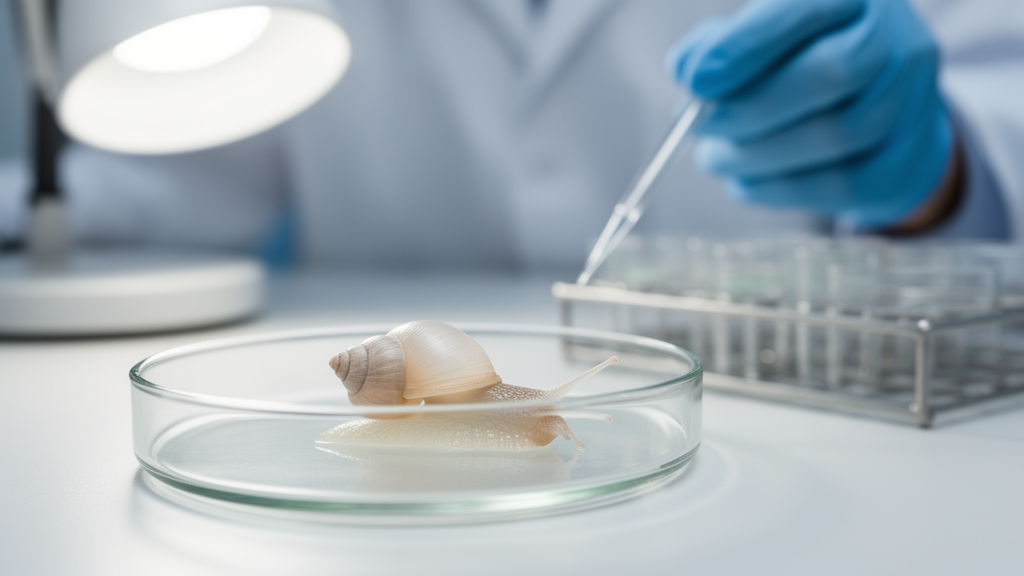
Scientists have knocked out a gene in the slipper limpet Crepidula fornicata, a snail with no assembled genome, and produced eyeless embryos — a demonstration that CRISPR-Cas9 gene editing can succeed using nothing more than a transcriptome. The study, published in Developmental Biology Advances, generated F0 mosaic mutants carrying disruptive mutations in the gene pax6, a master regulator of eye development, and confirmed the edits both genetically and through a visible phenotype.
The work tackles a long-standing obstacle in non-traditional model organisms. CRISPR-Cas9 editing has been a mainstay of functional genetics in fly, mouse and zebrafish for more than a decade, but its application in the Spiralia — a clade encompassing molluscs, flatworms, segmented worms and nearly half of all bilaterian phyla — has been limited. One reason is genomic: spiralian genomes can be large, complex, rich in repetitive regions and highly variable between individuals, making guide RNA design and genotyping difficult without a well-annotated reference.
Combining short-read Illumina sequencing with long-read PacBio isoform sequencing, they produced an assembly of 95,319 transcripts with an N50 of 1,702 base pairs and 83% BUSCO completeness. Because transcriptomes capture expressed coding regions, they are cheaper and technically simpler to produce than genome assemblies, and they naturally reflect the coding-sequence variation present in the population being studied.
To target a gene without knowing its genomic structure, the researchers exploited evolutionary conservation. They identified a single pax6 transcript in the C. fornicata transcriptome by reciprocal BLAST, confirmed its identity through phylogenetic analysis with molluscan and outgroup sequences, and then aligned the transcript to genomic DNA and mRNA of the rough periwinkle Littorina saxatilis, its closest aligned relative among the species examined. This alignment revealed putative intron–exon boundaries, allowing the team to place two single guide RNAs in what they inferred to be exon three, immediately before the paired domain — a protein region with a known role in eye development.
Polymorphism checks reinforced the design. Transcriptome-wide variant calling across RNA-seq libraries identified 857,323 SNPs, and six SNPs were found within the cf-pax6 transcript itself — none overlapping the two guide RNA target sites, so natural variation would not interfere with CRISPR targeting. Guide RNAs were screened for quality with CRISPRscan and IDT scoring tools and checked against the transcriptome for potential off-target matches, though the authors note that without a genome, off-targets in non-coding regions could not be assessed in silico.
Single-celled embryos were microinjected with a ribonucleoprotein complex of Cas9 protein and guide RNA, using sibling embryos from the same capsule as uninjected and sgRNA-only controls. Genotyping of individual early organogenesis embryos showed that guide sgRNA 17 cut in four of five embryos tested and sgRNA 20 cut in four of four. Sanger sequencing revealed the discordant, multi-peaked chromatograms typical of mosaic F0 crispants, while ICE analysis quantified the mutation mix: one sgRNA 17 embryo carried 68% wild-type copies with 10% carrying a +1 base pair insertion and 8% a −6 base pair deletion, and one sgRNA 20 embryo held just 24% wild-type copies alongside −8 and −19 base pair deletions. Mosaicism was visible as multiple bands on a high-sensitivity TapeStation but not on a standard agarose gel.
The phenotype matched expectations. Embryos injected with both Cas9 and sgRNA developed one eye or none: among survivors injected with sgRNA 17, 30% had both eyes, 20% had one and 50% had none, while for sgRNA 20, 25% had one eye and 75% had none. All sgRNA-only controls and uninjected siblings developed two normal eyes. Both independent guides produced the same eye-loss phenotype, which the authors say supports the gene-specific nature of the effect. Injected embryos also showed an approximate 24-hour developmental lag relative to uninjected siblings, suggesting the delay relates to disruption of cf-pax6 itself. Survival analysis indicated that baseline mortality was high even in uninjected controls, with only 13% surviving to nine days post-injection, and injected groups fared similarly at around 20%, though small sample sizes and estimated starting numbers limit precision.
Alongside the editing work, the team characterised eye development in the species histologically for the first time in this context. Larval eyes are simple cup-like structures, one to two cells thick, formed by invagination of the surface ectoderm and covered by a putative early cornea; pigment increases through the veliger stage. Adults bear roughly 160-micrometre lenticular eyes at the base of the cephalic tentacles, with a cuboidal corneal epithelium, an acellular lens and a dense retinal layer. The authors did not find evidence of a light-regulating structure, suggesting the adult eye is unlikely to be among the most complex camera-type eyes seen in other gastropods.
The findings carry broader significance for evolutionary developmental biology. Pax6 is conserved across metazoans and required for eye development in animals with visual systems; disrupting both the paired and homeodomains, as in these F0 mutants and in previously reported F2 null mutants of the apple snail Pomacea canaliculata, produces a completely eyeless phenotype, while annelid knockdowns disrupting only the homeodomain yield partial effects. The new results support an important role for the paired domain in molluscan eye formation and add a second caenogastropod example of a CRISPR-induced pax6 eye-loss mutant.
The authors caution that phenotypes in the absence of a genome should be interpreted cautiously, since off-target mutations cannot be ruled out without genomic resources, and they suggest complementary approaches such as genetic rescue to validate on-target effects. Husbandry and delivery of the editing complex to zygotes remain major bottlenecks for spiralian gene editing generally. Still, the pipeline — transcriptome-based guide and primer design, microinjection, genotyping and phenotyping — opens functional genetics to species lacking genomes, and positions C. fornicata, an embryological model for 150 years, as a genetically enabled system for studying the development and evolution of molluscan visual systems.
Subject of Research: CRISPR-Cas9 knockout of the pax6 gene in the gastropod mollusc Crepidula fornicata without an assembled genome
Article Title: Gene editing without a genome: generation of F0 CRISPR mutants in gastropod mollusc Crepidula fornicata
Article References: Jordan, D. C., Rivers, M. L., Belmont, L., Martin, S. A. M., Bean, T. P., & Sleight, V. A. (2026). Gene editing without a genome: generation of F0 CRISPR mutants in gastropod mollusc Crepidula fornicata. Developmental Biology Advances, 17(1), Article 15. https://doi.org/10.1186/s13227-026-00267-9
Image Credits: AI Generated
DOI: 10.1186/s13227-026-00267-9
Keywords: CRISPR-Cas9, Crepidula fornicata, pax6, transcriptome, gastropod, eye development, F0 mutants, functional genomics, non-model organisms, Spiralia, mollusc, evo-devo
News Source: Juliet Wilcox. (October 29, 2026). CRISPR snails: eyeless mutants made without a genome. Scienmag.