• HOME
  • NEWS
  • EXPLORE
    • CAREER
      • Companies
      • Jobs
    • EVENTS
    • iGEM
      • News
      • Team
    • PHOTOS
    • VIDEO
    • WIKI
  • BLOG
  • COMMUNITY
    • FACEBOOK
    • INSTAGRAM
    • TWITTER
Saturday, May 16, 2026
BIOENGINEER.ORG
No Result
View All Result
  • Login
  • HOME
  • NEWS
  • EXPLORE
    • CAREER
      • Companies
      • Jobs
        • Lecturer
        • PhD Studentship
        • Postdoc
        • Research Assistant
    • EVENTS
    • iGEM
      • News
      • Team
    • PHOTOS
    • VIDEO
    • WIKI
  • BLOG
  • COMMUNITY
    • FACEBOOK
    • INSTAGRAM
    • TWITTER
  • HOME
  • NEWS
  • EXPLORE
    • CAREER
      • Companies
      • Jobs
        • Lecturer
        • PhD Studentship
        • Postdoc
        • Research Assistant
    • EVENTS
    • iGEM
      • News
      • Team
    • PHOTOS
    • VIDEO
    • WIKI
  • BLOG
  • COMMUNITY
    • FACEBOOK
    • INSTAGRAM
    • TWITTER
No Result
View All Result
Bioengineer.org
No Result
View All Result
Home NEWS Science News Biology

CRISPR reveals the secret life of antimicrobial peptides

Bioengineer by Bioengineer
February 26, 2019
in Biology
Reading Time: 2 mins read
0
IMAGE
Share on FacebookShare on TwitterShare on LinkedinShare on RedditShare on Telegram

IMAGE

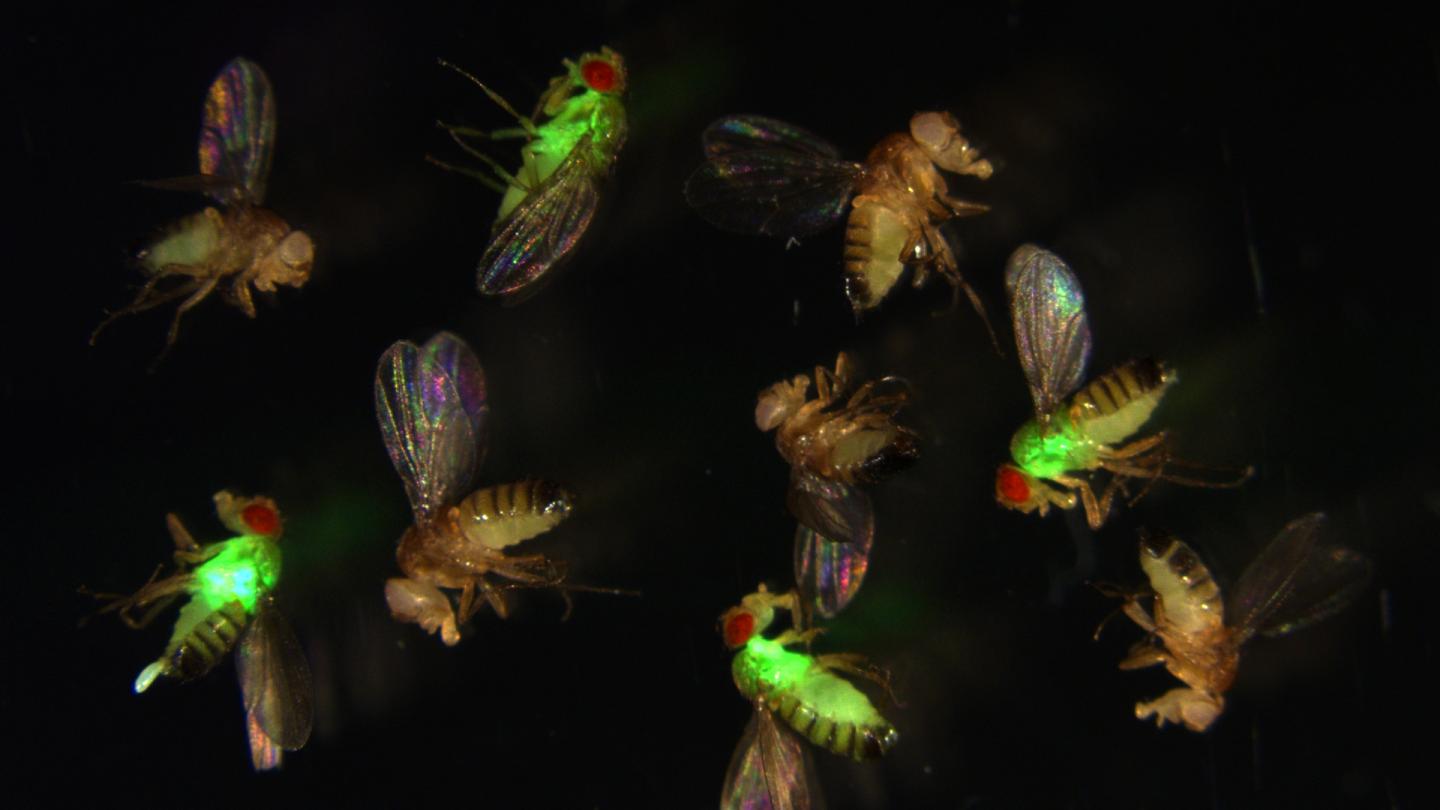
Credit: Mark Austin Hanson, EPFL

When it comes to the immune system, we usually think about lymphocytes like B and T cells or macrophages going on constant seek-and-destroy missions against invading pathogens like bacteria and viruses. But our immune system actually includes a lesser-known and less-studied first line of defense referred to as “innate immunity”.

One of the main weapons of innate immunity are a family of small peptides, collectively known as “antimicrobial peptides” or AMPs for short. AMPs are produced by the host’s (e.g. the human’s) cells and combat invading microorganisms by breaking apart their cell membranes or by disrupting their functions.

Despite their importance, we know very little about AMPs. Some in vitro studies have shown that they can kill bacteria and fungi, but scientists have been hard pressed to study them in living organisms. One of the reasons is that there are simply too many factors involved in innate immunity, so isolating the effect of individual AMPs in a living organism is a very complex proposition.

But now we have the tools. Scientists from the lab of Bruno Lemaitre at EPFL’s Global Health Institute have used CRISPR, the gene-editing technique, to delete no less than 14 AMPs from the fruit fly Drosophila. By deleting single AMP genes, various combinations of genes, or even all 14 genes, the scientists were able to remove their corresponding AMPs and observe how their absence affected the fly’s resistance to different bacterial and fungal pathogens.

The results showed that, at least in Drosophila, AMPs act mainly against Gram-negative bacteria (e.g. E. coli, Enterobacter species) and certain fungi. The AMPs also work either together or by adding up their individual effects. Surprisingly, they found that certain AMPs can be incredibly specific in defending against certain infections (e.g. the AMP diptericin against the pathogen P. rettgeri). This unexpected result highlights a previously unknown level of specificity to the innate immune response.

“What’s really exciting is that these results will help us understand how our own AMPs might help fight infection,” says Mark Austin Hanson, the study’s first author. “It could be that some people have a defective copy of a specific AMP needed to prevent a common infection – as an example, uropathogenic E. coli – and so they are at higher risk. Fighting infection is great, but learning how to prevent it in the first place is the ideal of medicine. That’s what these AMPs do: they prevent infection before it ever settles in.”

But the applications of studying AMPs go even further, Hanson adds. “Studying how the fly’s AMPs work can also help us manage economically important insects, whether it be protecting bumblebees or preventing mosquitoes from spreading disease.”

###

Other contributors

University of Paris-Saclay

National Institute of Genetics (Japan)

Reference

Mark Austin Hanson, Anna Dostalova, Camilla Ceroni, Mickael Poidevin, Shu Kondo, Bruno Lemaitre. Synergy and remarkable specificity of antimicrobial peptides in vivo using a systematic knockout approach. eLife 26 February 2019. DOI: 10.7554/eLife.44341

Media Contact
Nik Papageorgiou
[email protected]

Related Journal Article

http://dx.doi.org/10.7554/eLife.44341

Tags: BiologyBiotechnologyCell BiologyGenesGeneticsImmunology/Allergies/AsthmaInfectious/Emerging DiseasesMolecular Biology
Share12Tweet8Share2ShareShareShare2

Related Posts

Single mother must adapt swiftly — the survival of her colony depends on it — Biology

Single mother must adapt swiftly — the survival of her colony depends on it

May 15, 2026
Why Are Nearly Everyone Right-Handed? It Might Be Linked to How We Learned to Walk — Biology

Why Are Nearly Everyone Right-Handed? It Might Be Linked to How We Learned to Walk

May 15, 2026

Excessive Neuronal Activity Initiates Severe Autoimmune Brain Disorder

May 15, 2026

Precision Anti-Aging Strategies Focus on Eliminating Harmful Senescent Cells While Preserving Beneficial Ones

May 15, 2026
Please login to join discussion

POPULAR NEWS

  • Research Indicates Potential Connection Between Prenatal Medication Exposure and Elevated Autism Risk

    843 shares
    Share 337 Tweet 211
  • New Study Reveals Plants Can Detect the Sound of Rain

    730 shares
    Share 291 Tweet 182
  • Salmonella Haem Blocks Macrophages, Boosts Infection

    62 shares
    Share 25 Tweet 16
  • Breastmilk Balances E. coli and Beneficial Bacteria in Infant Gut Microbiomes

    58 shares
    Share 23 Tweet 15

About

We bring you the latest biotechnology news from best research centers and universities around the world. Check our website.

Follow us

Recent News

Naïve CD4+ T-Cells Predict CAR T Therapy Success

REM Sleep Breathing, Metabolism, and Memory Linked

Machine Learning Detects Flow Instability in Channels

Subscribe to Blog via Email

Enter your email address to subscribe to this blog and receive notifications of new posts by email.

Join 82 other subscribers
  • Contact Us

Bioengineer.org © Copyright 2023 All Rights Reserved.

Welcome Back!

Login to your account below

Forgotten Password?

Retrieve your password

Please enter your username or email address to reset your password.

Log In
No Result
View All Result
  • Homepages
    • Home Page 1
    • Home Page 2
  • News
  • National
  • Business
  • Health
  • Lifestyle
  • Science

Bioengineer.org © Copyright 2023 All Rights Reserved.