• HOME
  • NEWS
  • EXPLORE
    • CAREER
      • Companies
      • Jobs
    • EVENTS
    • iGEM
      • News
      • Team
    • PHOTOS
    • VIDEO
    • WIKI
  • BLOG
  • COMMUNITY
    • FACEBOOK
    • INSTAGRAM
    • TWITTER
Wednesday, June 24, 2026
BIOENGINEER.ORG
No Result
View All Result
  • Login
  • HOME
  • NEWS
  • EXPLORE
    • CAREER
      • Companies
      • Jobs
        • Lecturer
        • PhD Studentship
        • Postdoc
        • Research Assistant
    • EVENTS
    • iGEM
      • News
      • Team
    • PHOTOS
    • VIDEO
    • WIKI
  • BLOG
  • COMMUNITY
    • FACEBOOK
    • INSTAGRAM
    • TWITTER
  • HOME
  • NEWS
  • EXPLORE
    • CAREER
      • Companies
      • Jobs
        • Lecturer
        • PhD Studentship
        • Postdoc
        • Research Assistant
    • EVENTS
    • iGEM
      • News
      • Team
    • PHOTOS
    • VIDEO
    • WIKI
  • BLOG
  • COMMUNITY
    • FACEBOOK
    • INSTAGRAM
    • TWITTER
No Result
View All Result
Bioengineer.org
No Result
View All Result
Home NEWS Science News Biology

Crikey! Massive prehistoric croc emerges from South East Queensland

Bioengineer by Bioengineer
December 21, 2020
in Biology
Reading Time: 2 mins read
0
IMAGE
Share on FacebookShare on TwitterShare on LinkedinShare on RedditShare on Telegram

IMAGE

Credit: The University of Queensland

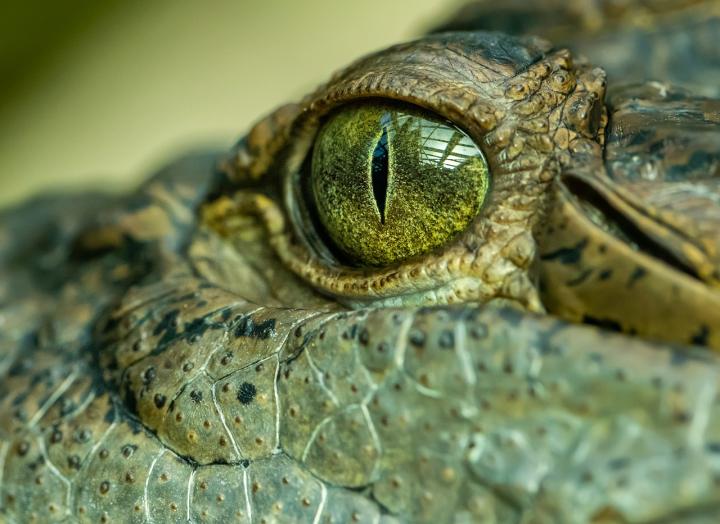
A prehistoric croc measuring more than five metres long – dubbed the ‘swamp king’ – ruled south eastern Queensland waterways only a few million years ago.

University of Queensland researchers identified the new species of prehistoric croc – which they named Paludirex vincenti – from fossils first unearthed in the 1980s.

UQ PhD candidate Jorgo Ristevski, from UQ’s School of Biological Sciences, said they named the species after Geoff Vincent who discovered the giant fossilised skull near the town of Chinchilla.

“In Latin, ‘Paludirex’ means ‘swamp king’, and ‘vincenti’ honours the late Mr Vincent,” he said.

“For several years the fossilised skull was on display in the Queensland Museum, before it was donated to the Chinchilla Museum in 2011.

“The ‘swamp king’ was one intimidating croc.

“Its fossilised skull measures around 65 centimetres, so we estimate Paludirex vincenti was at least five metres long.

“The largest crocodylian today is the Indo-Pacific crocodile, Crocodylus porosus, which grows to about the same size.

“But Paludirex had a broader, more heavy-set skull so it would’ve resembled an Indo-Pacific crocodile on steroids.”

Paludirex was one of the top predators in Australia a few million years ago, capable of preying on giant prehistoric marsupials.

“The waterways of the Darling Downs would once have been a very dangerous place because of it,” Mr Ristevski said.

Mr Ristevski’s supervisor, Dr Steve Salisbury, said various species of prehistoric crocodylians had existed in Australia.

“Crocs have been an important component of Australia’s fauna for millions of years,” Dr Salisbury said.

“But the two species we have today — Crocodylus porosus and Crocodylus johnstoni — are only recent arrivals, and were not part of the endemic croc fauna that existed here from about 55 million years ago.

“Whether Paludirex vincenti went extinct as a result of competition with species like Crocodylus porosus is hard to say.

“The alternative is that it went extinct as the climate dried, and the river systems it once inhabited contracted – we’re currently investigating both scenarios.”

The research has been published in the open access journal PeerJ (DOI: 10.7717/peerj.10466).

###

Media Contact
Jorgo Ristevski
[email protected]

Related Journal Article

http://dx.doi.org/10.7717/peerj.10466

Tags: BiologyEvolutionFisheries/AquacultureOld WorldPaleontologyZoology/Veterinary Science
Share13Tweet8Share2ShareShareShare2

Related Posts

Decades of Data Reveal Which Orcas Call Puget Sound Home

June 24, 2026
Copal Tree Genetics Reveal Tropical Forest Connectivity — Biology

Copal Tree Genetics Reveal Tropical Forest Connectivity

June 24, 2026

How Intestinal Mucus Influences Klebsiella pneumoniae Colonization and Antibiotic Effectiveness

June 24, 2026

From Darkness to Light: How Blind Mexican Cavefish Reveal Brain Evolution

June 24, 2026
Please login to join discussion

POPULAR NEWS

  • Saying Goodbye to PGY-6: Pediatric Fellowship Realities

    103 shares
    Share 41 Tweet 26
  • Multi-Hospital Study Reveals Long Covid Burden Is Twice as High as Current Estimates

    92 shares
    Share 36 Tweet 23
  • Detection of EDCs in Breast Milk and Infant Urine Up to Six Months Highlights Early Exposure Risks

    77 shares
    Share 31 Tweet 19
  • New Drug Candidate Developed at McMaster Shows Potential for Treating Brain Cancer

    58 shares
    Share 23 Tweet 15

About

We bring you the latest biotechnology news from best research centers and universities around the world. Check our website.

Follow us

Recent News

Late Neanderthal Genetic Diversity in Northwest Europe

Global Mining Threatens Forest Conservation Inside, Outside Protected Areas

Gene Variant rs11030119 Impacts BDNF Platelet Function

Subscribe to Blog via Email

Enter your email address to subscribe to this blog and receive notifications of new posts by email.

Join 82 other subscribers
  • Contact Us

Bioengineer.org © Copyright 2023 All Rights Reserved.

Welcome Back!

Login to your account below

Forgotten Password?

Retrieve your password

Please enter your username or email address to reset your password.

Log In
No Result
View All Result
  • Homepages
    • Home Page 1
    • Home Page 2
  • News
  • National
  • Business
  • Health
  • Lifestyle
  • Science

Bioengineer.org © Copyright 2023 All Rights Reserved.